2024 DCRC Annual Meeting Speakers
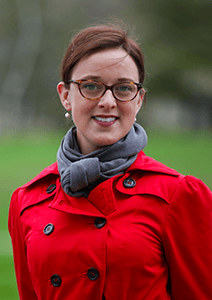
Christine Baes
Christine F. Baes is a full professor, department chair and Canada research chair in livestock genomics at the University of Guelph. Together with her team, Dr. Baes strives to incorporate cutting-edge research results into large-scale breeding programs for improved productivity, health and welfare of livestock. She has extensive knowledge in the areas of quantitative genetics and statistical genomics as it relates to the genetic and genomic evaluation of domestic animals. Dr. Baes serves on various industry and governmental boards and committees in Canada and abroad.
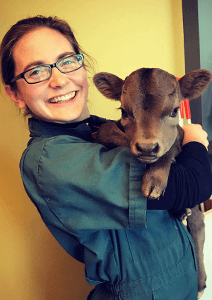
Kaitlyn Briggs
Dr. Kaitlyn Briggs is an experienced dairy veterinarian with a passion for animal health/welfare and sustainability. She started her veterinary career in private practice in the thumb of Michigan and since has led environmental modeling and animal health sustainability research at Dairy Management Inc. She has since transitioned to a role at fairlife where she gets to put her knowledge and passion to work, creating and communicating on dairy sustainability strategy within fairlife and Coca-Cola, while simultaneously being involved in implementation of continuous improvement projects from an animal welfare and sustainability lens on farms. She currently resides in Washington where she spends her free time hiking and helping on the dairy her husband manages.
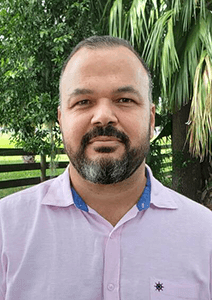
Ricardo Chebel
Dr. Ricardo Chebel is a distinguished professor at the University of Florida’s College of Veterinary Medicine, known for his expertise in dairy cattle health and reproductive management. His research emphasizes improving the health and welfare of dairy herds though the adoption of new technologies. Dr. Chebel has made substantial contributions through his research on dairy cow health management, focusing on areas like peripartum management, postpartum health, adoption of automation, heat stress abatement, and reproductive management. His work is central to the development of precision agriculture technologies aimed at promoting sustainable farming practices. He has published extensively, with numerous peer-reviewed articles investigating the efficacy of non-antibiotic treatments and the use of precision tools to enhance decision making in herd management. In addition to his publications, Dr. Chebel is actively involved in multi-disciplinary and multi-institutional research collaborations. He works closely with colleagues in areas such as reproductive physiology, calf health, and the use of artificial intelligence in livestock management. His leadership in these initiatives is helping shape the future of dairy farming by integrating technological advancements into practical farming solutions, enhancing productivity, animal welfare, and environmental sustainability.
John Cole
With an interest in genetic improvement of fertility, health, and fitness traits in dairy cattle, development of selection indices, and recessive genetic conditions, Dr. John B. Cole leads the newly developed research and development team at the Council on Dairy Cattle Breeding. Before his current role, he spent three years at PEAK Genetics overseeing genetics and reproductive biology research as the Senior Vice President, Research and Development. Nearly two decades of Dr. Cole’s career was spent as a research geneticist and acting research leader for USDA’s Animal Genomics and Improvement Laboratory. He has authored or co-authored more than 150 peer-reviewed research articles and mentored many postdoctoral scientists and graduate students. Dr. Cole’s research has been recognized with the Jay L. Lush Award in Breeding and Genetics from the American Dairy Science Association, the Distinguished Service Award from the National Dairy Herd Information Association, and the National Association of Animal Breeders Peer Research Award. A native of South Louisiana, he holds a PhD in animal breeding and genetics from Louisiana State University.
Paul Fricke
Dr. Paul Fricke was raised on his family’s row crop and dairy farm located near Papillion, Nebraska, where his father continues to farm today. After receiving a bachelor’s degree in animal science in 1988 from the University of Nebraska, Paul went on to complete a master’s degree in 1992 and a PhD in 1996 in reproductive physiology from the department of animal sciences at North Dakota State University. Paul joined the faculty at the University of Wisconsin-Madison in 1998. His current position includes research and extension responsibilities in dairy cattle reproduction. His research program focuses on understanding the biology underlying the many reproductive problems of dairy cattle. Paul has authored or co-authored 108 peer-reviewed journal publications, 144 abstracts, and 6 book chapters. He has mentored 16 master’s degree and six PhD students, and his research program has attracted $4.5 million in extramural research grants, contracts, and gifts. The goal of Dr. Fricke’s extension program is to improve reproductive efficiency of dairy cattle by applying scientific research to develop practical management strategies and assess new reproductive technologies.
Adam Geiger
Dr. Adam Geiger was raised on a Wisconsin dairy farm and received his bachelor’s degree from the University of Wisconsin-Madison in dairy science. Upon graduation, he completed a master’s degree at Mississippi State University in ruminant nutrition. Adam then received his PhD from Virginia Tech in lactation physiology. His dissertation is a series of work dedicated to understanding the relationship between nutrition and the mammary gland, and understanding how both interact with various hormonal axis to improve milk production. Adam spent time with a large animal nutrition company before starting with Zinpro as a research nutritionist in 2017. His work focuses heavily on calf and heifer management, transition cow management, mammary function/health, and lameness. Currently, Adam manages Zinpro’s colostrum business and supports various global markets.
Robert Hagevoort
Dr. Robert Hagevoort, a native of The Netherlands, is an associate professor and extension dairy specialist at New Mexico State University. Prior to joining NMSU in 2005, Dr. Hagevoort served for more than 10 years as an independent dairy management consultant – primarily in California’s Southern and Central Valley. As an extension specialist, he has been working closely with the dairy industry in New Mexico and across the West regarding many regulatory and environmental issues. A key component of his current program is the development and implementation of a comprehensive dairy workforce training and safety program. A great deal of his time is spent working individually with dairies and collectively with producer associations on implementing and evaluating comprehensive workforce training programs in dairy safety, animal handling, parlor performance, calf care, feeder performance and hospital and maternity care. A recent direction, because of expressed producer needs, is a focus on the development of effective middle-manager training programs.
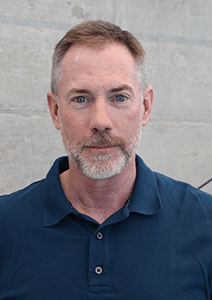
Stephen LeBlanc
Dr. Stephen LeBlanc is a professor in the department of population medicine at the University of Guelph and director of Dairy at Guelph – The Centre for Dairy Research and Innovation. He received a bachelor’s degree in animal science from McGill University in 1992, DVM in 1997, and DVSc in 2001 from the University of Guelph. His research focuses on dairy cow metabolic and reproductive health and management, precision technologies, and antimicrobial stewardship. With graduate students and collaborators, this work has resulted in 200 peer-reviewed papers and invited talks in 20 countries. He is a former DCRC president, a Journal of Dairy Science senior editor, and serves as an American Dairy Science Association board member.
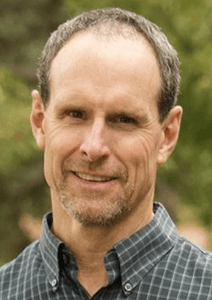
Jason Lombard
Dr. Jason Lombard grew up in Colorado and spent his early years on his family’s cattle ranch. After obtaining his DVM from Colorado State University, he practiced primarily dairy cattle medicine in Wisconsin for almost 10 years. He returned to CSU and completed a master’s degree in epidemiology while working for USDA’s National Animal Health Monitoring System. He coordinated multiple national studies, primarily focused on the dairy industry. While with USDA, he also participated on an Incident Management Team and was deployed for multiple cattle and poultry diseases during his 20-year federal career. Jason’s research interests include infectious disease epidemiology and population health, with a focus on cattle diseases. His most recent work has involved investigating bovine tuberculosis outbreaks and bovine leukemia virus-associated lymphosarcoma in beef and dairy cattle. These disease investigations and research have taken a One Health approach with collaboration with public health officials and infectious disease physicians. He has spent most of 2024 learning about and researching HPAI in dairy cattle.
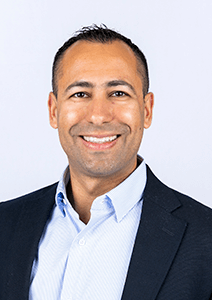
Luis Mendonca
Dr. Luís Mendonça received a DVM degree in 2006 at Universidade Estadual de Maringá, Brazil. After earning his DVM degree, he worked in a private practice that specialized in reproductive management and technologies. Then, he was hired as a postgraduate researcher at the Veterinary Medicine Teaching and Research Center in Tulare, California. In 2012, he obtained his master’s degree and completed his residency in dairy production medicine at the University of Minnesota College of Veterinary Medicine. Prior to joining Merck Animal Health in 2020, Dr. Mendonça was a faculty member at Kansas State University for seven years. While at Merck Animal Health, he provided support and consultative services to dairy producers, calf ranches, and veterinarians as a ruminant technical services veterinarian for four years before starting his current position as research scientist at Merck Animal Health Technology Labs.
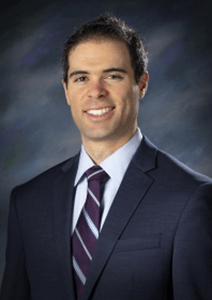
Rafael Neves
Dr. Rafael Neves grew up in the Southeast region of Brazil and received his DVM degree from Pontificia Universidade Catolica de Minas Gerais. Following graduation, he completed a master’s degree in epidemiology and dairy health management at University of Guelph, Canada, a clinical residency in the Ambulatory and Production Medicine Clinic at Cornell University, and a PhD in comparative biomedical sciences at Cornell University. He was on faculty for 18 months in the department of veterinary sciences, Texas Tech University. Currently, he is an assistant professor of food animal production medicine at Purdue University.
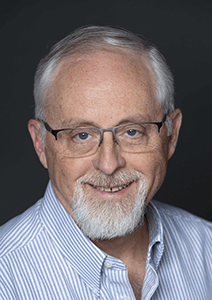
Mike Overton
Dr. Michael Overton has worked at Zoetis for four years in the role of Global Dairy Platform Lead within the Precision Animal Health group. In this role, he works extensively in data analytics and economic modeling and collaborates across multiple areas within Zoetis. He received his bachelor’s degree and DVM from North Carolina State University and practiced veterinary medicine for eight years in North Carolina. He then completed a dairy production medicine residency and his masters of preventive veterinary medicine degree at the University of California-Davis where he worked as a dairy production medicine specialist in Tulare, California. Next, he served as professor of dairy production medicine and chief of service for the food animal program at the University of Georgia from 2006 to 2012. Dr. Overton then spent eight years at Elanco Animal Health in a data analytics and consultancy role. Throughout his career, Dr. Overton has worked in the areas of data analytics and economic modeling of key dairy production management areas, including replacement heifers, reproduction, disease and herd replacement decision making.
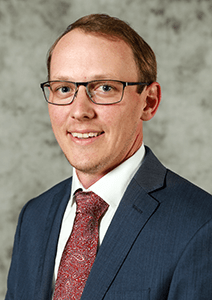
Ky Pohler
Dr. Ky Pohler is an associate professor and chair of the pregnancy and developmental programming area of excellence in the department of animal science at Texas A&M University. He grew up in Shiner, Texas, and received a bachelor’s degree in animal science from Texas A&M University. Next, he received a master’s degree and PhD from the University of Missouri. Dr. Pohler’s research interest focuses on understanding the physiological and molecular mechanisms that control reproductive efficiency in cattle. More specifically, his lab is interested in the mechanisms that lead to embryonic and fetal mortality in cattle and development of management strategies to overcome these losses.