
Newsletter – 2020 – October
President's message
 From the DCRC President’s Desk
By Julio Giordano
Who’s ready to help make history and attend the Dairy Cattle Reproduction Council’s (DCRC) first Virtual Annual Meeting? While I’d rather see you in Madison, Wis., meeting via the Zoom video and audio-conferencing platform is an excellent option. So, I hope you can join us Nov. 10-12, 10 a.m.-3 p.m. Central time, via the virtual highway.
The 2020 DCRC Annual Meeting showcases dairy cattle reproduction topics that reflect on the past, share the present and gaze into the future. With a virtual conference platform, DCRC plans to reach a more global and diverse audience during this year’s meeting. All sessions will be recorded, which registered attendees can access by late November. Also, individual session recordings may be purchased following the meeting.
For anyone involved in dairy cattle reproduction, this is a “must attend” event. While many topics focus on reproduction strategies, we also address related topics, such as data analytics, economics, dry cow management, digital technologies, leadership development and personnel management practices.
Presentation titles and presenters for this year’s top notch DCRC Annual Meeting include:
- 25 years of timed AI programs: Past, present and future – Milo Wiltbank, University of Wisconsin-Madison
- Producer panel: Revamping estrous detection and reproductive efficiency with digital technology – Don Niles, Dairy Dreams LLC, Evan Platte, Steenblik Dairy, Luke Hopkin, Collins Dairy, and Tiffany Paulus Schneider, Paulus Dairy
- Cattle fertility in 12 years of genomics: Lessons learned, current applications and future development – John Cole, U.S. Department of Agriculture, and Peter Hansen, University of Florida
- Future of dairy management decisions based on big data analytics – Michael Ferris and Victor Cabrera, University of Wisconsin-Madison
- From colostrum to weaning: How to better prepare your replacement heifers for the future – Michael Steele, University of Guelph
- Economics of rearing replacement heifers and culling strategies in times of good fertility and genomics – Mike Overton, Zoetis
- Dry cow management: How to optimize udder health and improve postpartum reproductive performance – Brian Miller, Merck Animal Health
- Can uterine infections be treated or managed without antibiotics? – Klibs Galvão, University of Florida
- The importance of using transition cow records for decision making – John Wenz, Washington State University
- Establishing a high fertility cycle in the lactating herd – Richard Pursley, Michigan State University
- Optimization of embryo transfer technologies in dairy herds – Daniela Demetrio, Maddox Dairy
- Using digital technology to optimize health and reproductive management – Ricardo Chebel, University of Florida
- Future of DHI and diagnostic services in modern dairy management – Kelly Sporer, CentralStar Cooperative Select Sires
- Development of employees and future leaders in the dairy industry – Molly Sloan, URUS
- Understanding dairy personnel motivations for adoption of new practices – Steven Roche, ACER Consulting
- Sire fertility and sexed semen in dairy cattle – Stephen Butler, Teagasc Moorepark
To find more details about the meeting, go to: https://www.dcrcouncil.org/2020-annual-meeting.
Additionally, the preconference seminars provide more learning opportunities. On behalf of DCRC, I extend many thanks to our preconference seminar sponsors – Arm & Hammer, STgenetics, Merck Animal Health and Jefo – for providing these additional presentations.
Sponsorship opportunities remain for the 2020 DCRC Annual Meeting. If you’d like to learn about sponsoring this year’s meeting, please contact Glaucio Lopes (glaucio.lopes@altagenetics.com) or Kristy Mach (kristym@dcrcouncil.org).
For veterinarians, DCRC will submit an application to the American Association of Veterinary State Boards for RACE (Registry of Approved Continuing Education) credits. We anticipate receiving approval for up to 18 CEs. In addition, DCRC is approved as a New York State sponsor of continuing education for veterinarians and veterinary technicians. This is a great opportunity for bovine practitioners to fulfill CE requirements.
New book: Dairy Cattle Fertility
With submissions from several DCRC leaders, Hoard’s Dairyman released a new book – Dairy Cattle Fertility. DCRC Secretary-Treasurer Jeffrey Stevenson, professor of reproductive physiology at Kansas State University, coordinated the industry-leading authors who contributed to this book.
This book reviews dairy herd reproduction management tools, economics, anatomy and health and calving management. Key topics include:
- Reproductive technologies for dairy use
- Fertility program scheduling and compliance
- Various methods of pregnancy diagnosis
- Genetics of fertility
- Ideal timing of breeding for cows and heifers
- Artificial insemination technique and on-farm bull management
- Feeding strategies for improving fertility
Each of the 19 chapters is authored by different reproduction specialists from universities and companies across North America, providing a variety of perspectives on today’s dairy industry. Order yours today!
Research Summaries
Lactating dairy cows managed for second and greater artificial insemination services with the Short-Resynch or Day 25 Resynch program had similar reproductive performance
M.M. Pérez, R. Wijma, M. Scarbolo, E. Cabrera, F. Sosa, E.M. Sitko, and J.O. Giordano
Reinsemination strategies for nonpregnant dairy cows is crucial to minimize days to pregnancy and reduce the number of nonpregnant cows at the end of lactation (Pursley et al., 1997; Tenhagen et al., 2004; Wijma et al., 2018). Strategies to manage reinsemination for second and greater artificial insemination (AI) services are usually a combination of AI at detected estrus (AIE) and timed AI (TAI) after resynchronization of ovulation with the Ovsynch protocol, or its variants by the time of nonpregnancy diagnosis (NPD; Fricke et al., 2003; Bilby et al., 2013; Bruno et al., 2014). Programs including resynchronization to cows with certain ovarian structures at NPD have also been developed in an attempt to reduce days to pregnancy by targeting subgroups of cows to optimize reinsemination interval and pregnancy per AI (P/AI; Bartolome et al., 2005; Wijma et al., 2017, 2018). Therefore, the authors’ objective in this experiment was to evaluate reproductive performance and physiological outcomes of lactating Holstein cows managed for reinsemination with the Short-Resynch or Day 25 Resynch program.
Treatments
- Cows from 2 commercial farms were randomly assigned after first service to two different Resynch programs in which they remained until 210 days after first service or left the herd:
- Day 25 Resynch (D25R; n = 917), cows in D25R received GnRH 25 ± 3 days after AI
- Short-Resynch (SR; n = 870), cows in SR did not receive GnRH 25 ± 3 days after AI
- Cows from both treatments:
- Underwent NPD through transrectal ultrasonography (TUS) at 32 ± 3 days after AI
- Nonpregnant cows with a corpus luteum (CL) ≥15 mm and an ovarian follicle ≥10 mm (CL cows) received 2 PGF2α treatments 24 hours apart, GnRH 32 hours after the second PGF2α, and timed AI 16 to 18 hours later
- Cows without a CL ≥15 mm and a follicle ≥10 mm (NoCL cows) received a modified Ovsynch protocol with progesterone (P4) supplementation [P4-Ovsynch; GnRH and controlled internal drug-release device (CIDR) in, 7 days later CIDR removal and PGF2α, 24 hours later PGF2α, 32 hours later GnRH, and 16 to 18 hours later timed AI]
- Blood samples were collected and TUS conducted at each treatment to evaluate ovarian responses to resynchronization in a subgroup of cows
Results
- A greater proportion of cows were AIE before NPD in the SR (60.5%; 57.0–63.8; n = 3,416) than the D25R (50.1%; 46.5–53.7; n = 3,177) treatment, but P/AI at 32 days for AIE services was greater for the D25R (41.3%; 38.8–43.8; n = 1,560) than the SR (37.6%; 35.5–39.8; n = 1,961) treatment
- Greater proportion of cows in the D25R (84.3%; 82.2–86.2) than the SR (77.0%; 74.4–79.4) treatment were considered CL cows at NPD
- Pregnancy per AI at 32 days was greater for the D25R than the SR treatment for all timed AI services (D25R = 43.0%; 40.2–45.9 vs. SR = 36.8%; 33.8–39.8) and for CL cows (D25R = 42.8%; 39.7–45.9 vs. SR = 33.8%; 30.6–37.2) but did not differ for NoCL cows (D25R = 39.4%; 32.1–47.3 vs. SR = 44.0%; 36.8–51.4)
- The hazard ratio for time to pregnancy (1.03; 0.93–1.14) and the proportion of cows not pregnant at the end of the observation period (D25R = 5.9%; 4.4–7.8 vs. SR = 6.7%; 5.0–8.7) did not differ between SR and D25R treatments.
- The GnRH treatment 25 days after AI resulted in more cows with P4 >1 ng/mL (D25R = 80.5%; 75.3–84.9 vs. SR = 63.6%; 57.3–69.4) and smaller follicle diameter at NPD 32 ± 3 days after AI for D25R (16.2 ± 0.4 mm) than for SR (17.5 ± 0.4 mm); however, it did not affect follicle diameter and luteal regression risk (CL cows only) before TAI.
The authors concluded that the use of reproductive management programs including SR and D25R for CL cows and the P4-Ovsynch protocol for NoCL cows resulted in similar hazard of pregnancy and proportion of nonpregnant cows for up to 210 days after first service.
Access the paper: https://www.journalofdairyscience.org/article/S0022-0302(20)30697-4/fulltext
The association of cow-related factors assessed at metritis diagnosis with metritis cure risk, reproductive performance, milk yield, and culling for untreated and ceftiofur-treated dairy cows
V.S. Machado, M.L. Celestino, E.B. Oliveira, F.S. Lima, M.A. Ballou, and K.N. Galvão
Metritis is a complex multifactorial disease associated with striking effects on cow performance and productivity. Antimicrobials are used for treating metritis cases in the United States, with the majority of farms reporting the use ceftiofur as their drug of choice. Nonetheless, more than half of the cows diagnosed with metritis undergo spontaneous cure. For this reason, identifying cow-related risk factors at the time of metritis diagnosis that are associated with improved response to treatment or spontaneous cure will enable the development of protocols to optimize treatment efficacy and contribute to the judicious use of antimicrobials in the dairy industry. The authors’ objectives were to investigate the cow-related factors associated with metritis cure and to evaluate the association of the same cow-related factors with reproductive performance, culling, and milk production.
Treatments and cow-related factors
Cows were considered to have metritis if fetid, thin, serous, or watery, reddish-brownish, with or without pieces of necrotic tissue present, was observed within the first 10 days in milk (DIM). Cows diagnosed with metritis were randomly allocated to receive subcutaneous injection of ceftiofur at metritis diagnosis and 72 hours later (CEF, n = 168) or to be in the untreated control group (CON, n = 147). Cows that did not have metritic discharge were considered to be non-metritic (NMET, n = 150).
- Metritis cure was defined as absence of metritic discharge when uterine health was reassessed 12 days after enrollment/metritis diagnosis.
- Cows that still have metritic discharge at the 12-day post-enrollment evaluation, cows that were culled or dead, and cows that received escape therapy (based on farm personnel decision because of signs of systemic illness) were considered as noncured for metritis.
Cow-related factors that were evaluated included plasma concentrations of non-esterified fatty acids (NEFA), beta-hydroxybutyrate (BHB), and haptoglobin (Hp), parity, rectal temperature, and DIM at metritis diagnosis, vulvovaginal laceration (VL), body condition score, dystocia, twins, and retained placenta.
Results
- Metritis cure was 64.6% of cows in the CON group and 81.5% in the CEF group.
- Cows receiving ceftiofur were more likely to recover from metritis than cows in the CON group.
- Hierarchical order of variables predictive of metritis cure was plasma Hp concentration, DIM at metritis diagnosis, treatment, and dystocia.
- Cows with lower Hp levels at the time of metritis diagnosis were more likely of curing from metritis in CON (Hp <54 mg/mL) and CEF (Hp < 0.78 mg/mL) groups.
- Metritis cases diagnosed earlier in lactation (before 8 and 5 DIM for CON and CEF, respectively) were less likely to cure within 12 days of diagnosis.
- CON and CEF cows with lower concentrations of Hp at the time of metritis diagnosis had similar milk production, reproductive performance, and culling risk when compared with NMET cows.
- Metritic cows were more likely to leave the herd than NMET cows.
In conclusion, circulating concentration of Hp and DIM at metritis diagnosis are associated with risk of cure for metritis in CON and CEF cows. In addition, vaginal laceration and dystocia are associated with the risk of cure for metritis in CEF cows. Cows with lower Hp blood concentrations and greater DIM at metritis diagnosis perform similarly as NMET cows. These results indicate that the development of a selective therapy for metritis using cow-related factors is a possibility, but more research is needed to identify more accurate predictors of metritis spontaneous cure and treatment failure.
Access the paper at: https://www.journalofdairyscience.org/article/S0022-0302(20)30629-9/fulltext
Validation of genomic predictions for a lifetime merit selection index for the US dairy industry
Brenda Fessenden, Daniel J. Weigel, Jason Osterstock, David T. Galligan, and Fernando Di Croce
Selection indices, a critical component of breeding programs, were developed to facilitate selection for balanced genetic improvement across multiple genetic traits related to production and economic outcomes (Hazel, 1943). Selection indices combine information about many traits into a single number that can predict an animal’s genetic potential for total economic merit (Shook, 2006) and rank animals and inform breeding decisions (Cole and VanRaden, 2018). The effect of increased production on herd profitability was a motivator of this selection goal. However, this narrow selection goal contributed to a decrease in health and fertility (VanRaden, 2004). Improvement of phenotype recording and development of new trait evaluations led to fertility (VanRaden et al., 2004), longevity (VanRaden and Wiggans, 1995), milk quality (Schutz, 1994), and health traits (Vukasinovic et al., 2017). Incorporation of these nonproduction traits in selection indices has grown (Miglior et al., 2005) as breeders strive to account for factors influencing both income from animal production and associated costs of production. Therefore, the authors’ objective of this study was to evaluate retrospectively whether a specific selection index comprising genomically enhanced predicted transmitting abilities had the ability to predict observed lifetime profit in U.S. Holstein animals.
Treatments
- Dairy wellness profit (DWP$) selection index was evaluated in 2,185 animals from 5 commercial dairy herds
- Individual animals needed to meet the following criteria: born in 2011, received a genomic evaluation before December 2012, and entered the lactating herd as a first-lactation animal
- Production and health data between January 1, 2011, and April 12, 2019, were extracted from herd management software
- Index values were used to rank and assign animals to quartiles (genetic groups: worst 25%, 26–50%, 51–75%, and best 25%)
- Generalized linear mixed effects models were applied to estimate the associations between index quartile and defined economic outcomes
- Lifetime Profit, Net Present Value, and Annuity were calculated
- Similar analyses were conducted to estimate associations between index quartile and observed phenotype to characterize the extent to which profitability outcomes were driven by economically relevant production and health traits
- Lifetime milk production, lifetime fat and protein production, lifetime number of live calves produced, longevity, and lifetime disease incidence
Results
- Differences in lifetime profit and annuity value between the best and worst genetic groups for DWP$ were $811 and $232, respectively
- Significant differences were also observed between top and bottom quartiles for milk production (8,077 kg), fat production (336 kg), protein production (264 kg), live calves (0.5), time spent in the lactating herd (6.6 months), and cow mortality (8.4%)
- Additionally, differences in disease incidence were significant between the best and worst DWP$ quartiles for metritis (5.2%), mastitis (14.9%), and lameness (15.9%)
In conclusion, the observed results of this study demonstrated the ability of DWP$ predictions to predict lifetime profitability of Holstein animals and its potential utility as a tool to guide selection and breeding programs. Improving DWP$ through genetic selection, when combined with good management practices, provides an opportunity for dairy producers to improve overall herd profitability.
Access the paper: https://www.journalofdairyscience.org/article/S0022-0302(20)30692-5/fulltext
Featured Column
Weighing the costs and returns of IVP-ET
In vitro-produced embryo transfer (IVP-ET) in dairy herds greatly reduces the genetic lag with service sires. However, this evolving technology carries a fairly high price tag. Thus, the question is: Does IVP-ET’s cost outweigh its genetic improvement gain? Or, does the value of decreased genetic lag outweigh IVP-ET’s cost?
During the Dairy Cattle Reproduction Council (DCRC) Annual Meeting, Albert De Vries, University of Florida department of animal sciences, addressed the topic of IVP-ET and artificial insemination (AI) economic and genetic performance. He noted that North America produced 311,867 IVP dairy embryos in 2017 (95.5 percent produced in the United States). This equates to about 0.5 percent of dairy cattle breedings. The use of this technology doubled between 2013 and 2017.
Pair IVP-ET with genomics
Before the implementation of genomic testing in 2010, the rate of genetic gain (Lifetime Net Merit [NM$]) was $28 per year for sires born between 2003 and 2007. For sires born between 2013 and 2017, NM$ jumped to more than $70 per year.
On a similar note, De Vries explained that Council on Dairy Cattle Breeding data show that cows’ genetic merit is less than that of service sires. Cows’ genetic merit lags behind service sires’ genetic merit.
To improve genetic gain on the female side, De Vries said to select a herd’s superior females as dams of future offspring. Use genomic test results to select superior females and breed them to female sexed semen or take their oocytes and fertilize them with sexed semen in the lab (IVP-ET). To decrease the genetic lag more, use IVP-ET. “Use of technologies, such as AI, sexed semen, IVP-ET and selection of surplus animals, all contribute to a reduction in genetic lag,” said De Vries.
Why is this important? De Vries replied, “The difference in genetic merit of the best heifers in a herd compared with the genetic merit of the average cow in a herd is becoming greater. This is the result of bulls getting better faster. As a result, capturing and propagating the best genetics in the herd is becoming more valuable.”
IVP-ET: Evolving technology
Still a relatively new technology, De Vries explained that an IVP-ET program consists of three components: ovum pickup (OPU) protocol, donors and recipients. The process starts with OPU (egg or oocyte collection) from donors’ ovaries after a hormonal treatment. Next, sperm fertilize the oocytes outside the body (in a laboratory) to produce embryos. At about 1 week of age, the embryos are transferred to recipients to create pregnancies.
In general, donors have reached puberty. Oocytes can be collected from pregnant animals – up to four months into the pregnancy. The success of IVP-ET varies, but four transferrable embryos per OPU is a realistic goal.
Multiplying the best genetics
“In vitro-produced embryos for ET allows for rapid multiplication of the best genetics in the herd, but is also more expensive than AI,” said De Vries. “There is often an economically optimal amount of IVP-ET to be used, depending on, for example, calf value, IVP-ET procedure cost, accuracy of identifying the best dams, and alternative breeding options, such as sexed and beef semen.”
De Vries’ DCRC Annual Meeting proceedings paper discusses some studies that looked at the economics of using IVP-ET in dairy herds. To learn more about these studies, access his paper through DCRC’s Members Only site.
The “perfect” combination of IVP-ET and AI with sexed, beef and/or convention semen depends on several variables. Researchers continue to work on identifying the most profitable and promising strategies.
Reducing the generation interval
De Vries noted that further reduction in the generation interval will increase the rate of genetic gain in a nucleus population – in the production of service sires, for example. “In-vitro breeding is an emerging technique that can reduce the generation interval to only three to four months.”
De Vries concluded, “Individual dairy farms that rely on marketed service sires to produce IVP embryos will continue to have a genetic gain rate that in steady state will be the same as that of service sires.
Improvements in ranking donors and recipients, and improved efficiencies and reduced costs will strengthen the economic viability of IVP-ET programs, according to De Vries. “IVP-ET programs will become more economically competitive with AI programs and eventually they might become clearly more profitable.”
Featured Member
(Editor’s Note: For each issue, DCRC interviews a member to learn more about his/her career, involvement with DCRC and thoughts about dairy cattle and reproduction. We encourage you to recommend someone for this feature by contacting JoDee Sattler at: JoDee@dcrcouncil.org)
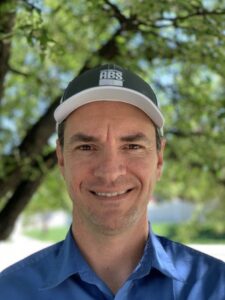 Anibal Ballarotti
ABS Global
Meridian, Idaho
DCRC member since 2015
Born and raised in Brazil, Anibal Ballarotti credits his long line of Italian ancestors for his involvement in agriculture. His father and grandfather owned land dedicated to raising beef cattle, horses and some dairy cows. Early in life, Ballarotti developed a love for animal care while tending to livestock on horseback.
Subsequently, Ballarotti earned a Doctor of Veterinary Medicine degree and then master’s and doctorate degrees while still in Brazil. With a deep interest in dairy cattle reproduction and herd management, he ventured to the University of Wisconsin-Madison and pursued post-doctorate education.
Help feed the world
With world population at an all-time high and continuing to grow, Ballarotti felt a call to help feed the world. “To meet our nutritional needs, we must produce more food, of higher quality, more efficiently and quickly,” he said. “This must be done while respecting both the environment and animals’ well-being.”
Early in his career, these challenges motivated Ballarotti to conduct research with several world-class dairy scientists, including Milo Wiltbank (University of Wisconsin), Paul Fricke (University of Wisconsin) and Roberto Sartori (University of Sao Paulo, Brazil). With this solid education and research background, Ballarotti entered the “real world” and has made his own contributions to enhancing day-to-day operations on dairies across the United States.
Currently, Ballarotti serves as a technical services consultant for ABS Global in North America. His team, along with the genetic services team, provides support to milk producers, managers and employees to achieve their goals in different areas, such as production, reproduction, cow comfort, transition management, maternity care, milk quality and any other area that can impact milk production and profitability of their U.S. customers’ dairy herds.
Values DCRC’s practical approach
Ballarotti’s affiliation with the Dairy Cattle Reproduction Council (DCRC) started five years ago when he began employment with ABS Global. “I value the practical approach of our organization. We unite scientists, producers, students, veterinarians and others in the dairy industry at the same table to discuss current issues and opportunities to improve and learn from each other’s experiences and, of course, increase our network to make a positive difference in our environment,” he stated.
To help “move the needle forward” in the world of dairy cattle reproduction, Ballarotti said DCRC helps build bridges among different areas of dairy science and the industry. “There are other organizations doing similar work, but they’re not so focused on these practical approaches. We understand that our organization should keep the focus on milk producers, who I consider to be ‘heroes without capes.’ Furthermore, we understand the need to tackle all sorts of issues related to meeting the nutrition demands of a growing world.”
A lifetime learner, Ballarotti finds resources – particularly the timed artificial insemination protocols – on the DCRC website quite helpful. “I find them to be very convenient and timely,” he said. “They keep me on top of the details so I can confidently recommend them to producers.” In addition, he views the recordings of all DCRC webinars. “This is a great member benefit.”
DCRC fills practical application gap
Reflecting on DCRC’s history and the progress of dairy cattle fertility in the last 10-plus years, Ballarotti said, “After many years of decreasing fertility performance in lactating dairy cows, it’s critical for dairy scientists to keep producing knowledge at a high level. It’s also critical that this knowledge continues to be spread among veterinarians and producers. As a consultant traveling all over the country, I still see some disconnect between these two ends. The knowledge is available and ready to be applied, but many times the field specialists and producers do not know exactly where to go for reliable information. DCRC is filling this gap, but we still need to keep moving forward in dairy cattle reproduction, in a determined and resilient mode.”
When asked about DCRC’s future, Ballarotti commented, “To think about DCRC’s future, I like to look back at the past. The most important observation I made these past years in DCRC is how the leadership and staff are passionate about helping milk producers. That’s our core. That’s what we stand for and that’s why we keep working tirelessly. I remember when Jeff Stevenson, Kansas State University, at DCRC’s 2016 annual meeting talked about DCRC’s first decade. His passion for transferring all the knowledge possible to dairy producers and field veterinarians really hit home with me. That was one of the reasons I became deeply involved with DCRC, helping to choose the topics and speakers for the 2019 annual meeting in Pittsburgh. My prediction is that we are going to pass this passion on to build more and more bridges with younger generations to come in support of the global dairy industry.”
DCRC Webinar Series
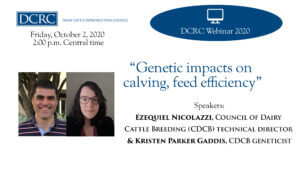 DCRC Adds Webinars to 2020 Lineup
Get out your calendars and add three upcoming Dairy Cattle Reproduction Council (DCRC) webinars, set for Oct. 2, Nov. 16, and Dec. 4, all starting at 2 p.m. Central time. These free programs offer access to high-quality information and interaction with industry experts to attendees from across the United States and around the world, all from the comfort of their farm or office.
Save these dates and times:
- Ezequiel Nicolazzi and Kristen Parker Gaddis, Council on Dairy Cattle Breeding
“Genetic impacts on calving, feed efficiency”
Oct. 2, at 2 p.m. Central time
- Luis Mendonca, Merck Animal
“Maximizing fertility while minimizing timed AI use” (“Maximizando fertilidade e, ao mesmo temp, minimizando o uso de IA em tempo fixo”) (presented in Portuguese)
Nov. 16, at 2 p.m. Central time
- Pablo Pinedo, Colorado State University
“Revisiting the impact of overall and reproductive health on fertility – phenotypes and genotypes” (“Revisitando el impacto de la salud general y reproductiva en la fertilidad – fenotipos y genotipos”) (presented in Spanish)
Dec. 4, at 2 p.m. Central time
For more information about the DCRC webinars, e-mail Paula Basso, DCRC Education Committee chair, at: paula.basso@zoetis.com or e-mail DCRC at: dcrc@dcrcouncil.org.
To register for a webinar, please visit www.dcrcouncil.org/webinars and follow all prompts. As the webinar approaches, you will receive an e-mail with information on how to log in for attendance. If you are a DCRC member and cannot attend the ”live” webinar, you may access it (and all past webinars) at www.dcrcouncil.org/webinars.
Industry Calendar
- Dairy Cattle Reproduction Council Webinar, Genetic impacts on calving and feed efficiency, October 2, at 2-3 p.m. Central time
- Dairy Calf and Heifer Association Webinar, October 8, at 2-3 p.m. Central time
- Council on Dairy Cattle Breeding Industry Meeting, November 2, at 1-3 p.m. Central time, Virtual
- Dairy Cattle Reproduction Council 2020 Annual Meeting, November 10-12, Virtual
- Dairy Cattle Reproduction Council Webinar Maximizing fertility while minimizing timed AI use / Maximizando fertilidade e, ao mesmo temp, minimizando o uso de IA em tempo fixo (presented in Portuguese), November 16, at 2-3 p.m. Central time
- National Mastitis Council Webinar, Improving udder health through better bedding management, November 19, at 2 p.m. Central time
- Council on Dairy Cattle Breeding Triannual Evaluation, December 1
- Dairy Cattle Reproduction Council Webinar Revisiting the impact of overall and reproductive health on fertility; phenotypes and genotypes / Revisitando el impacto de la salud general y reproductiva en la fertilidad; fenotipos y genotipos (presented in Spanish), December 2, at 2-3 p.m. Central time
- Dairy Strong Conference, January 19-21, Virtual
- National Mastitis Council Annual Meeting, January 25-28, Dallas, Texas
- National Cattlemen’s Beef Association, February 3-5, Nashville, Tennessee
- Commodity Classic, March 4-6, San Antonio, Texas
- Central Plains Dairy Expo, March 23-25, Sioux Falls, South Dakota
- Council on Dairy Cattle Breeding Triannual Evaluation, April 6
- Dairy Calf and Heifer Association Annual Conference, April 6-8, Appleton, Wisconsin
- Council on Dairy Cattle Breeding Triannual Evaluation, August 10
- Council on Dairy Cattle Breeding Triannual Evaluation, December 7
