
Newsletter – 2021 – February
President's message
 From the DCRC President’s Desk
By Michael Overton
Now that the chaotic and challenging 2020 is behind us, I hope the new year is off to a great start for each of you. The DCRC board and staff are already busy with preparations for our 2021 Annual Meeting that is scheduled for Nov. 10-11, at the Embassy Suites, Kansas City International Airport. After a very successful virtual conference in 2020, we look forward to hosting an in-person meeting again or some kind of hybrid meeting to meet the needs of those who may not be able to attend in person (stay tuned!). Our DCRC is in good financial condition and we are continuing the efforts to broaden the reach of this fantastic organization. Meanwhile, there are several topics to highlight for the coming months.
Our program committee, chaired by Ralph Bruno and co-chair Pablo Pinedo, are already busy strategizing and brainstorming in an attempt to plan a great educational offering for our annual meeting. If you have ideas or suggestions for a topic or specific speaker, please reach out to one of them. One of the highlights from 2020 was the pre-recorded posters; Bruno and Pinedo are planning to offer this again as a series of very short presentations.
An idea that DCRC has been considering for some time is that of hosting or co-hosting a DCRC conference in a country outside of the United States. Our current membership is approximately 10 percent international and we would like to grow that number. A working subgroup is currently studying options and trying to select a potential location and working partner, but no firm decisions have been made. We feel that a venture such as this would improve DCRC’s visibility as we strive to improve our international representation. If you have thoughts or suggestions for the board to consider, please let one of us know. (DCRC members’ contact info can be found via the “Members Only” [www.dcrcouncil.org/member-center] webpage in the online “Member Directory.”)
One underutilized benefit of DCRC membership is access to numerous recorded webinars on a wide variety of topics. Currently, on the Members Only section of the DCRC website, there are more than 40 recorded webinars that are available for on-demand viewing. In addition, we have planned a series of webinars for 2021 that will kick off in March with John Cole presenting “Dairy Cattle Fertility After 12 Years of Genomic Selection: Lessons Learned, Current Applications, and Future Developments.” Look for more details to come via e-mail.
Beginning in March, DCRC will again start accepting nominations for its annual Herd Reproduction Awards program. This program recognizes outstanding reproductive performance from dairy herds around the world. We very much appreciate the nominations that are submitted by veterinarians, extension agents, artificial insemination and pharmaceutical company representatives, and consultants. If you know of a herd that has been performing very well reproductively, please plan to nominate them. The window for nominations will run from March 1 to April 30, and details can be found at https://www.dcrcouncil.org/awards. Please help spread the word and ensure that those herds with outstanding reproductive performance are nominated for recognition.
I encourage you to reach out to DCRC leaders and staff (kristym@dcrcouncil.org, jodee@dcrcouncil.org, kyle@dcrcouncil.org, 952-758-2395) if you have questions, suggestions or would like to volunteer your time or resources to DCRC. And if you’re interested in being a corporate sponsor of DCRC, please let us know.
Keep up to date on DCRC programs and resources by visiting www.dcrcouncil.org. Help us spread the word about DCRC through social media: follow us on Twitter (@DCRCouncil), Facebook and Linkedin. Your retweets and “likes” help extend the reach of DCRC’s information and programs.
Research Summaries
 Ovulation and fertility response to commercially available GnRH products in lactating cows synchronized with the Double-Ovsynch protocol
M. Luchterhand, C.A. Gamarra, R.S. Gennari, P.D. Carvalho, R.V. Barletta, and A.H. Souza
Fertility programs, such as Double-Ovsynch (DOV), increase the number of cows that are inseminated earlier after the end of the voluntary waiting period. Several GnRH (gonadotropin-releasing hormone) products are approved for use in the United States. These products have different gonadotropin salts and diluents. Thus, the authors’ objectives were to compare the ovulatory responses and P/AI (pregnancies per artificial insemination) after first postpartum AI using three commercially available GnRH products.
Treatments and protocols
- A total of 1,411 cows (primiparous = 591 and multiparous = 910) were enrolled from February 2016 until April 2017 in 2 Wisconsin herds.
- Modified Double-Ovsynch protocol: D0V:GnRH; D (day) 7: prostaglandin (PG) F2α; D10: GnRH; D17: GnRH; D24: PGF2α; D25: PGF2α; D26-pm: GnRH; D27: AI 16 hours after the last GnRH administration.
- The same PGF2α product was used in all groups (Estrumate, Merck & Co., Inc.)
- GnRH products used:
- Cystorelin (CYS, n = 484, 100 mcg of gonadorelin diacetate tetrahydrate, Merial Inc.)
- Factrel (FAC, n = 482, 100 mcg of gonadorelin hydrochloride, Zoetis LLC)
- Fertagyl (FER, n = 515, 100 mcg of gonadorelin diacetate tetrahydrate, Merck & Co., Inc.)
- Ovulation was assumed when a new CL (corpus luteum) structure was observed on D24 of the DOV protocol.
- Pregnancy was diagnosed by ultrasonography at 32 d (day) and confirmed at 60 d post-breeding.
- Pregnancy loss was diagnosed when a cow was diagnosed pregnant at 32 d and not pregnant at 60 d.
Results
- No statistical significance was observed on the ovulation rate when comparing the different groups treated with different GnRH products.
- An 11-percentage point ovulation rate difference was observed in favor of the diacetate-based GnRH products (73% vs. 62%)
- The proportion of cows with a CL on D17 of DOV was similar among the treatment groups (CYS = 98.4%; FAC = 95.3%; FER = 95.0%).
- The proportion of cows pregnant 32 d after breeding was not statistically different among the treatment groups, but numerically higher for gonadorelin diacetate tetrahydrate groups:
- FAC = 44.1%; FER = 49.3%; CYS = 51.3%
- The proportion of cows pregnant 60 d after breeding was different among the treatment groups:
- FAC = 42.0%; FER = 47.8%; CYS = 49.8%
- Pregnancy loss between 32 and 60 d after breeding did not differ among the different treatment groups.
Conclusions
A numerically lower number of animals receiving gonadorelin hydrochloride-based GnRH salt was observed to have ovulated on D17 of the DOV protocol when compared with the diacetate tetrahydrate salts. Although no statistical difference in the P/AI was observed at 32 d post breeding, fewer cows treated with the hydrochloride-based GnRH product were still pregnant at 60 d post-AI when compared with the diacetate tetrahydrate salts. No difference in pregnancy loss was reported.
The study was supported by Merck Animal Health, E.I. Medical Imaging, and Bovisync® herd management software.
Access the paper at: https://pubmed.ncbi.nlm.nih.gov/30739752/
Effects of metritis treatment strategies on health, behavior, reproductive, and productive responses of Holstein cows
V.R. Merenda, D. Lezier, A. Odetti, C.C. Figueiredo, C.A. Risco, R.S. Bisinotto, and R.C. Chebel
Metritis is a complex multifactorial disease associated with striking effects on cow performance and productivity. Broad-spectrum antibiotics are used for treating metritis cases in the United States, with the majority of farms reporting use of ceftiofur as their drug of choice. Ampicillin is an alternative antibiotic for treating metritis. Among other objectives, this study aimed to compare the effects of ceftiofur crystalline free acid (CCFA) and ampicillin (AMP) on metritis cure, uterine health, and reproductive performance.
Experimental design, treatments, and cure definition
- Vaginal discharge was examined at 4, 6, 8, 10, and 12 days (d) postpartum using a Metricheck device.
- Rectal temperature was measured daily.
- Cows with fetid, watery, reddish, or brownish vaginal discharge (VD; VD = 5) were considered to have metritis.
- If rectal temperature (RT) >5˚ C = puerperal metritis
- If rectal temperature <39.5˚ C = metritis
- At day of metritis diagnosis (d0), cows were matched based on parity and severity of uterine disease and assigned to 2 treatment groups.
- AMP; n = 308 cows. Nonsalable-milk pen, where they were treated once daily for 5 d and were moved back to their original pen 72 hours (h) after the last treatment (d 7)
- CCFA; n = 310 cows. Remained in their original pen and received 2 treatments of CCFA, 72 h apart
- Cure was defined as the absence of treatment with additional antimicrobial before experiment D 11, VD <5, and RT <39.5° C.
- Vaginal discharge was checked at 28 days in milk (DIM) and cytological endometritis at 35 DIM.
- Pregnancy was diagnosed 40 d after artificial insemination (AI) and confirmed at 60 d.
Results
- Incidences of metritis and puerperal metritis were 19.0% (n = 460) and 8.1% (n = 197), respectively.
- Metritis cure: Treatment did not affect the likelihood of cure (P >35).
- Uterine health: Cows treated with AMP were more likely to be diagnosed with purulent VD at 28 DIM than cows treated with CCFA (P < 0.01). Only a numerical difference was observed in the incidence of cytological endometritis at 35 DIM, when comparing AMP and CCFA (P = 0.09).
- Reproductive performance: Treatment did not affect the likelihood of resumption of estrous cycles (P = 0.33). Treatment did not affect the likelihood of pregnancy at 40 and 60 d after AI and pregnancy loss between 40 and 60 d post-AI when comparing both treatments.
In conclusion, even though some differences were observed in uterine health (purulent vaginal discharge at 28 DIM and endometritis at 35 DIM), metritis cure and reproductive performance did not differ when comparing AMP and CCFA treatments.
Access the paper at: https://www.sciencedirect.com/science/article/abs/pii/S0022030220310286
Influence of pathogens causing clinical mastitis on reproductive variables of dairy cows
F.M. Dalanezi, S.F. Joaquim, F.F. Guimarães, S.T. Guerra, B.C. Lopes, E.M.S. Schmidt, R.L.A. Cerri, and H. Langoni
Mastitis is a disease that poses major economic losses for dairy farms. Economic losses caused by mastitis include reduction in milk yield, discarding of milk, and increased culling. In addition, several studies have demonstrated the deleterious effects of mastitis on reproductive performance of dairy cows. It is not clear, however, whether severity in reproductive performance decrease differs among specific pathogens that cause mastitis. The authors’ objective of this study was to evaluate the effects of clinical mastitis caused by different pathogens on reproductive performance of dairy cows.
Materials and methods
- The study was conducted in 5 commercial dairy herds averaging 30 kg of milk/cow/day.
- A total of 833 Holstein cows were included.
- Milk samples from cows presenting clinical mastitis were collected for microbial isolation.
- Cows were classified based on occurrence of mastitis and type of pathogen isolated as follows:
- Healthy – cows that were not diagnosed with mastitis
- Major pathogens group – cows that had mastitis caused by Staphylococcus aureus, Streptococcus agalactiae, Escherichia coli, Klebsiella spp., Mycoplasma spp., Streptococcus uberis, or dysgalactiae
- Minor pathogens group – cows that had mastitis by coagulase-negative Staphs (CNS) or Corynebacterium
- Cows that had mastitis were also classified based on the gram staining classification of the pathogens that cause mastitis as follows:
- Gram-positive group – mastitis by aureus, CNS, Strep. agalactiae, Strep. uberis, or Strep. dysgalactiae
- Gram-negative group – mastitis by coli or Klebsiella spp.
- Reproductive indices evaluated were pregnancy per artificial insemination (P/AI) at first service, pregnancy loss between 30 and 60 days after AI, and days open.
Results
- Control, major pathogens, and minor pathogen groups were comprised of 273, 369, and 191 cows, respectively. A total of 123 and 395 cows had mastitis caused by Gram-negative and Gram-positive pathogens, respectively.
- P/AI was greater in the control group compared with the major pathogens group (33.2%, 20.1%), but did not differ between minor pathogens group and either the control or major pathogens group.
- P/AI was greater in the control group compared with the Gram-negative group (32.6%, 15,4%), but did not differ between the Gram-positive group and either the control or Gram-negative groups.
- Pregnancy loss in the major pathogens group was greater than in the control group (22.2%, 12.8%), but did not differ between the minor pathogens group and either the control or major pathogens groups.
- Pregnancy loss in the Gram-negative group was greater than in the control and Gram-positive groups (30.1%, 12.8%, 17.2%, respectively), but did not differ between the Gram-positive and control groups.
- Days open was greater for cows in the major pathogens group (175.1 days) than cows in the minor pathogens (162.0 days) and control groups (129.5 days).
- Days open was greater for cows in the Gram-negative group (191.1 days) than cows in the Gram-positive (172.7 days) and control groups (129.5 days).
In conclusion, cows that were not diagnosed with mastitis had greater P/AI, lower pregnancy loss, and fewer days open than cows with mastitis. In addition, this study provides evidence that the extent of the deleterious effects of mastitis on reproductive performance may depend on the pathogen causing mastitis. Reproductive losses in this study were the most evident when cows had clinical mastitis caused by either major pathogens or Gram-negative bacteria.
Access the paper at: https://doi.org/10.3168/jds.2019-16841
Featured Column
Reproduction takes a complete approach
During the 2020 Dairy Cattle Reproduction Council (DCRC) Annual Meeting, DCRC recognized 24 outstanding dairy operations as Bronze, Gold, Silver or Platinum winners. DCRC extends a huge congratulations to the Platinum winners.
Davis Family Dairies, Nicollet, Minnesota, USA
Tom Jinkinson, farm manager
Nominated by Brandon Thesing, Select Sires
Hendriks Dairies, Brucefield, Ontario, Canada
Henry and Tyler Hendriks
Nominated by Gary Markus, Alta Genetics
High Noon Dairy, Hereford, Texas, USA
Jody Cole, farm manager
Nominated by Fabio Horacio Schneider Teixeira, Progressive Dairy Health Services, and Kim Egan, Genex
Holmesville Dairy, Argyle, Wisconsin, USA
Tim and Travis Holmes
Nominated by B.J. Jones, Center Hill Veterinary Clinic
Patterson Farms, Auburn, New York, USA
Jon and Julie Patterson, and Dan Young
Nominated by Claire Mulligan, ABS Global
Riverside Dairy, Reedsville, Wisconsin, USA
Andy Fisher and Tom and Jean Tienor
Nominated by Angie Ulness, Parnell Living Science
Following is an excerpt from the Hoard’s Dairyman round table discussion that highlights the Platinum winners’ repro management strategies. Learn about optimizing dairy cattle reproduction from these outstanding dairy producers.
Hoard’s Dairyman: What insights do you have for others?
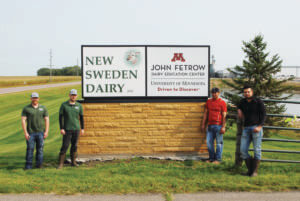 Davis Family: Look at nutrition first. If you have over a 1% displaced abomasum (DA) rate, deal with hemorrhagic bowel syndrome, or have a high rate of sole ulcers, chances are you can bump up reproduction quickly by fixing your nutrition program. The injection-intense reproduction programs can overcome some of these nutrition issues but only operate as a Band-Aid on a gash in our experience.
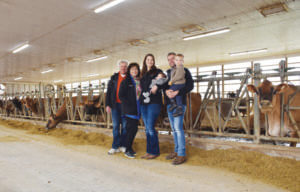 Hendriks: My advice for producers looking to improve their herd repro is to code breedings as there is no such thing as too much information. This will make troubleshooting much easier when a problem does arise. There is no worse feeling than seeing a big slip in preg rate and not knowing what or where your problem is on the farm.
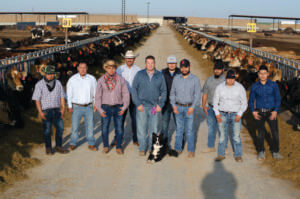 High Noon: Overtrain employees. Use your local services, veterinarians, animal health companies such as Zoetis, and the like to pull information to educate and motivate your staff. Assemble teams that work well together – fresh cows, veterinary care crews, maternity, and feeders. Make sure communication is open between everyone, and show them how they impact each other.
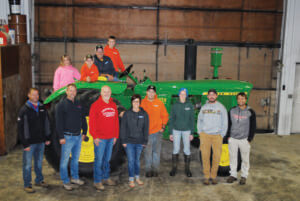 Holmesville: Use all the resource people you can to maximize your herd fertility. We feel the breeding is a result of a total team approach from the employees, nutritionists, veterinarian, and breeders. Quarterly team meetings have helped keep our group on the same page. Everyone needs to be a team to have a successful breeding program.
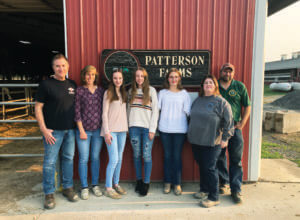 Patterson: No matter what area you want to improve on the dairy, or in life, find someone who is achieving the results you want to achieve, ask them for assistance, and utilize their experience and knowledge. Ask them for an honest assessment to find out what are your areas of opportunity. Once that is done, develop a strategy to accomplish the goals you set. The next step is one that several people miss – execution. Don’t just talk about what you want to see happen, follow through and execute the plan. There are so many great approaches… synchronization programs, technology, and cow management systems… to use to successfully get cows pregnant. Pick something that fits the management strategy of your operation. Whatever technology, program, or protocol the dairy decides to utilize, the key is going to be in the consistency. The thing to remember is you need to do the same thing, the same way, the same time, every time.
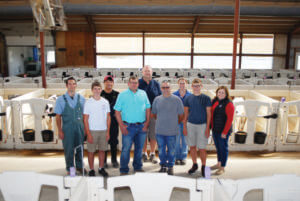 Riverside: Consistency. As we all know, cows are creatures of habit and like their day to be the same way, every day. Strive to provide an environment that gives them every opportunity to become pregnant and maintain that pregnancy. Choose your resources wisely. You can tell when a person is passionate with their job. It works both ways. The nutritionist, breeder, veterinarian, and employees will work hard for you when they see your drive and dedication to the farm. Don’t be quick to point the finger when things slide in the wrong direction; rather, work together as a team on how to move forward.
Featured Member
(Editor’s Note: For each issue, DCRC interviews a member to learn more about his/her career, involvement with DCRC and thoughts about dairy cattle and reproduction. We encourage you to recommend someone for this feature by contacting JoDee Sattler at: JoDee@dcrcouncil.org)
 Tony C. Bruinjé
University of Guelph PhD Student
Guelph, Ontario, Canada
DCRC member since 2016
Last year, the Dairy Cattle Reproduction Council (DCRC) selected Tony C. Bruinjé as the 2020 DCRC Scholar. As the award recipient, Bruinjé earned recognition at the virtual 2020 DCRC Annual Meeting and an expense-paid trip to attend the 2021 DCRC Annual Meeting in Kansas City, Mo.
Bruinjé grew up in the state of Paraná, Brazil, in close contact with his grandparents’ farm, which included a mix of beef and grazing dairy cattle. He studied veterinary medicine in Curitiba, Paraná, located close to one of the most advanced dairy industry areas in Brazil.
“During my vet studies, I became passionate about reproduction of dairy cows – particularly how the available and emerging technologies can be used to improve reproductive management and performance,” said Bruinjé. His growing interest in dairy science led to a summer internship at the University of Florida, under the supervision of José Santos, where he assisted with data collection of research projects related to transition and reproductive health.
In 2014, as part of his clinical year in vet school, Bruinjé spent time with a commercial veterinary center that provided reproductive services to more than 200 dairies in Paraná. He then spent additional time participating in research projects related to reproductive physiology of dairy cows at the University of São Paulo, under the supervision of Roberto Sartori.
The following year, Bruinjé headed to Canada and pursued a master’s degree at the University of Alberta, under Divakar Ambrose’s supervision. His research focused on investigating the use of an automated inline milk progesterone analysis sensor to monitor reproductive function as an approach to manage reproduction. After completing his master’s degree, Bruinjé worked as a research assistant with Ambrose and Michael Steele, and conducted studies on reproductive development of heifers.
“The opportunities I had to learn from such excellent mentors nurtured my interests in dairy reproduction, particularly in investigating the use of precision technologies and data analysis for more efficient dairy cattle management,” said Bruinjé.
Two years ago, he embarked on his doctorate degree with Stephen LeBlanc, University of Guelph. Bruinjé’s current research is investigating impacts of transition cow health on reproductive function, particularly related to expression of estrus and detection by activity monitors.
Looking to the future, Bruinjé plans to work as a researcher with a focus on investigating and developing strategies for dairy cow reproductive management that involve health assessment and optimization of precision technologies. “Such strategies will not only result in more efficient management overall but also play a role in improving our understanding of dairy cow physiology and enhancing animal welfare and sustainability – priorities for the dairy industry’s future,” he said.
Industry Calendar
- Pennsylvania Dairy Summit, February 8, Virtual
- World Ag Expo, February 9-11, Virtual
- 2021 DCRC Reproduction Award nominations open March 1
- 2021 DCRC Scholars applications open March 1
- Commodity Classic, March 2-5, Virtual
- National DHIA Annual Meeting, March 10-11, Virtual
- Professional Dairy Producers of Wisconsin Business Conference, March 17-18, Wisconsin Dells, Wisconsin
- Central Plains Dairy Expo, March 24-25, Sioux Falls, South Dakota
- Council on Dairy Cattle Breeding Triannual Evaluation, April 6
- Dairy Calf and Heifer Association Annual Conference, April 6-8, Appleton, Wisconsin
- Animal Agriculture Alliance Stakeholders Summit, May 5-6, Virtual
- American Dairy Science Association Annual Meeting, July 11-14, Louisville, Kentucky
- Council on Dairy Cattle Breeding Triannual Evaluation, August 10
- National Cattlemen’s Beef Association, August 10-12, Nashville, Tennessee
- World Dairy Expo, September 28-October 2, Madison, Wisconsin
- American Association of Bovine Practitioners Conference, October 7-9, Salt Lake City, Utah
- Dairy Cattle Reproduction Council Annual Meeting, November 10-11, Kansas City, Missouri
- Council on Dairy Cattle Breeding Triannual Evaluation, December 7
