
Newsletter – 2021 – August
President's message
 From the DCRC President’s Desk
By Michael Overton
Wow, where has the summer gone? I hope you have had a chance to take a break with family and friends for some time off this summer. Soon, schools will be back in session and just around the corner, the college football schedule will kick off.
As you wrap up your summer to-do list, make sure to mark your calendar for this year’s DCRC Annual Meeting that is planned for Nov. 9-11, at the Loews Hotel in Kansas City, Mo. Ralph Bruno and Pablo Pinedo have assembled a great set of speakers and topics, highlighted by plenary speakers with Jack Britt (A Vision for Dairy Farms and Cows in 2067), Robin White (How Reproductive Efficiency Can Impact Sustainability of Dairy Operations), and Scott Brown (Dairying in the Post COVID-19 World: Lessons Learned and Planning for the Future). In addition to an excellent mix of academic and industry speakers covering a wide variety of topics, we’ll also have a panel of dairy producers discussing heifer reproductive management strategies, a panel of AI company researchers discussing sire fertility and advances in the AI industry, and of course, our annual Excellence in Dairy Reproduction Awards program. For a full listing of the confirmed speakers and topics, please see the DCRC website: https://www.dcrcouncil.org/2021-annual-meeting. We hope to see you there! If you are unable to attend in person, we plan to offer a virtual attendance option.
A more global DCRC
Approximately 10 percent of DCRC’s membership is from our international colleagues. However, DCRC would like to expand our reach further. One idea that recently received board approval was to move forward with planning a joint one-day conference with an existing organization in Europe. A subcommittee, organized by Matt Utt and Michael Overton, has been at work considering multiple potential collaborative partners and selected the Dairy Tech meeting in Stoneleigh Park, England, that is scheduled for Feb. 2, 2022. DCRC plans to provide two speakers from our board and one outside academic presenter to speak on behalf of DCRC during the Dairy Tech meeting. Our hope is that this low-risk venture will help create positive exposure to the benefits and value of DCRC membership, and help grow our organization internationally. Stay tuned for more info on this exciting new venture. If you have suggestions or ideas on where we should try to go next, please reach out to one of us.
DCRC educational webinars
One of DCRC’s major goals is to improve the knowledge of its membership around all things related to dairy cattle reproduction. On our website, you will find pre-recorded webinars, how-to videos and many other features, including news about our upcoming webinars. Most of our webinars are in English but, increasingly, we are also trying of offer some in other languages. Our webinar on July 29 was in Portuguese and later this year we plan to offer a webinar in Spanish.
DCRC’s next webinar is scheduled for Aug. 19, at 2 p.m. Central time (U.S./Canada). This one is sponsored by Zoetis and will feature Ralph Bruno (Zoetis) and Fabio Lima (University of California-Davis), presenting “Effect of GnRH Dose at Beginning of OvSynch for Breeding of Cows Inseminated After the Double OvSynch Program.” Check out our website to register: https://www.dcrcouncil.org/webinars.
I encourage you to reach out to DCRC leaders (https://www.dcrcouncil.org/about-dairy-cattle-reproduction-council/leadership) and staff (https://www.dcrcouncil.org/about-dairy-cattle-reproduction-council/dcrc_staff) if you have questions, suggestions or would like to volunteer your time or resources to DCRC. And if you’re interested in being a corporate sponsor of DCRC, please let us know (kristym@dcrcouncil.org).
Keep up to date on DCRC programs and resources by visiting www.dcrcouncil.org. Help us spread the word about DCRC through social media: follow us on Twitter (@DCRCouncil), Facebook and Linkedin. Your retweets and “likes” help extend the reach of DCRC’s information and programs.
Research Summaries
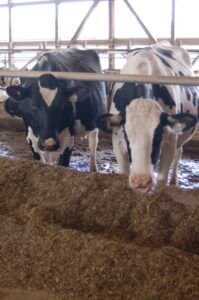 First postpartum ovulation, metabolites and hormones in follicular fluid and blood in transition dairy cows supplemented with a Saccharomyces cerevisiae fermentation product
J.A. Sauls-Hiesterman, K.E. Olagaray, S.E. Sivinski, B.J. Bradford, and J.S. Stevenson
Cultures of Saccharomyces cerevisiae are commonly used in diets of lactating dairy cows. These cultures are known to promote changes in ruminal digestive processes, which can ultimately optimize energy status and health during lactation. Many studies indicate that S. cerevisiae increase dry matter intake, nutrient digestibility, rumen pH, and milk production, but these findings are not consistent in the literature. Responses to supplemental S. cerevisiae fermentation products (SCFP) seem to depend on stage of lactation, type of forage used, feeding strategy, and forage-to-concentrate ratio, which could explain its variable results in the literature. Objectives of this study were to determine effects of supplementing SCFP from 4 weeks before to 7 weeks after parturition on postpartum ovulation, and hormone and metabolite concentration in the bloodstream, and follicular fluid of dairy cows.
Materials and methods
- Data were collected from 67 Holstein cows (14 primiparous, 50 multiparous).
- Treatments consisted of feeding rations with (SCFP group) or without (Control group) supplementation, with a cerevisiae product (19 grams/cow/day) (0.035 ounces/cow/day).
- Cows were fed the treatment diets between 4 weeks before and 7 weeks after parturition.
- Cows were milked twice a day and milk weights were recorded at each milking.
- Milk samples were collected twice weekly.
- Body condition score (BCS) was recorded twice weekly.
- Cows were weighed at enrollment (week -4), at parturition, and at 42 days in milk (DIM).
- Ovaries were scanned by ultrasound at 33 ±3 DIM to determine presence of a corpus luteum. At the same time, a blood sample was collected for determining progesterone concentration. Cows were considered to have early spontaneous ovulation if they had a corpus luteum (CL) or progesterone was >1 ng/mL at 33 DIM. Cows that failed to ovulate by 33 DIM were considered to have late ovulation.
- Additional blood samples were collected at weeks -4, -2, +1, +2, +5, and +7.
- At 50 DIM, follicular fluid was collected from the largest follicle by ultrasound-guided transvaginal aspiration. A blood sample was collected on the same day.
- Concentration of free fatty acids (FFA), beta-hydroxybutyrate (BHB), glucose, progesterone, estradiol, and androstenedione were measured in blood and follicular fluid samples.
- All cows were artificially inseminated at 71 DIM after a synchronization program.
Results
- Plasma FFA was not affected by SCFP supplementation.
- Starting on postpartum week 2, FFA was greater (P < 0.01; week by ovulation status) in late- compared with early-ovulating cows.
- Plasma BHB was greater (P = 0.03) in cows supplemented with SCFP.
- Androstenedione in serum was less (P < 0.05) in late- than early-ovulating cows.
- Concentrations of BHB (r = 0.75) and glucose (r = 0.52) in follicular fluid were positively correlated (P < 0.01) with those in blood.
- Body weight at calving and 42 DIM was less (P < 0.05), and energy balance through days 28 and 42 was more positive in SCFP-supplemented compared with Control cows.
- Body weight at calving and 42 DIM was less (P ≤ 0.05), and energy balance through days 28 and 42 was more positive in early- than late-ovulating cows.
- Milk fat percentage increased (P < 0.01) in cows supplemented with SCFP.
- Dry matter intake, daily milk yield, and yields of fat, protein, lactose, and total solids were less (P <0.01) in early- compared with late-ovulating cows.
The authors concluded that metabolites and steroid hormones in blood and follicular fluid were not affected by SCFP supplementation or ovulation status, except for androstenedione. In addition, authors concluded that increased BHB and FFA in plasma, more severe negative energy balance, and greater milk yield and components were associated with later postpartum ovulation. Findings from this study further support previous evidence that increased FFA and BHB during the transition period are associated with delayed postpartum ovulation and potential reduction in reproductive performance of dairy cows.
Access the paper at: https://doi.org/10.1016/j.theriogenology.2021.01.013
Predictive models to identify Holstein cows at risk of metritis and clinical cure and reproductive/productive failure following antimicrobial treatment
V.R. Merenda, J. Ruiz-Munoz, A. Zare, and R.C. Chebel
Metritis is a postpartum disease diagnosed in 20 to 40% of postpartum dairy cows. Although several research groups have studied the efficacy of different treatments on metritis cure, approximately 30% of cows treated with antimicrobials fail to cure, which leads to impaired reproductive performance. Automated health monitoring systems have been shown to identify cows at risk of developing diseases, including metritis, in a timely manner. Thus, the authors’ objective was to determine “whether the use of behavioral changes could improve the accuracy of prediction of the risk of metritis and the risk of clinical cure of cows diagnosed with metritis.”
Materials and methods
- A total of 555 cows (141 primiparous and 414 multiparous) from 2 commercial dairy farms in Central Florida were enrolled between December 2017 and July 2018.
- Cows were fitted with a neck-mounted automated monitoring device (AMD – HR-LDn tags, SCR Engineers Ltd., Netanya, Israel).
- Activity change index was calculated using a proprietary algorithm.
- Metritis was diagnosed using a Metricheck device at 4, 6, 8, 10, and 12 days in milk (DIM).
- Cows diagnosed with metritis received ampicillin or ceftiofur for treatment of metritis.
- Metritis cure: Cows were considered cured if clinical signs (vaginal discharge and rectal temperature ≥39.5 C [103 F]) were not present 11 days (d) after diagnosis.
- Performance failure: Cows that were not pregnant by 200 DIM and in the lowest 25th percentile for milk yield within a given farm and lactation.
- Lactation number, calf sex, stillbirth, twinning, dystocia, vaginal laceration, days in the close-up diets, body condition score and body condition score change from -21 d and calving, behavior (measured by the AMD), and their interaction were used in the predictive models.
Results
- Models using routinely available data, behavior information during the first 200 DIM, and body condition score change during late gestation were excellent in predicting metritis (AUC = 0.82, 95% confidence interval [CI]: 0.78-085) and acute metritis (area under the curve [AUC] = 0.87, 95% CI: 0.83-0.89).
- Some models were outstanding on the prediction of metritis cure (AUC = 0.91, 95% CI: 0.85-0.95) and reproductive/productive failure (AUC = 0.90, 95% CI: 0.84-0.94).
The inclusion of behavioral data collected by AMD in models using routinely available data improved the predictive accuracy of these models. These models can potentially be useful in identifying cows that are more likely to develop metritis in early lactation, cure following antimicrobial therapy, and at higher risk for reproductive/performance failure.
Access the paper at: https://doi.org/10.1016/j.prevetmed.2021.105431
Effects of GnRH and hCG administration during early luteal phase on estrous cycle length, expression of estrus and fertility in lactating dairy cows
T.O. Cunha, W. Martinez, E. Walleser, and J.P.N. Martins
Estrous detection continues to be an essential part of reproductive management, despite the low efficiency of estrous detection on dairies. As a result, fewer pregnancies per artificial insemination (P/AI) are observed in cows inseminated after estrous detection when compared with timed-AI fertility programs, such as Double-Ovsynch. The decreased fertility of high-producing dairy cows is partially explained by the reduced concentration of estradiol and progesterone (P4) in blood, leading to decreased estrous duration and P/AI. The administration of gonadotropin releasing hormone (GnRH) and human chorionic gonadotropin (hCG) 5 to 7 days (d) after estrus have been shown to induce ovulation and development of an accessory corpus luteum (CL). Therefore, this elevates the concentration of circulating P4. The authors’ objective was to determine the effect of a single dose of GnRH or hCG from d 5 to 7 of the estrous cycle on estrous expression and P/AI in lactating dairy cows.
Materials and methods
- In total, 642 cows (269 primiparous and 373 multiparous) from 2 commercial dairy farms (Farm 1 – Holstein; Farm 2 – Jersey) in Central Valley California were enrolled between September 2017 and January 2018.
- Cows were fitted with a neck-mounted automated monitoring device (AMD – H-tags, SCR Engineers Ltd., Netanya, Israel).
- Cows in the control group did not receive any treatment.
- Cows in the treatment groups received 3,300 IU of hCG (i.m.) or 86 ug of gonadorelin acetate (i.m.) from d 5 to 7 of the estrous cycle.
- Ultrasonography of the ovaries of a subgroup of cows was used to determine ovulation following treatment. Ovulation was determined by the disappearance of follicle ≥9 mm.
- Estrous activity level and duration were measured using AMD.
- Serum progesterone was measured the day of treatment and on d 14 of the estrous cycle.
- Pregnancy was diagnosed at 37 ± 3 days after AI.
Results
- The ovulatory response did not differ when comparing the GnRH and hCG groups, but differed when comparing both treatment groups to the control group.
- Only cows in the treatment groups ovulated.
- Circulating P4 at the time of treatment did not differ between groups. On d 14 of the estrous cycle, hCG cows had the greatest serum P4, followed by cows in the GnRH group and control, respectively.
- P4 concentration did not differ when comparing both treatment groups.
- Treatment did not affect the proportion of cows detected in estrus after treatment. When treatments were combined, the proportion of treated multiparous cows that returned to estrus was reduced.
- Treatment did not affect the proportion of cows with high peak activity and heat index calculated by the AMD.
- P/AI was not different between the treatment groups.
A single dose of hCG or GnRh induced the formation of an accessory CL and increased the concentration of P4 during diestrus. Treatment extended the estrous cycle length and led to fewer cows returning to estrus. Treatment did not affect estrous behavior and P/AI.
Access the paper at: https://doi.org/10.1016/j.theriogenology.2021.06.010
Featured Column
 Understand farmers’ mindset and motivation to foster change
“Advisers often assume that the best way to influence someone is by simply educating them,” explained Steven Roche of ACER Consulting, Guelph, Ont., Canada, during the 2020 Dairy Cattle Reproduction Council Annual Meeting. “We assume that once we provide someone with information, they will apply it in a rational way.”
Roche said that it takes much more than education/knowledge to generate uptake of a consultant’s recommendations. Another important factor is a person’s behavior, which is influenced by attitude, perception, knowledge, opinion, beliefs and skills. Additionally, social referents (e.g., advisers, consultants, herd veterinarians, colleagues or family), agricultural extension efforts and industry outreach play a role in influencing change.
Individualism thrives among farmers. Similarly, their decision-making styles are unique. While economics, external regulations and policies play a role in farmers’ decisions, personality, attitudes, beliefs, intentions, values, skills and knowledge are more likely to govern behavioral decisions. Other influencers include media and discussion and peer groups.
Some agricultural consultants have studied human medicine models, such as the Health Belief Model and Theory of Planned Behavior, which influence behavior change. “These frameworks describe the process of how, based on a foundation of knowledge, a range of factors influence an individual’s attitude and perception of a particular behavior and their intention to perform that behavior,” Roche noted. Knowledge, mindset and social referents play key roles in motivating change.
Knowledge
Roche said that an individual’s knowledge, with respect to a given topic or issue, provides the foundation for his/her behaviors relating to that topic or issue. Education and training enhance a farmer’s ability to make successful changes to management practices. Plus, education and training increase a farmer’s willingness to make these changes.
To motivate change, a farmer must understand that a problem (e.g., inadequate calf growth, excessive cases of mastitis, insufficient repro performance) exists. “Ensuring that farmers have sufficient technical knowledge about a given issue and understanding the extent and importance of the issue are important components to influence a farmer’s behavior toward adoption of recommended on-farm management practices,” said Roche.
However, people don’t make behavioral changes based solely on knowledge. Often, a farmer’s attitude and peer influence are stronger motivators than knowledge, Roche explained.
“Providing information when it is not needed is likely to result in what psychologists have termed ‘reactance’ – resistance to your persuasion,” said Roche. “In other words, they will perceive you as nagging and are less likely to engage with you on the topic. This is an important principle to understand when managing people and trying to influence change.”
Roche noted that farmers’ knowledge (facts) is not typically the limiting factor when consultants/advisers try to encourage farmers to make management changes. Generally, it’s time, money, space, emotions, attitudes, opinions, perceptions and/or social influences that are stronger factors in preventing or fostering change.
Mindset
A person’s attitudes, beliefs, values, personality, preferences and self-efficacy (perceived ability to perform a given task) all influence one’s decision on how he/she will address a given task or problem, Roche explained. Together, these factors describe a person’s “mindset.” An individual’s mindset is unique, self-protective and flawed. Additionally, mindset shapes a person’s worldview, creates “blind spots” and governs people’s actions. “Most importantly, mindsets can be changed,” said Roche.
“The level of importance each farmer places on a given issue is likely to influence their actions,” Roche continued. Similarly, farmers typically spend their resources on problems they consider most important. What does that mean for dairy farm advisers? “Uncovering a farmer’s beliefs about a given issue and how it fits his/her list of priorities is key to understanding and influencing on-farm behavior,” answered Roche.
“Perceived self-efficacy refers to a person’s confidence in their own ability to perform a given behavior,” Roche explained. When considering a behavior (management) change, farmers typically look at their ability to obtain and mobilize resources (i.e., money and labor), their own personal skills and competence, and their ability to control or manage risks that may arise from adopting the new behavior. “If you’re the adviser, make sure farmers possess the requisite knowledge and skills to perform the behavior. And, make sure the recommended changes are feasible and practical. If the recommended changes are viewed as impractical, adoption will be significantly hampered.”
Social referents
Regarding potential behavioral changes, farmers will consider expectations from other sources, such as friends, family members, peers and organizations. In addition, they will look at external resources, penalties and incentives that motivate them to make a change. Then, farmers will generally place a value on these perceptions and weigh those against their personal feelings, relationships and experiences with these sources. Furthermore, values, morals, ethics, learning styles and emotions influence an individual’s decision to change.
Changing behavior is not for the faint of heart. If your goal is to inspire on-farm change, you must help farmers find their own motivation to change. This may come from the classic “carrot and stick” approach (extrinsic motivators) or from internal desire (intrinsic motivation).
Roche explained that extrinsic motivators do not typically stimulate long-term change. “This is because no change in mindset has occurred; the change has simply occurred because of an external pressure.” If (when) the external pressure disappears, the farmer will most likely stop the behavior.
Get clients talking
“Any effort to influence and motivate farmers requires an understanding of their mindset and what motivates them,” said Roche. To better understand their intrinsic motivation, get them talking about personal and professional matters. Their responses give you a better understanding of what drives them and helps build your relationship with them.
Ask open-ended questions that will provide information regarding their attitudes, beliefs and concerns about an issue. The questions should also generate responses that broadly describe their goals, priorities, wants, needs and challenges. “It’s not just about collecting the facts; it’s about understanding their story,” Roche added.
“Motivating change is not easy; the playbook is complex,” Roche concluded. “Advisers must consider farmer mindset as the most important determinant of adoption. The key to adoption is when farmers believe there is a problem in the herd and believe in the effectiveness of specific strategies to solve that problem. With an understanding of mindset, farmers can be motivated by personalizing the message, increasing the farmers’ frame of reference, providing feedback on how they are doing, and using the power of farmers’ social environment by having them engage with their peers and other advisers.
Featured Member
(Editor’s Note: For each issue, DCRC interviews a member to learn more about his/her career, involvement with DCRC and thoughts about dairy cattle and reproduction. We encourage you to recommend someone for this feature by contacting JoDee Sattler at: JoDee@dcrcouncil.org)
 Brandon Thesing
Minnesota Select Sires/Select Sires MidAmerica
Oronoco, Minnesota, USA
DCRC member since 2014
Raised on his family’s 150-cow dairy farm near Winona, Minn., Brandon Thesing gained hands-on farming experiences during his youth. Today, Thesing is a partner in his family’s farm, which includes a beef cow-calf operation, feeder steers and crops. This farm is run by his parents, brother and sister-in-law.
In addition, Thesing serves as the corporate account manager for Minnesota/Mid America Select Sires. His duties include leveraging the collective knowledge of Select Sires Inc. (SSI) to help Minnesota/Mid America Select Sires’ key clients manage profitable dairy businesses. “This is done by understanding a client’s reproductive, genetic and business goals, and then designing a reproductive solution and genetic development program in concert with the herd’s management team that can regularly be measured and managed,” he stated.
SSI is based in Plain City, Ohio. The largest global AI cooperative, SSI currently consists of six farmer-owned and controlled local organizations throughout the United States. As an industry leader, SSI provides highly fertile semen and excellence in service and programs to supply dairy and beef producers with some of the world’s best genetics.
When asked about his interest in dairy cattle reproduction, Thesing replied, “Genetics and making the next generation of a dairy herd better has always been a passion of mine. Reproduction plays such a vital role in the overall efficiency and profitability of my customers’ dairy farms. I enjoy playing a small part in helping my customers reach their goals and be the very best they can be.”
Thesing is one of DCRC’s most prolific and successful nominators of dairies in the DCRC Excellence in Dairy Reproduction Awards program. Why does he take time to nominate dairies? “They deserve to be recognized and awarded for the hard work and dedication they put in every single day. It’s been a great pleasure and privilege of mine to have the opportunity to nominate my customers for the program. I enjoy the ability to work side by side and collaborate with my customers to achieve their reproductive goals. It’s been amazing to see what efficiencies they can achieve and then be recognized for their efforts. I enjoy learning and sharing what successes we’ve seen and what we can accomplish. I have been blessed to work with nine herds that have earned an award.
“One of the most valuable assets of my job is learning what makes them uniquely successful. Having the daily opportunity to work with hard-working, fantastic people is probably the best part. It all starts and ends with amazing people and their attention to detail. It’s been a fun ride to see how efficient these dairies can become as they continue to push higher every year. It’s been rewarding to see their persistence pay off and be the cream of the (dairy cattle reproduction) ‘crop’.”
As a DCRC member for seven years, Thesing has witnessed how DCRC influences dairy cattle reproduction education and improvement. He said that bringing the brightest and best minds together via conferences and webinars, and sharing articles and research to help educate and spread new ideas and concepts to the industry is extremely valuable. For Thesing, DCRC presentations and resources help him stay on top of the latest research and data regarding estrous synchronization programs. “This is critical in helping my clients improve their herds’ reproductive performance,” he commented.
Thesing foresees DCRC continuing to be a leader in disseminating new reproduction ideas, research and data to help dairy producers be profitable, efficient and knowledgeable in this management area. Predicting that labor will always be a challenge for dairy farms, Thesing feels employee management and training are crucial to operate a successful dairy business. More specifically, highly skilled and trained employees are needed to execute effective reproduction protocols.
Webinars
DCRC offers webinars in August and October
Mark your calendars for the next two Dairy Cattle Reproduction Council (DCRC) webinars. These highly regarded sessions offer access to high-quality information and interaction with industry experts to attendees from across the United States and around the world, all from the comfort of their farm or office.
Save these dates and times:
- Ralph Bruno, Zoetis, and Fabio Lima, University of California-Davis, present “New data on a GnRH dosing trial in double Ovsynch programs.”
Aug. 19, at 2 p.m. Central time (U.S./Canada)
Sponsored by Zoetis
- Phil Cardoso, University of Illinois, and Darren T. Juniper, University of Reading, England, present “Importance of dietary methionine and selenomethionine on health and reproduction.”
Oct. 14, at 2 p.m. Central time (U.S./Canada)
Sponsored by Adisseo
DCRC will seek 1 Registry of Approved Continuing Education (RACE) credit from The American Association of Veterinary State Boards for each of these webinars. This provides veterinarians with a convenient continuing education opportunity.
For more information about the DCRC webinars, e-mail Luciano Caixeta, DCRC Education Committee chair, at: lcaixeta@umn.edu. DCRC plans to offer a Spanish webinar in December. Watch for more details in the next DCRC newsletter.
To register for a webinar, please visit www.dcrcouncil.org/webinars and follow all prompts. If you are a DCRC member and cannot attend the ”live” webinar, you may access it (and all past webinars) at www.dcrcouncil.org/webinars.
Industry Calendar
- Council on Dairy Cattle Breeding Triannual Evaluation, August 10
- National Cattlemen’s Beef Association, August 10-12, Nashville, Tennessee
- Dairy Cattle Reproduction Council webinar, “New Data on GnRH Dosing in Double Ovsynch Programs,” August 19, at 2 p.m. Central time (USA/Canada)
- National Mastitis Council Spanish webinar, “Ordeno eficiente con Calidad de Leche en mente,” September 16, at 2 p.m. Central time
- World Dairy Expo, September 28-October 2, Madison, Wisconsin
- American Association of Bovine Practitioners Conference, October 7-9, Salt Lake City, Utah
- Dairy Cattle Reproduction Council webinar, “Importance of Dietary Methionine and Selenomethionine on Health and Reproduction,” October 14
- National Association of Animal Breeders, October 27-29, Lake Geneva, Wisconsin
- Western Dairy Management Conference, November 1-4, Reno, Nevada
- National Mastitis Council webinar, “Improving Milkability Without Testing Equipment,” November 2, at 2 p.m. Central time
- Central Plains Dairy Women’s Conference, November 2-3, Sioux Falls, South Dakota
- Dairy Cattle Reproduction Council Annual Meeting, November 9-11, Kansas City, Missouri
- Council on Dairy Cattle Breeding Triannual Evaluation, December 7
- National Mastitis Council Annual Meeting, February 1-3, San Diego, California
- National DHIA Annual Meeting, February 21-24, San Antonio, Texas
- High Plains Dairy Conference, March 1-2, Amarillo, Texas
- Central Plains Dairy Expo, March 29-31, Sioux Falls, South Dakota
- Dairy Calf and Heifer Association Annual Conference, April 12-14, Bloomington, Minnesota
- ICAR/Interbull, May 30-June 3, Montreal, Quebec, Canada
