
Newsletter – 2022 – April
President's message
 From the DCRC President’s Desk
By Matt Utt
Greetings, DCRC membership!
I write, today, with the words “uncertainty” and “volatility” floating around in my mind. It appears, in the United States, at least, that we are relaxing restrictions put in place to curb COVID-19. As we start to relax in that regard, uncertainty and volatility in our financial markets, weather, and global peace are taking center stage. We are part of a global dairy industry and feel the financial impacts of the war in Ukraine, as well as the toll it is taking on friends and colleagues who live and/or work in Ukraine. I pray that this war will come to an end and that peace, healing, and rebuilding will begin soon.
The Dairy Cattle Reproduction Council (DCRC) is always looking for new ways to improve what we offer to our membership. In 2018, DCRC conducted a strategic planning campaign to determine what kind of organization we needed to be and offer by the end of 2021. Data were collected from surveys and interviews. The process culminated in a strategic planning meeting consisting of eight DCRC leaders and three staff that resulted in a strategic plan adopted by the DCRC board of directors. Please contact a member of our leadership team or staff if you would like a copy of the strategic plan. During the strategic planning sessions, we answered high-level questions, such as:
Who are we?
“A global network of leading producers, veterinarians, consultants, academia, and suppliers”
What business are we in?
“Developing synergies to improve dairy reproduction, health, and sustainability of dairy herds”
What we do is…
“Develop and share unbiased knowledge”
The strategic plan focused on six key areas: content, conferences, diversity, membership, finances, and governance. The table below shows changes in some key elements at the end of 2017 and 2021.
|
Condition at the end of: |
|||
|
FY2017 |
FY2021 |
||
|
Element |
Actual |
Desired |
Actual |
|
Gross revenue |
$ 199,908 |
$ 240,000 |
$ 134,095 |
|
Gross expenses |
$ 144,343 |
$ 205,000 |
$ 94,126 |
|
Net assets |
$ 114,585 |
$ 135,000 |
$ 174,190 |
|
|
|
||
|
Members |
338 |
475 |
340 |
|
Annual meeting attendees |
250 |
350 |
207 |
|
|
|
|
|
|
Website visits per month |
907 |
2,500 |
1,633 |
|
Facebook followers |
2,115 |
4,000 |
3,796 |
|
Twitter followers |
1,607 |
2,400 |
2,355 |
The COVID-19 pandemic affected our meeting attendance and membership totals, as well as revenue and expenses. However, DCRC remains financially strong and has a larger digital footprint than before. We have increased the amount and quality of content delivered to members through webinars, newsletters, and social media posts. One other accomplishment to note is planning our first international event, participating in Dairy Tech (United Kingdom) and providing three presentations in addition to an exhibition booth. Unfortunately, COVID-related travel restrictions made us postpone this until 2023.
If you have ideas of how to improve DCRC and/or would like to serve as a committee or board member, please reach out to the DCRC leadership or staff. This is your organization and we want your input and participation!
Please note the following upcoming deadlines:
- DCRC Scholar Program – DCRC will provide free registration and travel funds for a full-time graduate student and member of DCRC to attend the DCRC Annual Meeting. Please see our website for application information. Deadline: April 30
- DCRC Excellence in Dairy Reproduction Awards – Consider nominating a dairy! Please see our website for nomination information. Deadline: April 30
Research Summaries
Assessment of milk yield and composition, early reproductive performance, and herd removal in multiparous dairy cattle based on the week of diagnosis of hyperketonemia in early lactation
Z. Rodriguez, E. Shepley, M.I. Endres, G. Cramer, and L.S. Caixeta
Hyperketonemia is characterized by an abnormally high concentration of ketone bodies in the blood of cows around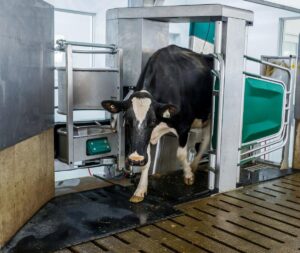 parturition, and has been associated with increased susceptibility for diseases, impaired reproductive performance, and decreased milk yield. Hyperketonemia is highly prevalent during the first two weeks postpartum. Thus, screening programs include testing cows during that period. The objective of the study was to assess the association of hyperketonemia with milk production, reproductive performance, and culling, differentiating hyperketonemia cases that occurred either in the first or second week of lactation.
Screening methods and variables assessed
A total of 362 multiparous Holstein cows from a single commercial dairy farm located in Minnesota were enrolled in the study. Cows were screened for hyperketonemia twice a week during the first two weeks of lactation through the measurement of beta hydroxybutyrate (BHB) concentration in blood. Hyperketonemia was characterized as circulating BHB ≥1.2 mmol/L.
- Cows with BHB ≥1.2 mmol/L in at least one of the two tests during the first week postpartum were considered hyperketonemia positive (HYK+) in the first week; otherwise, they were considered negative (HYK-).
- The same threshold was applied to cows tested in the second week postpartum.
- Reproductive management included a voluntary waiting period of 65 days in milk (DIM) with a Double-Ovsynch program for the first artificial insemination (AI). Subsequent AI was performed after estrous detection or Resynch program.
- Data on milk production, reproductive performance, and culling were extracted from the farm’s database software.
- Comparisons between HYK+ and HYK- cows were done separately by week of lactation.
Results
- Hyperketonemia during the first week postpartum was associated with a milk production loss of 3.7 kg/day, but hyperketonemia at the second week of lactation was not associated with milk yield.
- Hyperketonemia when diagnosed in the first week postpartum was also associated with decreased likelihood of pregnancy within the first 150 DIM. However, when detected at the second week postpartum, hyperketonemia was not associated with reproductive losses.
- Culling or removal from the herd was associated with hyperketonemia when detected within the first week of lactation, but it was not influenced by the disorder when diagnosed during the second week.
In conclusion, hyperketonemia was associated with milk yield losses, impaired reproductive performance, and increased risk of culling only when it was diagnosed within the first week postpartum. These associations were not observed when hyperketonemia was detected during the second week of lactation.
Access the paper at: https://www.sciencedirect.com/science/article/pii/S0022030222001096
Heat stress during the transition period is associated with impaired production, reproduction, and survival in dairy cows
P.R. Menta, V.S. Machado, J.M. Piñeiro, W.W. Thatcher, J.E.P. Santos, and A. Vieira-Neto
Heat stress induces economic losses close to $900 million annually in the United States. High-producing dairy cows are more likely to be affected by the deleterious effects of heat stress than lower-producing cows. In recent years, more focus has been dedicated to evaluating if there are specific periods when heat stress poses a greater challenge to dairy cows, such as the transition period. The objectives of this study were to evaluate the association between timing of exposure to heat stress during the transition period on milk production, health, reproductive performance, and survival in the first 90 days in milk (DIM) in Holstein cows.
Materials and methods
- This was a retrospective cohort study.
- Data on 5,722 Holstein cows from two commercial California herds were used.
- Cows were categorized based on average temperature humidity index (THI) as:
- Thermoneutral (TN) = average THI <68
- Heat stress (HS) = average THI >68
- Categorization was conducted separately during the prepartum (PRE – last 28 days of gestation) and postpartum (POST – first 28 DIM) periods, and for nulliparous (n = 2,324) and parous (n = 3,397) cows.
- In total, four groups were analyzed:
- TN-TN (no heat stress in PRE or POST periods)
- TN-HS (no heat stress in PRE, exposed to heat stress in POST period)
- HS-TN (heat stress in PRE, not exposed to heat stress in POST period)
- HS-HS (heat stress in PRE and POST periods)
- Data on milk production, health, reproduction, and survival were retrieved from the dairy management software.
Results
For nulliparous:
- Exposure to heat stress during the PRE, POST, or both periods was associated with a reduction in milk production of 1.7 kg/cow per day compared with TN-TN cows.
- Heat stress in the POST period was associated with:
- Increase of 4.4 percentage points in incidence of retained placenta
- Increase of 18.1 percentage points in incidence of metritis
- Increase of 2.0 percentage points in incidence of mastitis
- Reduction of 5.3 percentage points in pregnancy at first artificial insemination (AI)
- Increase of 4.5 percentage points in pregnancy loss compared with POST TN
- Exposure to heat stress during the PRE and POST periods was associated with increased removal from the herd.
For parous cows:
- Exposure to heat stress during PRE, POST, or both periods was associated with reduced milk production of 2.4 kg/cow per day compared with TN-TN cows.
- POST heat stress was associated with an increase of 5.8 percentage points in incidence of retained placenta within PRE heat stress cows.
- POST heat stress was associated with an increase of 6.3 percentage points in incidence of metritis.
- POST heat stress was associated with reduced pregnancy per AI at first service of 10.6 percentage units within PRE-TN cows.
- Removal from the herd increased in cows exposed to heat stress during PRE, POST, or both periods.
In conclusion, this study suggests that exposure to heat stress in the postpartum period is associated with more severe performance losses than that observed in cows exposed to heat stress before parturition. In addition, results from this study suggest that exposure to heat stress during the transition period is associated with deleterious effects for both nulliparous and multiparous cows.
Access the paper at https://doi.org/10.3168/jds.2021-21185
Exploring the role of milk yield in the first week of lactation on the association between hyperketonemia and reproductive performance in dairy cattle
Z. Rodriguez, E. Wynands, E. Shepley, L.H. Baumgard, G. Cramer, and L.S. Caixeta
Increased concentration of circulating beta hydroxybutyrate (BHB), also known as hyperketonemia (HYP), is an indication that the cow is using body reserves to fulfill her energy demands. Some studies demonstrated that cows that present HYP have impaired reproductive performance. It is not clear, however, if such association depends on milk yield in the first days of lactation. The objective of this retrospective cohort study was to investigate whether the association of HYK with reproductive performance differs depending on milk yield in the first week of lactation of Holstein cows.
Materials and methods
- This was a retrospective cohort study.
- Data on 2,091 Holstein cows from five commercial herds in Minnesota were used.
- Records from the day of calving until 150 days in milk (DIM) were retrieved from the dairy management software.
- Blood samples were collected twice between 3 and 10 DIM.
- Blood BHB concentration were measured using an electronic handheld device.
- Cows with BHB concentration >2 mmol/L in at least one of the two samples were considered to be hyperketonemia-positive (HYK+) and were otherwise hyperketonemia-negative (HYK-).
- Milk production was recorded daily in three herds that had milk meters and estimated, based on peak milk, in the other two herds.
- Within parity and herd, average week one milk yield was categorized in three groups, based on percentiles:
- Low = lower 25th percentile
- Mid = 25th to 75th percentile
- High = upper 75th percentile
Results
- Incidence of HYK between 3 and 10 DIM was 14.2%.
- For cows with low milk yield, HYK was associated with:
- Lower risk of pregnancy at first service (risk ratio = 0.62; 95% CI: 0.39 – 0.98)
- Lower risk of pregnancy up to 150 DIM (hazard ratio = 0.70; 95% CI: 0.51 – 0.96)
- Extended days of calving to conception interval (mean difference = 13.0 days; 95% CI: 5.1 – 20.9)
- For cows with mid and high week one milk yields, reproductive performance was similar between HYK+ and HYK- cows.
In conclusion, this study provides initial evidence that early lactation milk yield should be considered in the association between HYK and reproductive performance of dairy cows. Low-yielding cows with hyperketonemia had poorer reproductive performance compared with cows that had normal BHB concentrations. Such association, however, was not observed for cows with mid or high milk yield in the first week after calving. This retrospective cohort study provides a different perspective on the relationship between HYK and reproductive performance, and warrants further investigation in larger studies.
Access the paper at https://doi.org/10.3168/jdsc.2021-0129
Featured Column
For heifers, strive to improve age at conception

Joe Dalton, University of Idaho
“When developing heifers, the reproductive focus should be on age at conception – not age at first calving,” Joe Dalton, University of Idaho, told Dairy Cattle Reproduction Council (DCRC) Annual Meeting attendees. “A delay in age at conception will lead to a delay in age at first calving – in addition to increased rearing costs, primarily due to extra days on feed and lost income opportunity. Thus, implementing a reproductive program focused on age at first pregnancy is beneficial to the long-term viability of the heifer-raising enterprise.”
Synchronization programs for dairy heifers help facilitate timely reproductive outcomes and help dairy producers and heifer raisers attain age at first pregnancy goals. Furthermore, these programs help increase fertility at artificial insemination (AI) after detected estrus or timed AI. Dalton focused his presentation on two programs – 5-day CIDR-Synch and 14-day CIDR-PGF2α.
5-day CIDR-synch (conventional and sexed semen)
Silva et al. (2015) studied dairy heifer reproductive performance and cost per pregnancy following a 5-day CIDR-synch timed AI (TAI) program compared with AI following detected estrus. Heifers in the TAI group received gonadotropin releasing hormone (GnRH) and a controlled internal drug release (CIDR) insert on day -6, PGF2α treatment and CIDR insert removal on day -1, PGF2α treatment on day 0, and GnRH and TAI on day 2. Heifers in the TAI group detected in estrus the day before scheduled TAI received AI the same day. Estrus was detected daily, starting on day 0. Heifers detected in estrus received AI on the same morning as detected estrus. Control heifers not inseminated by day 7 received PGF2α (treatment was repeated every two weeks until AI).
For the TAI heifers, days to first AI was approximately 8 days shorter for control heifers (1.7 vs. 10.4, respectively). The percentage of heifers pregnant (as determined 60 days after AI) did not differ between control (58.3%) and TAI heifers (62.8%). Likewise, the percentage of heifers pregnant after AI with conventional semen was not different for control and TAI heifers (64.6 vs. 65.4%, respectively). In contrast, there was an increased percentage of TAI heifers pregnant following AI with sexed semen compared with control heifers (54.8% vs. 31.6% respectively).
The 21-day insemination risk was greater for TAI than for control heifers (91.4 vs. 82.4%, respectively), even when evaluated after the first 21 days of the study (TAI = 77.1% vs. control = 68.2). The increased insemination risk in the TAI group improved the 21-day pregnancy rate (57.2% vs. 47.9% for TAI and control heifers, respectively). The increased 21-day pregnancy rate of TAI heifers reduced the mean days to pregnancy by 10 days (18.9 days vs. 28.9 days for TAI and control heifers, respectively). Furthermore, the proportion of pregnant heifers increased 6.3 percentage points in the TAI group by the end of the study (day 84; 91.5% vs. 85.2%) for TAI and control heifers, respectively. From an economic perspective, the cost per pregnancy was $17 less for TAI heifers compared with control heifers.
5-day CIDR-synch (sexed semen)
Lauber et al. (2021) studied estrous expression and pregnancy outcomes of three strategies when submitting dairy heifers for first service using sexed semen. Holstein heifers received one of these first-service treatments: 5-day CIDR-synch protocol (day -6, GnRH + CIDR; day -1, PGF2α -CIDR; day 0, PGF2α; day 2, GnRH + TAI); 6-day CIDR-synch protocol (day -6, GnRH + CIDR; day -1, PGF2α; day 0, PGF2α -CIDR; day 2, GnRH + TAI); or estrous detection and AI (EDAI; PGF2α on day 0 followed by once-daily estrous detection and AI). Heifers detected in estrus on day 1 (24 hours before TAI) were inseminated and the protocol was discontinued. All heifers received AI with sexed semen. Sires were allocated randomly among treatments within farm.
Researchers found that the proportion of heifers detected in estrus on day 1 (24 hours before TAI) was greater for 5-day than for 6-day CIDR-synch heifers (28 vs. 0.004%). The proportion of heifers in estrus at TAI, however, did not differ between CIDR treatments (76 vs. 73% for 5-day vs. 6-day CIDR-synch heifers, respectively). Overall, 5-day CIDR-synch heifers tended to have more pregnancies per AI (P/AI) than 6-day CIDR-synch and EDAI heifers by 64 ±5 days (52%, 45%, and 45%, respectively) after AI. The fertility advantage for 5-day CIDR-synch heifers resulted from more P/AI by 64 ±5 days after AI for heifers inseminated to early estrus on day 1 (62%) than TAI (48%).
Delaying CIDR removal by 24 hours suppressed early estrous expression. However, it did not increase fertility as measured by P/AI. Heifers receiving AI with sexed semen after submission to a 5-day CIDR-synch protocol tended to have more P/AI than heifers submitted to a 6-day CIDR-synch protocol or EDAI.
14-day CIDR – PGF2α (conventional semen)
“Presynchronization is an effective management strategy applied during the voluntary waiting period in lactating dairy cows to enhance P/AI to a TAI protocol or to facilitate AI after detection of estrus, shortly after breeding eligibility,” Dalton reported. However, presynching dairy heifers is not often used to manage the immediate pre-breeding period. “Nevertheless, presynchronization of heifers may be an effective strategy to accomplish first AI shortly after eligibility and has the potential to decrease days on feed before first calving.”
In dairy heifers, a 14-day CIDR treatment can be effective in synchronizing ovulation. A 14-day CIDR insert inhibits estrus and ovulation, and induces a persistent dominant follicle that ovulates after CIDR removal, resulting in a synchronized estrus that serves as a presynchronization tool. In this scenario, PGF2α is injected 16 days after CIDR removal and followed by GnRH and TAI, or AI upon detected estrus.
Claypool et al. (2019) investigated presynchronization of dairy heifers using a 14-day CIDR or PGF2α treatment, followed by PGF2α on the day of breeding eligibility and AI upon detected estrus, compared with control heifers (no presynchronization, but PGF2α on the day of breeding eligibility and AI upon detected estrus). The objectives were to evaluate P/AI, days to first AI, proportion of heifers pregnant within the first week of breeding eligibility, and economic outcomes of heifers subjected to presynchronization compared with control heifers.
Following heifer selection, based on projected criteria on day of AI eligibility (weight = ≥860 pounds, height = withers ≥51 inches, age = ≥12.5 months), Holstein heifers were assigned randomly to three treatments: 14-day CIDR-PGF2α, prostaglandin (2× PGF2α), or control (1× PGF2α). The 14-day CIDR-PGF2α group received a CIDR on day -30, which was removed on day -16. Immediately after CIDR removal, all heifers received an Estrotect patch to aid in detecting estrus. The 14-day CIDR-PGF2α group received PGF2α upon entry to the breeding program (day 0). The 2× PGF2α group received the first PGF2α on day -11 and second PGF2α on day 0. The control group (1× PGF2α) received PGF2α on day 0. All heifers received tail paint on day 0, were observed for behavioral estrus once daily, and received AI within 1 hour after detected estrus.
High percentage detected in estrus
The research group reported 96.7% of heifers were detected in estrus by 5 days after CIDR removal. After PGF2α administration on day 0, 95.8% of heifers in the 14-day CIDR-PGF2α group were detected in estrus during the first week, compared with 74.6 and 66.9% for the 2× PGF2α and control groups, respectively. Days to first AI following breeding eligibility were fewest for heifers in the 14-day CIDR- PGF2α group (3.6 days), intermediate for heifers in the 2× PGF2α group (5.0 days), and greatest for heifers in the control group (6.8 days). Days from breeding eligibility to pregnancy were fewest for heifers in the 14-day CIDR-PGF2α group (15.1 days) compared with heifers in the control group (25.0 days). Pregnancy per AI for first AI during the first week of breeding eligibility was 71.9% (14-day CIDR-PGF2α), 58.0% (2× PGF2α), and 61.7% for the control group. A greater proportion of heifers became pregnant during the first week of breeding eligibility in the 14-day CIDR-PGF2α group compared with the 2× PGF2α and control groups (68.9 vs. 43.2% and 41.3%, respectively). No difference was detected between the 2× PGF2α and control groups. The economic benefit of heifer presynchronization (14-day CIDR-PGF2α group relative to control heifers) was $15.85.
Bottom line: Presynching dairy heifers with a 14-day CIDR followed by a single injection of PGF2α on the day of AI eligibility appears to increase P/AI, increase the proportion of pregnant heifers during the first week upon entry to the breeding program, decrease days on feed, and provide an economic benefit to producers.
To read Dalton’s complete DCRC Annual Meeting proceedings paper, log into the DCRC Member Center.
Featured Member
Editor’s Note: For each issue, DCRC interviews a member to learn more about his/her career, involvement with DCRC and thoughts about dairy cattle and reproduction. We encourage you to recommend someone for this feature by contacting JoDee Sattler at: JoDee@dcrcouncil.org)

Brian Schilling
Schilling Farms
Darlington, Wisconsin
DCRC member since 2009
“Our dairy is a family farm that has grown over the generations,” explained Brain Schilling, a new Dairy Cattle Reproduction Council board member. “With two locations, we milk 2,100 cows.” Additionally, the business includes approximately 5,200 crop acres in southwestern Wisconsin. The owners include Bill, Brian’s dad, Andy, Brian’s brother, and himself.
For Schilling Farm’s, Brian’s main responsibilities include managing fresh cow pens and reproduction strategies. “Our dairy was a recipient of the Platinum Excellence in Dairy Reproduction Award the first year DCRC awards were given,” Brian noted. He has been involved with DCRC since that time.
“DCRC has helped our dairy in many ways – from its breakout sessions at meetings to learning new ways to complete dairy cattle reproduction process improvement,” Brian stated. “One thing we have really focused on is dry cow comfort and how that affects cows’ next lactation fertility. We improved our estrous synchronization program and moved the voluntary waiting period back to 90 days in milk to capture peak milk.”
Furthermore, the Schillings implemented genomic testing. “Genomic data helped improve our genetic potential faster,” said Brian. “One of our challenges is that increased milk production led to a lack of corpus luteum (CL) development. As a result of increased milk production, we are working on the best strategies to handle this. We implemented fresh cow checks to see where CL development is prior to starting synchronization.”
Industry Calendar
- Dairy Calf and Heifer Association Annual Conference, April 12-14, Bloomington, Minnesota
- Animal Agriculture Alliance Stakeholders Summit, May 11-12, Kansas City, Missouri
- ICAR/Interbull, May 30-June 3, Montreal, Quebec, Canada
- ADSA Discover Conference “Dairy Cattle Reproduction: Lessons Learned and Future Frontiers,” May 31-June 3, Itasca, Illinois
- American Dairy Science Association Annual Meeting, June 19-22, Kansas City, Missouri
- National Mastitis Council Regional Meeting, July 12-14, East Lansing, Michigan
- Lameness in Ruminants Conference, August 1-5, Bloomington, Minnesota
- Council on Dairy Cattle Breeding Triannual Evaluation, August 9
- American Association of Bovine Practitioners Annual Conference, September 22-24, Long Beach, California
- World Dairy Expo, October 2-7, Madison, Wisconsin
- Dairy Cattle Reproduction Council Annual Meeting, November 15-17, Middleton, Wisconsin
- Council on Dairy Cattle Breeding Triannual Evaluation, December 6
