
Newsletter – 2022 – June
President's message
 From the DCRC President’s Desk
By Matt Utt
Dear fellow DCRC members,
We certainly have had a lot of “firsts” in the last couple of years, but I never expected gas prices to soar above $4 per gallon. Despite high gas prices, and high prices for nearly everything it seems, I hope that your summer plans are shaping up for some fun times with family and friends, as well as travel to upcoming conferences.
Speaking of conferences, June is a big month for the American Dairy Science Association (ADSA). You may be at the ADSA Discovery Conference “Dairy Cattle Reproduction: Lessons Learned and Future Frontiers” in Chicago, as you are reading this. I hope to see many of you there, as well as the ADSA Annual Meeting in Kansas City, Mo., during the last half of June. See the Industry Calendar section of the newsletter for more events.
Please remember to put Nov. 15-17, on your calendar and plan to join us for the DCRC Annual Meeting in Middleton, Wis. (just west of Madison, Wis.). The DCRC leadership team reviewed proposed topics and speakers for the program a few weeks ago. I am excited about what the Program Committee has put together and look forward to seeing it come to fruition in November. I started my service to DCRC on the Program Committee. If you have an interest in serving on a DCRC committee, the Program Committee is quite a bit of work but a great experience. It is especially suited toward creative individuals who have a pulse on where the dairy industry is and where it is going. If you would like to serve on the Program Committee or any other committee, please contact a DCRC staff member or someone from the leadership team.
Many of the DCRC programs and activities are associated with the annual meeting. One of the longstanding programs (since 2009) is the Excellence in Dairy Reproduction Awards Program. Twenty-four dairies are awarded platinum, gold, silver or bronze status, based on indicators of exemplary performance in reproductive management. Nominations for the 2022 awardees closed April 30. A total of 105 dairies were nominated across four countries (Canada, Italy, Mexico and the United States), two Canadian provinces (Alberta and Ontario), and 11 U.S. states (California, Iowa, Idaho, Minnesota, New York, Ohio, Pennsylvania, South Dakota, Texas, Vermont and Wisconsin). Thank you to everyone who nominated herds.
The DCRC Scholars Program started several years ago to provide travel funding for a full-time graduate student to attend the DCRC Annual Meeting. I am pleased to announce Guilherme Madureira as the recipient of the 2022 award. Guilherme is a native of Sorocaba, São Paulo, Brazil, and holds a bachelor’s degree in veterinary medicine (Federal University of Lavras) and master’s degree in animal science and pasture (University of São Paulo), and served as a research assistant in the department of dairy science at the University of Wisconsin-Madison. Guilherme is currently in a PhD program at the University of Guelph under Eduardo Ribeiro. His dissertation work is focused on uterine function and factors that affect pregnancy success in dairy cattle. Congratulations, Guilherme!
I wish everyone safe travels this summer and hope to see you soon or in November!
Research Summaries
Evaluation of luteolysis, follicle size, and time to ovulation in Holstein heifers treated with two different analogs and doses of prostaglandin-F2α
S.G. Umaña Sedó, C.C. Figueiredo, T.D. Gonzalez, G.A. Duarte, M.B. Ugarte Marin, C.A. Crawford, K.G. Pohler, R.C. Chebel, T.R. Bilby, and R.S. Bisinotto
The success of estrous synchronization and timed artificial insemination programs is directly dependent on efficient control on corpus luteum (CL) lifespan and timing of ovulation after treatment with exogenous prostaglandin F2 (PGF2α). Several strategies focused on improving luteolytic response in cattle have been studied, including the use of different analogs of PGF2α, alternative treatment routes, increased dose, and frequency of injection administration. Objectives of this study were to evaluate the effect of 2 PGF2α analogs (cloprostenol vs. dinoprost) on luteolysis, follicle diameter, hormonal concentrations, and time to ovulation in dairy heifers.
Materials and methods
- This study was conducted at the University of Florida Dairy Unit.
- 186 Holstein heifers were used in the study.
- Heifers were 11-12 months at enrollment and weighed 348 +5 kg (767 + 61 pounds)
- Heifers were fitted with a collar-mounted activity monitoring system.
- Heifers had their estrous cycles synchronized using PGF2α and a CIDR (controlled internal drug release).
- Experimental treatments were designed based on the type of PGF2α analog used (cloprostenol vs. dinoprost) and the number of PGF2α analog injections (1 vs. 2).
- Once detected in estrus, heifers were assigned to 1 of 4 treatments:
- CLOx1 – cloprostenol on day 7 after estrus
- CLOx2 – cloprostenol on days 7 and 8 after estrus
- DINx1 – dinoprost on day 7 after estrus
- DINx2 – dinoprost on days 7 and 8 after estrus
- The first day of treatment with PGF2α was defined as experimental day 0.
- CLs and follicles were evaluated by ultrasound multiple times starting on day 0.
- Blood samples were collected every 6 hours starting on day 0 until ovulation.
Results
- Heifers treated with cloprostenol had shorter interval to luteolysis.
- Time to ovulation was not affected by treatment.
- Fewer heifers treated with a single injection of PGF2α presented luteolysis compared with heifers treated with 2 injections:
- – CLOx1 = 84.6 + 6.2
– CLOx2 = 100 + 0.0
– DINx1 = 59.7 + 9.8
– DINx2 = 96.3 + 2.7%
- – CLOx1 = 84.6 + 6.2
- Ovulatory follicle diameter was larger for DINx1 (18.2 +7 mm [0.72 + 0.11 inch]) compared with DINx2 (17.4 + 2.7 mm [0.69 + 0.11 inch]).
- Ovulatory follicle diameter did not differ between CLOx1 and CLOx2 heifers.
- Among heifers that underwent luteolysis, progesterone concentration from 18 to 36 hours after treatment was lower in heifers treated with cloprostenol compared with those treated with dinoprost.
- Heifers treated with 2 PGF2α injections had less progesterone concentration and CL blood flow 36 to 72 hours after treatment.
In conclusion, interval from treatment to ovulation was not affected by PGF2α type or dose, despite differences in the interval from treatment to luteolysis. Ovulation was reduced when a single dose of dinoprost was used compared with 2 doses of dinoprost, or 1 or 2 doses of cloprostenol. Treatments with 2 injections of PGF2α resulted in greater reduction of luteal blood flow and progesterone concentrations in plasma compared with a single treatment.
Access the paper at https://doi.org/10.3168/jds.2021-21487
Transition cow nutrition and management strategies of dairy herds in the northeastern United States: Part II—Associations of metabolic and inflammation-related analytes with health, milk yield, and reproduction
A.L. Kerwin, W.S. Burhans, S. Mann, D.V. Nydam, S.K. Wall, K.M. Schoenberg, K.L. Perfield, and T.R. Overton
The concentration of metabolic and inflammatory biomarkers, such as non-esterified fatty acids (NEFA), beta-hydroxybutyrate (BHB), and haptoglobin (Hp), measured during the periparturient period is associated with impaired health and performance of dairy cows. The objectives of the study were to:
- Identify cut-off points for NEFA, BHB, and Hp associated with health disorders.
- Evaluate the association of NEFA, BHB, and Hp with milk yield and reproductive performance.
- Establish the proportion of cows above the critical cut-off points (alarm level) for the selected biomarkers that were associated with increased herd-level disease incidence and impaired lactation and reproductive performance.
Herds and animals included, biomarkers measured, and variables assessed
A total of 1,473 cows from 72 commercial dairy herds from the northeast region of the United States were included in the study.
- Two blood samples were collected from 11 to 24 cows per herd; the first samples collected within the last 21 days of gestation and the second samples collected within the first 21 days postpartum.
- Prepartum samples were analyzed for NEFA and postpartum samples were analyzed for NEFA, BHB, and Hp.
- Information regarding health outcomes (metritis, displaced abomasum [DA], clinical ketosis), culling, 305-day mature equivalent milk (ME305), and reproductive performance was extracted from the herds’ database software.
- Alarm levels for each biomarker was established based on the thresholds established in the first part of this study and proportion of cows above these thresholds.
Results
- Cows with prepartum NEFA concentration >0.17 mmol/L were more likely to be culled. Multiparous cows above this cut-off point produced 479 kg (1,056 pounds) less milk.
- Postpartum NEFA concentrations >0.46 mmol/L was associated with diagnosis of metritis, DA, and clinical ketosis. In primiparous and multiparous cows, this threshold was associated with 446 kg (983 pounds) more and 280 kg (617 pounds) less milk, respectively.
- BHB threshold of 0.9 mmol/L was associated with increased incidence of metritis, DA, and clinical ketosis. Primiparous cows with BHB ≥0.9 mmol/L produced 552 kg (1,217 pounds) more milk.
- Hp thresholds of 0.96 and 0.45 g/L were associated with increased risk for metritis and culling, respectively, and cows with Hp ≥0.45 g/L produced 492 kg (1,085 pounds) less milk.
- Thresholds of BHBA ≥1.1 mmol/L and Hp ≥0.45 g/L resulted in reduced risk of pregnancy within the first 150 days in milk.
- Herds with ≥30% of multiparous cows sampled with prepartum NEFA concentrations >0.17 mmol/L had increased disease incidence and lower pregnancy risk.
- Herds with >15% of cows sampled with postpartum NEFA >0.59 mmol/L had increased incidence of disorders and lower milk production and reproductive efficiency.
- Herds with ≥15% of cows sampled with BHB >1.2 mmol/L had and greater disorder incidence, greater milk yield, and lower pregnancy risk.
- Herds with ≥20% of cows sampled Hp ≥0.45 g/L had greater disease incidence.
In conclusion, both at cow and herd levels, increased concentrations of biomarkers were associated with increased disease incidence and impaired reproductive performance, with variable milk yield responses.
Access the paper at https://www.sciencedirect.com/science/article/pii/S0022030222002442?via%3Dihub
Association between genomic daughter pregnancy rates and reproductive parameters in Holstein dairy cattle
A.M.L. Madureira, J. Denis-Robichaud, T.G. Guida, R.L.A. Cerri, and J.L.M. Vasconcelos
Milk production has been associated with decreased fertility in dairy cattle. This decrease in fertility could be related to genetic factors, given that traits such as milk production and conformation were prioritized over fertility in the selection for dairy cattle. Genomic daughter pregnancy rate (GDPR) is calculated using the risk of pregnancy of a bull’s daughters and predicts the genetic improvement in pregnancy rate for a future daughter of a bull. The objective of this study was to evaluate the relationship between GDPR with reproductive parameters (pregnancy at first artificial insemination [AI], pregnancy per AI, and pregnancy losses).
Materials and methods
- This was an observational study.
- Data came from 12,949 events from 3,499 Holstein cows.
- Cows were enrolled as:
- Nulliparous (1,220 animals)
- Primiparous (1,314 animals)
- Multiparous (965 animals)
- Cows were bred by AI at spontaneous estrus, timed AI, or timed embryo transfer (ET).
- Hair samples were collected and used for genotype testing.
- Cows that were bred by timed AI were evaluated for estrous expression.
- Pregnancy diagnosis was performed at 32 and 60 days after AI.
- Pregnancy loss was defined as a pregnant cow at 32 days after AI and was open at 60 days.
Results
As GDPR increased:
- Odds of pregnancy at first AI increased (odds ratio [OR] = 1.28, 95% confidence interval [CI] = 1.20 – 1.35).
- Odds of pregnancy per AI increased (OR = 1.31, 95% CI = 1.25 – 1.36).
- Odds of pregnancy loss decreased (OR = 0.66, 95% CI = 0.60 – 0.72).
- Odds of demonstrating estrus on the day of timed AI (OR = 1.31, 95% CI = 1.17 – 1.48).
In conclusion, the odds of pregnancy at first AI and pregnancy per AI increased as GDPR increased. Odds of pregnancy loss decreased with greater GDPR. Increased GDPR was also associated with greater occurrence of estrus on the day of timed AI. Collectively, these results suggest that selection for higher GDPR could result in greater reproductive performance. The authors contented, however, that such findings should be evaluated with additional research.
Access the paper at https://doi.org/10.3168/jds.2021-21766
Featured Column
Jack Britt, futurist and scientist, shares some dairy industry triumphs and challenges
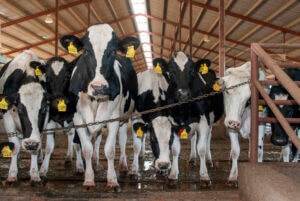 Here’s some great news for the dairy industry. A dairy-based diet feeds more people from available farmland than any other diet, according to Jack Britt of Jack H. Britt Consulting, Etowah, N.C., USA. Plus, nutritionists and experts on childhood growth say that milk-based diets improve children’s health. The United Nations encourages countries around the world to increase milk and dairy product intake to ensure that diets provide essential nutrients.
Britt delivered these promising messages during the 2021 Dairy Cattle Reproduction Council (DCRC) Annual Meeting. Given global population projections and malnutrition concerns in Africa and Asia, Britt estimates that dairy consumption needs to increase to 1.12 trillion tons annually by 2070 to meet global needs.
To gain a perspective on global milk production intensity, Britt shared milk production intensity numbers. At both ends of the spectrum were the United States, which requires 3.5 cows to produce 100 liters of milk (26.4 gallons) per day, and Tanzania, which requires 176 cows.
Efficiency yields several advantages, including environmental impact. “Countries with the lowest milk production intensities produce about sevenfold more greenhouse gases per kilogram of milk than countries with the highest milk production intensities.” Britt explained. “It is urgent for those in countries with greater (production) intensities to assist countries with lowest intensities to address climate and environmental impacts of low-producing dairy cows.”
Besides increased milk production, Britt noted the progress made in milk components. From 1968 to 2018, U.S. Holsteins’ annual milk yield increased 1.86-fold, while milk fat increased 1.99-fold. Milk protein production increased 1.79-fold from 1970 to 2018.
Breeding options for less productive cattle
What about cattle that haven’t been intensively managed for milk production? Britt noted that 40 to 50 percent of the world’s dairy cows include indigenous cattle that have not been selected to produce more milk. Many of these cows produce less than 882 pounds (400 kg) a year and emit significant amounts of carbon dioxide.
To improve these cattle from a milk production perspective, these mostly Bos indicus cattle are being mated with Girolando bulls from Brazil. “Such crosses have more than doubled daily milk yields in India,” Britt noted.
In countries where genomic selection has decreased generation intervals to about two years, Britt said that genetic strategies will focus on breeding females with the greatest genetic values to produce heifers or embryos for the next generations of milk cows. Other females will be bred to produce beef calves.
Edit genes to improve fertility, health
In addition, Britt described other emerging genetic strategies, such as identifying runs of homozygosity to improve fertility and health traits. “Editing single genes by altering DNA sequences from a less desirable sequence to a more desirable sequence within a species is likely to be adopted in practice, especially if such edits provide protection from cross-border diseases or eliminate painful procedures, such as removing horn buds,” Britt explained. “Gene editing could also be used to move a desirable gene from one purebred breed to another purebred breed.”
Britt noted that it may become possible to produce several generations of embryos in vitro if both male and female germ cells can be cultured and matured in vitro. In this scenario, cells from developing embryos would be screened genomically and the superior embryos transferred to recipients to produce a significantly advanced generation of dams and sires.
Foster transition cow health
Given DCRC’s focus on repro health, Britt discussed peripartum diseases, including acute or subacute metabolic diseases, and uterine infections. “These transition diseases are strongly linked to body weight changes during the late dry period and first few weeks postpartum, and lead to greater death rates, increased veterinary care and drug costs, and poorer fertility.
Britt summarized a field study of 1,887 Holsteins in two Wisconsin herds. The dairies reported that 42 percent of cows lost body condition during the first three weeks postpartum; proportions were similar between the two herds. Yet, one herd reported that 33.5 percent of the cows gained body condition. In the other herd, only 8 percent gained body condition. Pregnancy rates at 40 and 70 days after artificial insemination were twice as great in the herd in which one-third of cows gained weight during the three weeks after parturition. Researchers concluded that cows don’t have to lose body condition to produce large quantities of milk and be less fertile. Britt noted that future genetic selection indexes may need to include postpartum body condition changes to improve fertility and health, and reduce postpartum metabolic disorders.
Economies of scale at play
Like many industries, economics (economies of scale) have fostered consolidation. Improved economics come from reducing fixed costs for each pound of milk, fat and protein produced. However, dairy farm consolidation has not reduced the U.S. dairy cattle herd. “The trend is for a modest increase in dairy cow numbers,” said Britt.
From a biological perspective, Britt explored if feed crop (corn/maize and soybeans) and milk yields have reached their limits. “There is no evidence that yields of corn, soybeans or milk are leveling off or decreasing,” he remarked. “The top yield for corn, soybeans and milk exceeds the average yield by 8.0, 10.6 and 11.6 standard deviation units, respectively.”
With these factors in mind, Britt noted that it’s too soon to know how climate change may affect future crop yields and milk production. However, he predicted that dairy herds will move north from the Southwest as climate change reduces water access. “If this occurs, average herd size may decline because access to land in other regions may be more limited than in the Southwest. As transportation fuels shift to electricity, demand for corn-based ethanol will decrease. Thus, the Corn Belt may see more land devoted to dairy farming.”
High priority: Water quality
Recognizing that agricultural practices impact the climate, Britt said dairy and crop farmers must address water quality. To ensure sufficient water, manage crop fertilization to limit the amount of nitrogen that reaches groundwater and streams. Contamination of groundwater (with nitrates from chemical fertilization and manure) is a major issue in most dairy countries; this includes countries that use intensive grazing to feed cows.
Furthermore, Britt endorsed processing technology for dairy farm wastewater and manure. For example, a system converts dairy wastewater and manure into three products – sterile bedding or compost, potable water and liquid nitrogen fertilizer. For this type of system to be affordable, it must serve a large dairy or multiple smaller dairies.
What are some of Britt’s predictions for the future? “Managing microbiomes of animals, crops, soils and groundwater systems will emerge as standard practices in agriculture,” he reported. Having access to water and limiting cattle heat stress are two major challenges for dairy operations. Moving the dairy industry northward addresses these challenges. “Gene editing will provide many opportunities to improve efficiency and output of crops and livestock. The future will see increased use of artificial intelligence in managing dairy cows and dairy farms.”
To read Britt’s complete DCRC Annual Meeting proceedings paper, log into the DCRC Member Center and click on the Proceedings icon. References may be found in his proceedings paper.
Featured Member
Editor’s Note: For each issue, DCRC interviews a member to learn more about his/her career, involvement with DCRC and thoughts about dairy cattle and reproduction. We encourage you to recommend someone for this feature by contacting JoDee Sattler at: JoDee@dcrcouncil.org

Pablo Pinedo
Colorado State University
Fort Collins, Colorado
DCRC member since 2015
Meet Pablo Pinedo – the 2022 Dairy Cattle Reproduction Council (DCRC) Program Committee chair. Last year, Pinedo served as the DCRC Program Committee vice chair and coordinated the Poster Session held during the 2021 DCRC Annual Meeting. Also, he has collaborated with DCRC Education Committee projects.
Pinedo grew up in a large city in Chile. His limited childhood exposure to agriculture came via summer vacations spent on a horse/cattle farm. “These summer adventures marked me and were crucial in my decision to focus on dairy cattle during veterinary school in Chile,” Pinedo explained. After earning his Doctor of Veterinary Medicine degree, Pinedo worked 10 years for a Chilean dairy cooperative. Next, he accepted an opportunity to join the PhD program at the University of Florida.
Today, Pinedo is an associate professor in dairy systems at Colorado State University. His duties include the three components of land grant universities – research, education and extension. Specifically, he teaches applied livestock reproduction to undergraduate and graduate students, aiming to connect reproductive science with new technologies and on-farm users.
Team focuses on applied research
Pinedo described his team’s research as “very applied,” as most studies are completed in commercial dairy farms. “Our main goal is to contribute to improving the health, well-being and productivity of dairy cattle, while promoting sustainability at the same time,” said Pinedo. “Many of our research questions come from discussions with dairy farmers and are centered on the multiple factors that interconnect and have an impact on specific areas of dairy operations.”
As an example, Pinedo’s research team is interested in novel cow monitoring resources and strategies that allow for timely interventions that prevent disease, suboptimal reproductive performance or premature culling. Concerning reproduction, they primarily focus on factors that influence fertility – covering adequate health, cow comfort and genetic makeup. “The connections between new, on-farm precision technologies and novel data analysis tools to better understand dairy cows are also of great interest to us.”
Pinedo’s interest in dairy cattle reproduction stems from the important role adequate reproduction plays in most animal systems. “Reproduction is especially important in dairy operations,” he commented. “Besides all the interesting biological features of the reproductive system in cows, what really fascinates me are all the interrelated areas that affect fertility. You can work in reproduction from many different angles, such as genetics, nutrition, health, management and behavior – to name a few.”
DCRC provides connections
With his great interest in dairy cattle reproduction, Pinedo finds his involvement in DCRC extremely important. He stays up to date by reviewing DCRC materials that he can use in research and shares this information with his students. “A very useful resource is DCRC’s synchronization protocols, which are under continuous review,” he shared. Also, Pinedo has learned from his DCRC involvement that the approach for improving fertility in dairy herds has to consider a wide vision that is not only centered on reproductive physiology but also on proper management, personnel training and herd health.
Furthermore, Pinedo gave a “shout out” to his fellow DCRC members. “It’s quite valuable to get to know people in DCRC that work in the field that I am passionate about,” he stated.
From a broader perspective, Pinedo said that DCRC makes positive contributions to the dairy industry across multiple levels, because its membership includes a very diverse population. DCRC’s membership includes students, academia, producers, veterinarians, consultants and allied industry representatives. This diverse group has access to up-to-date, top-quality materials and may participate in discussions that encompass scientific discovery, development of new technologies and application of cutting-edge technologies at the user level.
While the dairy industry has made significant strides in improving reproductive performance since DCRC was founded in 2005, challenges still remain. “Our main reproductive challenges today are common to all areas of dairy farming and include limited resources (especially water), the need for optimal health and welfare of our cows, and a shortage of trained labor,” Pinedo stated. “Properly addressing these challenges will have a very positive impact on the reproduction of dairy herds around the world.”
Industry Calendar
- International Colloquium on Paratuberculosis, June 12-16, Dublin, Ireland
- American Dairy Science Association Annual Meeting, June 19-22, Kansas City, Missouri
- American Milking Shorthorn Society National Convention and Sale, June 22-25, Champaign, Illinois
- American Jersey Cattle Association-National All Jersey Annual Meetings, June 22-25, Portland, Oregon
- Gopher Dairy Camp, June 23-25, St. Paul, Minnesota
- Directions in Veterinary Medicine Regional Conference, June 24-25, Indianapolis, Indiana
- National Mastitis Council Regional Meeting, July 12-14, East Lansing, Michigan
- National Holstein Convention, June 27-July 1, Sioux Falls, South Dakota
- Lameness in Ruminants Conference, August 1-5, Bloomington, Minnesota
- Council on Dairy Cattle Breeding Triannual Evaluation, August 9
- Fetch dvm360 Conference, August 26-28, Kansas City, Missouri
- American Association of Bovine Practitioners Annual Conference, September 22-24, Long Beach, California
- World Brown Swiss Conference, October 2-6, Madison, Wisconsin
- World Dairy Expo, October 2-7, Madison, Wisconsin
- Council on Dairy Cattle Breeding Industry Meeting, October 5, Madison, Wisconsin
- S. Animal Health Association Annual Meeting, October 5-13, Minneapolis, Minnesota
- International Colloquium on Paratuberculosis, October 17-21, Jaipur, India
- Dairy Cattle Reproduction Council Annual Meeting, November 15-17, Middleton, Wisconsin
- Council on Dairy Cattle Breeding Triannual Evaluation, December 6
