
Newsletter – 2022 – December
President's Message
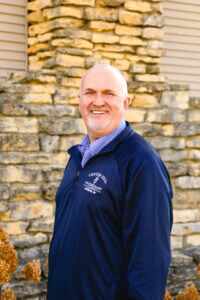 From the DCRC President’s Desk
By William “BJ” Jones, DVM
There is a nothing like our annual meeting to re-energize me about the excitement going on in the dairy industry. Renowned speakers from industry and academia, networking and seeing old friends, award presentations, and a new addition of farm tours made 2022 my favorite meeting to date. A great time was had by all in Madison!
We know how busy you all are, and would like to thank everyone who took time out of their schedules to attend. We had more than 220 people attend in person and virtually. A special thanks goes out to our program committee led by Pablo Pinedo, Colorado State University, along with his team: Caio Gamarra, Merck, and Scott Earnest, ProAGtive Dairy nutrition. We appreciate the many hours they put into developing an outstanding program for us to enjoy. We hope you can join us for next year’s annual meeting to be held Nov. 14-16, in Salt Lake City.
Congratulations to the 24 dairies that received outstanding reproduction achievement awards. You are an inspiration to us all and I do so enjoy learning about your operations in Hoard’s Dairyman, which graciously sponsors these awards. And thanks to the veterinarians, extension specialists and artificial insemination and pharmaceutical company representatives who took time to nominate these outstanding herds. If you think you have a dairy that should be honored, nominations open again in March and close April 30.
Also, a big “thank you” goes out to our sponsors. Without their financial support these meetings and our organization wouldn’t be possible. Silver sponsors included Select Sires, STgenetics and Zoetis. Bronze sponsors were Adisseo, Arm & Hammer Animal Nutrition, Boehringer Ingelheim, GENEX, Nedap, Trans Ova Genetics and VAS. Dairy Farm Tour sponsors included CentralStar Select Sires, Nicolet National Bank, Purina, STgenetics and Zoetis.
Also, welcome to our new board members, Vice President Tracy Burnett, University of Guelph, and Kim Egan, Genex. They join our other board members Past President Matt Utt, Zoetis, Secretary/Treasurer Luciano Caixeta, University of Minnesota, and Brian Schilling, Schilling Brothers Dairy. This board, along with the multiple committees, run your organization. If you would like to be involved, don’t hesitate to reach out.
Something new for DCRC is a partnership with the Dairy-Tech event in Stoneleigh Park, England, which is scheduled for Feb 1. This partnership will help increase DCRC’s international exposure. Three presentations focusing on dairy sustainability, profitability and monitoring reproductive performance will be presented by Frank Mitloehner (University of California-Davis), John Cook (World Wide Sires, UK) and Matt Utt (DCRC past president/Zoetis).
DCRC was started in 2006 when the dairy industry had many challenges in reproductive performance. It is amazing how far we have come in the 16 years since our formation. We will continue to bring our members the best sources of information so you can stay on top of your reproductive game on your dairies. Help us spread the word about DCRC through social media: follow us on Twitter (@DCRCouncil), Facebook and LinkedIn. Please like and share posts that you think others might enjoy!
As I said at the annual meeting, I leave you with two challenges for 2023. One is to tell another student, producer or consultant about our group, and encourage them to join us at our annual meeting in Salt Lake City next year. The second is dare to dream about where the next level of dairy reproduction can go at your dairy, in your research or in herds you work with. I can’t wait to see where the next decade takes us!
Happy Holidays and thank you for being a member of team DCRC!
Research Summaries
Exploring the role of milk yield in the first week of lactation on the association between hyperketonemia and reproductive performance in dairy cattle
Rodriguez, E. Wynands, E. Shepley, L.H. Baumgard, G. Cramer, and L.S. Caixeta
Blood concentration of ketone bodies assessed during the early postpartum period is measured to evaluate metabolic imbalance during the transition period. Elevated concentration of ketone bodies, also known as hyperketonemia (HYK), is associated with poor reproductive performance. Milk yield during the first week postpartum can also offer valuable information regarding transition period success. The objective of the study was to evaluate if the association of HYK with reproductive performance depended on milk yield during the first week postpartum.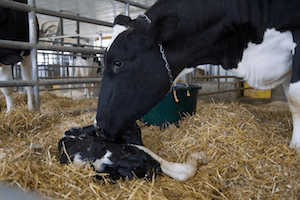
Animals, HYK diagnosis, milk yield categories, and variables assessed
A total of 2,091 cows from 5 commercial herds in Minnesota were enrolled in 2017:
- Herd size ranged from 650 to 2,050 cows.
- The average 305 mature equivalent (ME) ranged from 13,000 to 15,000 pounds and 12,800 to 14,600 pounds for primiparous and multiparous cows, respectively.
- Reproductive management consisted of timed artificial insemination (TAI) following double-Ovsynch in four herds. The other herd used Presynch-Ovsynch, with cows inseminated based on estrous detection or receiving TAI at the end of the Ovsynch protocol.
- Blood β-hydroxybutyrate (BHB) was measured twice between 3 and 10 days postpartum.
- HYK was defined as a cow having BHB ≥1.2 mmol/L in at least one of the blood assessments.
- The categories low, med, and high milk yield were created, based on the average milk yield of the first week of lactation.
- These categories were created separately for primiparous and multiparous cows within each herd, as the bottom 25% producing cows were categorized as low milk yield. Cows were considered high milk yield if they were the top 25% producing cows. Mid milk yield cows produced more than low milk yield cows but less than the high yield cows.
- Data related to calving information, diseases, culling, milk yield, and reproductive performance until 150 days in milk (DIM) were extracted from the herds’ management software.
Results
- Overall incidence of HYK was 14.2%, with primiparous and multiparous cows having incidence of 4.5% and 19.6%, respectively.
- Overall, HYK was associated with decreased probability of pregnancy within 150 DIM, but it was not associated with pregnancy risk at first service.
- For low milk yield cows, HYK was associated with decreased risk of pregnancy at first service and within the first 150 days postpartum, and extended calving to conception interval.
- None of the reproductive performance outcomes evaluated were associated with HYK in the mid and high milk yield categories.
In conclusion, the detrimental effects of HYK on reproductive outcomes were only observed when accompanied by low milk yield during the first week of lactation.
Access the paper at: https://pubmed.ncbi.nlm.nih.gov/36340678/
Evaluation of antimicrobial resistance and risk factors for recovery of intrauterine Escherichia coli from cows with metritis on California commercial dairy farms
C. Basbas, A. Garzon, N. Silva‑del‑Rio, B.A. Byrne, B. Karle, S.S. Aly, J.D. Champagne, D.R. Williams, F.S. Lima, V.S. Machado, and R.V. Pereira
Metritis is a disease with major economic implications and E. coli is one of the multiple etiological agents. Metritis treatment requires antimicrobial drug therapy, which can potentially lead to antimicrobial resistance (AMR) development. Ceftiofur, a third-generation cephalosporin with broad-spectrum activity, has been reported to be the treatment of choice for metritis therapy, but other antimicrobial drugs, such as penicillin and ampicillin, are also used for this purpose. The goal of this study was to identify animal and herd levels associated with AMR in intrauterine E. coli.
Animals, HYK diagnosis, milk yield categories, and variables assessed
A total of 307 cows from 255 commercial herds in California were sampled with an intrauterine swab within the first 21 days postpartum:
- Cows were categorized as having metritis (MET, n = 86), characterized by watery, red or brownish, and fetid discharge; Purulent Vaginal discharge (PUS, n = 106), characterized by non-fetid purulent or mucopurulent vaginal discharge; or normal discharge (CTL, n = 115), characterized clear lochia or mucus, or no discharge.
- Data on farm characteristics and management practices were obtained through a questionnaire.
- Data on individual cow health records and antimicrobial treatments were also collected.
- Swabs were cultured for E. coli, which was later submitted to antimicrobial susceptibility tests to test against multiple antimicrobial drugs.
Results
- The odds of E. coli recovery from swabs were greater in MET cows compared with PUS and CTL cows. No difference in E. coli recovery was observed between PUS and CTL cows.
- Only 8.6% of the isolates were resistant to ceftiofur, but all were resistant to ampicillin.
- AMR to tetracyclines was observed in approximately one-third of the isolates.
- Cow-level variables were not associated with AMR prevalence.
- At the herd level, E. coli isolated from herds that treated metritis with intrauterine infusion of oxytetracycline were more likely to be resistant to tetracyclines than E. coli isolated from herds with different metritis therapy protocols.
In conclusion, the AMR profile of E. coli isolated from the uterus of postpartum cows indicates that most isolates are susceptible to ceftiofur, which is the most common antimicrobial drug used for metritis therapy. The results also suggest that the extra-label practice of intrauterine infusion of oxytetracycline for the treatment of metritis can lead to the development of AMR.
Access the paper at: https://www.nature.com/articles/s41598-022-18347-w
Featured Column
The 2022 Dairy Cattle Reproduction Council (DCRC) Annual Meeting featured recognition of DCRC’s Excellence in Dairy Reproduction Award winners. DCRC honored 24 outstanding dairy operations as Bronze, Gold, Silver or Platinum winners. DCRC extends a big congratulations to the Platinum winners.
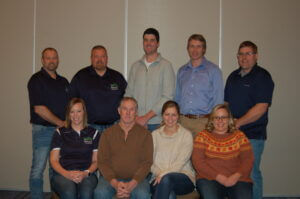
2022 DCRC award winners Front row: Nicole Davis, Steve Fetzer, Jaclyn Riddell and Marie Felling. Back row: Jeremy and Bard Davis, Travis Riddell, Darrin Young and Jason Felling
Davis Family Farm (Jayme and Brad Davis), Darlington, Wis.
Nominated by Tim Heiring, Heiring’s Heat Detection and A.I.
Emerald Spring Dairy (Darrin Young), Plainview, Minn.
Nominated by Brandon Thesing, Minnesota Select Sires
Felling Dairy LLC (Jason Felling), Sauk Centre, Minn.
Nominated by Andrew Krause, STgenetics
Fetzer Farms (Fetzer Family), Elmwood, Wis.
Nominated by Cole Mark, CentralStar Select Sires
High Noon Dairy LLC (Peter Bouma), Hereford, Texas
Nominated by Fabio Teixeira, Progressive Dairy Health Services, and Kim Egan and Mauricio Garcia, Genex
Riddell Farms (Travis Riddell), Atwood, Ont., Canada
Nominated by Kristen Edwards, Tavistock Veterinarians
Following is an excerpt from the Hoard’s Dairyman round table discussion that highlights the Platinum winners’ repro management strategies. Learn about enhancing dairy cattle reproduction from these outstanding dairy producers.
Hoard’s Dairyman: Do you use synchronization protocols?
Davis Family Farm: All lactating cows get enrolled into a presynch program starting at 54 days in milk (DIM) when they receive their first prostaglandin. Fourteen days later, they receive their second prostaglandin. All heats observed from these treatments are recorded and entered into Dairy Comp 305. Eleven days after the second prostaglandin, on Monday morning, they are started on an ovsynch 48-hour program protocol and given GnRH. The following Monday morning and the Tuesday after, they receive prostaglandin. GnRH is given Wednesday morning, and breeding occurs approximately eight to 10 hours later on Wednesday evening. Any open cows are resynched at pregnancy check if a corpus luteum (CL) is present. If no CL is present, GnRH is given and the cow is enrolled in the following week’s ovsynch 48-hour program. Heifers are ultrasounded prior to first service. If a CL is present, the heifer receives prostaglandin and is monitored for heat. If no CL is present, the heifer receives GnRH and is rechecked the following week. Any open heifers at pregnancy checks are handled the same way as the cows.
Emerald Spring: We use a double ovsynch protocol. All cows receive their first service on the second ovsynch. We do not resynch cows. Cows that are checked open get enrolled in ovsynch or CIDR synch, if there is no CL present.
Felling Dairy: We use double ovsynch for first service and resynch open cows after a pregnancy check. We breed on standing heats after first service.
Fetzer Farms: We were using a presynch but are trying out not using it. Prior to the trial, our standard was double prostaglandin after 50 DIM for first-lactation cows and after 65 days for second lactation cows and older.
High Noon Dairy: We use double ovsynch for the first service and ovsynch-56 for resynchronizing open cows. For the last prostaglandin in both programs, we use two treatments 24 hours apart (Days 7 and 8).
Riddell Farms: We do. We start with double ovsynch, then standard ovsynch or GGPG is used to resynch cows. CIDR synch is used to resynch heifers.
Hoard’s Dairyman: What change has been the most beneficial for your reproduction?
Davis Family Farm: Changing our VWP from 70 DIM to 88 DIM and allowing almost all of our first service breedings to be off of ovsynch has improved our first service conception rate by more than 10%. We also built another freestall barn this past year to help reduce the percentage of overcrowding and improve cow comfort.
Emerald Spring: In 2015, we built a cross-ventilated barn with an emphasis on cow comfort. All freestalls are deep bedded with reclaimed sand. Around the same time, we started using double ovsynch on all first breedings. Those two things have had the biggest impact, but we have also improved our forage quality and made strides in our genetic improvement.
Felling Dairy: Some of the best changes we have made include focusing on feeding for overall cow health versus individual production. We moved to a higher forage diet and pay great attention to forage quality and digestibility. Nelson Dairy Consultants has helped us achieve this goal. We also benefited from having all milk cows on sand bedding, other facility upgrades, and using in-house breeding. We have improved our team with more focus on company culture and a training program that sets up team members to succeed.
Fetzer Farms: About 15 years ago, we converted from mattresses to sand bedding. That really improved cow comfort level, thus improving reproduction. Doing the double prostaglandin as part of our ovsynch greatly improved our conception and pregnancy rates. In the last year, the SCR program has greatly contributed to catching cows in good heats and improving our timing of breeding.
High Noon Dairy: We are a fairly new dairy because we purchased the farm seven years ago. We believe everything we do affects our breeding, so we involve and help every person on our dairy succeed personally, professionally, and with our cows. Probably the most important aspect in these first seven years has been learning how to adapt to a new environment and a different facility. We have been working with the same team – breeders, treatment crew, on-site employees, veterinarians, and manager – since the beginning. Everyone knows what, where, when, and why we do anything. Consistency is the key.
Riddell Farms: We provide plentiful space for close-up dry cows (greater than 150 square feet per cow) and don’t regroup cows less than three weeks from calving. The double ovsynch, dietary cation-anion difference (DCAD) dry cow diet, and feeding brown midrib (BMR) corn silage have helped. We also emphasis daughter pregnancy rate (DPR) and calving ease when selecting sires.
Featured Member
Editor’s Note: For each issue, DCRC interviews a member to learn more about his/her career, involvement with DCRC and thoughts about dairy cattle and reproduction. We encourage you to recommend someone for this feature by contacting JoDee Sattler at: JoDee@dcrcouncil.org
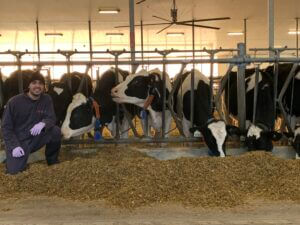
Guilherme Madureira
2022 DCRC Scholar
PhD Candidate
University of Guelph
Guelph, Ont., Canada
This was the first time I attended the Dairy Cattle Reproduction Council (DCRC) Annual Meeting and my experience was fantastic! This moment was even more special because I was selected as the 2022 DCRC Scholar.
The 2022 DCRC Annual Meeting took place in Madison, Wis., and the board of directors and its team organized a great program that included a tour to dairy farms with excellent reproductive management. Plus, the event had a very interesting poster session with graduate students and great presentations and discussions provided by researchers, industry members and farmers.
Before I give more specifics about this event, I would like to explain why this meeting matters to me. Since my early days in the School of Veterinary Medicine, I have been interested in reproductive management of dairy cattle. During this period, I was involved with academic and extension activities, such as organization of dairy management courses and assistance to small farmers to perform preg checks, synchronization protocols, artificial insemination and embryo collection. After this period, I realized that I wanted to continue studying reproduction and contribute to improve reproductive efficiency of dairy cattle and consequently profitability and sustainability of dairy farming. Therefore, I started my master’s degree program and I completed multiple studies in different states of Brazil – aiming to optimize synchronization protocols for timed artificial insemination. After completing my master’s degree, I decided to move overseas to expand my scientific training in dairy cattle reproduction.
Currently, I am a third-year PhD student at the University of Guelph, under the supervision of Eduardo Ribeiro. Our studies are focused on the nutritional, physiological and genetic regulation of uterine function and pregnancy in dairy cattle. My career goal is to work with research development in the livestock industry, using applied research and basic science to solve problems faced by animal food producers.
The DCRC Annual Meeting started with a tour of four dairy farms – Schilling Farms, Kieler Farms, Darlington Ridge Farms and Wessel Farms. I am very thankful for the farmers who welcomed us and talked about their operations. Each one of the farmers and their team are recognized for great reproductive management and some key points for success mentioned during the tour were consistency, teamwork, good communication and “eyes on the results.” It was clear that good reproductive management is essential for dairy farm profitability.
This event put together outstanding speakers from academia and the dairy industry. Presentations addressed cutting-edge research and hot topics related to reproduction, including health and dry matter intake during the transition period, economics of reproductive strategies and tools to individualize and optimize farm management decisions. Additionally, the DCRC Annual Meeting included a panel discussion about key points for reproductive success and an awards ceremony for reproductive excellence in dairy farming.
Between the breakout sessions, participants could hear from young researchers about their studies during the poster session. I presented results from my first PhD trial, where we are developing a uterine receptivity test using a pregnancy-derived factor. During our first experiment, we validated the test by analyzing endometrial responses to an intrauterine infusion with interferon-tau. Our second experiment showed promising differences in endometrial genes and components of uterine fluid between highly fertile and subfertile dairy heifers.
Therefore, participating in the 2022 DCRC Annual Meeting was an amazing opportunity because during the event I could get in contact and exchange experiences with members of academia and dairy industry representatives. In addition, DCRC created a great program with very important topics in dairy farming, as well as a very exciting farm tour to show examples of exceptional reproductive management.
Industry Calendar
- Nebraska Ag Expo, December 6-8, Lincoln, Nebraska
- PDPW Managers Academy for Dairy Professionals, January 10-12, Savannah, Georgia
- International Embryo Transfer Society Annual Conference, iets@assochq.org, Lima Peru, January 16-19
- Dairy Strong Conference, January 18-19, Madison, Wisconsin
- National Mastitis Council Annual Meeting, January 30-February 2, Atlanta, Georgia
- Iowa Ag Expo, January 31-February 2, Des Moines, Iowa
- Dairy-Tech, February 1, Stoneleigh Park, Coventry, United Kingdom
- PDPW Business Conference, March 15-16, Wisconsin Dells, Wisconsin
- Central Plains Dairy Expo, March 28-30, Sioux Falls South Dakota
- Dairy Calf and Heifer Association Annual Conference and Trade Show, April 11-13, Prior Lake, Minnesota
- Dairy Cattle Reproduction Council Annual Meeting, November 14-16, Salt Lake City, Utah
