
Newsletter – 2023 – June
President's Message
 From the DCRC President’s Desk
By William “BJ” Jones, DVM
Greetings from Southwest Wisconsin. For many of our Midwest dairy producers, first crop hay is chopped, in the bunker and planting and spraying are almost complete. While we have been more fortunate than many of you during the past year with moisture, this morning’s news said that we had our fifth driest May on record. The weather is becoming a frequent topic of our herd check conversations. Even the neighbor, whose hay always gets rained on, put up some high quality, first crop haylage. Here’s to hoping a nice rain is coming everyone’s way.
In the veterinary world, we always think problems come in threes! I was on call this Memorial Day weekend and had to visit one of our Amish producers. When the call came in around 11 p.m., I knew to take my headlamp. As I walked in the dark barn, I could see Ben’s flashing headlamp coming at me. “Doc, I think she is twisted,” he stated. I confirmed his diagnosis of a uterine twist and he said that it was his third torsion this month. I was surprised as that was a high number for a herd of 50 or so cows. Luckily, I was able to untorse the uterus fairly easily and deliver a live heifer calf. I found it interesting that the calf was sired by a Lineback, out of a Holstein and was good sized. Fetal size seems to be one of the biggest predisposing factors for a twisted uterus. Ben and I discussed that, but I think the biggest factor was old bad luck at play. We did have a twisted uterus outbreak at a larger dairy one time with several twists every week. After some investigation, we learned the cattle were being transported from the dry cow pasture in a trailer down “Roller Coaster Road.” The road has three big hills on it. When we had the crew change the route to some flatter roads, the outbreak disappeared. While I wasn’t 100 percent sure why Ben was having so many twists, we both agreed it wasn’t from overly aggressive carriage rides for the cows.
Plans are underway for the DCRC Annual Meeting to be held in Salt Lake City, Utah, Nov. 14-17. It was so exciting to hear the great speakers and round table sessions our program committee is planning! I am proud to announce that Frank Mitloehner will be one of our featured speakers this year, headlining our special emphasis on sustainability. The program is looking great, so be sure to make plans to attend.
It always amazes me how dairy management varies among U.S. regions and I am excited to hear from some of our western producers this year to pick up some new tips on reproduction and sustainability. Make sure to watch your e-mail and our website for the program when it is finalized.
Also, don’t forget to check out the upcoming DCRC webinars. Many of these were our most popular talks from the 2022 annual meeting and are free. On Sept. 12, Eduardo Ribeiro, University of Guelph, will present a Portuguese webinar – ‘Impacto do manejo de transição além do curral pós-parto’ (A look to transition beyond the fresh pen). Also, this fall, Gustavo Schuenemann, Ohio State University, will present a webinar in Spanish – “Transition cow management: Solutions for dry matter intake to enhance health, cyclicity and reproduction.” On Oct. 26, Phil Cardoso, University of Illinois, will be the primary presenter for the Adisseo-sponsored webinar. Watch your e-mail inbox and future DCRC newsletters for more details.
All past webinar recordings are available to watch in our “Members Only” section on our website. Webinars from earlier this year include Jackie Boerman from Purdue University on the “Importance of early life factors on future performance of dairy calves.” Also, one of my favorites from last year’s meeting was Dale Woerner from Texas Tech University on “Beef on dairy research provides insight to carcass value and consumer acceptance.”
Some other exciting “goings on” at DCRC include the awards committee receiving 100 nominations for our “best of the best” dairy reproduction awards contest. From what I hear, the competition gets tougher every year with several countries represented in this year’s nominated herds. The committee has the competition whittled down to the final 48, which are now undergoing an in-depth records analysis. Stay tuned to Hoard’s Dairyman magazine this fall for the winners’ round table and announcements at the annual meeting.
I am also proud to announce that Isabella Sellmer Ramos, a master’s degree student at the University of Missouri, was named as our 2023 DCRC Scholar. Ramos earned an expense-paid trip to attend the 2023 DCRC Annual Meeting, Nov. 14-17, in Salt Lake City. The DCRC Scholars program recognizes an outstanding graduate student studying dairy, animal or veterinary science, microbiology or a related program, with an area of interest that includes dairy cattle reproduction and fertility. Congratulations Isabella!
The DCRC organization is made up of volunteers from industry, production and academia. We really have a great team! A special welcome to our new membership chair, Jennifer Spencer, Texas A&M University, as well as our new program chair, Ralph Bruno, Zoetis. Thank you one and all for donating your time to help the betterment of dairy reproduction!
Research Summaries
Characterization of semen type prevalence and allocation in Holstein and Jersey females in the United States
M.R. Lauber, F. Peñagaricano, R.H. Fourdraine, J.S. Clay, and P.M. Fricke
The goals of the study were to characterize the semen type prevalence and allocation in Holstein and Jersey females in the United States by year, parity, number of services, and herd size; and to evaluate the prevalence of beef breed sires selected to create either beef x Holstein or beef x Jersey crosses.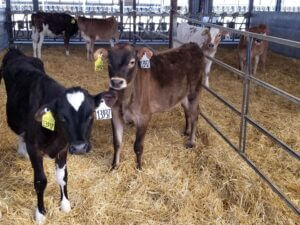
Dataset
A convenience sample was included in the study, which was gathered from Dairy Records Management Systems. The analyzed dataset included:
- 8,244,653 inseminations of 4,880,752 Holstein females across 9,155 herds
- 435,267 inseminations of 266,058 Jersey females across 2,759 herds
- Inseminations occurred between October 2019 and July 2021
- The type of semen used in the inseminations were either beef, conventional, sexed, and other dairy
Results
- The dataset analyzed represented approximately 42% and 27% of the total dairy cows and heifers, respectively.
- The proportion of inseminations of Holstein females using beef, conventional, sexed, and other dairy semen was 22.5%, 60.6%, 15.3%, and 1.6%, respectively.
- The proportion of inseminations of Jersey females using beef, conventional, sexed, and other dairy semen was 17.0%, 48.7%, 29.2%, and 5.1%, respectively.
- The top 3 beef breeds used in Holstein and Jersey females were Angus, Limousin, and Simmental.
- The use of sexed semen decreased with parity and service numbers, whereas the use of beef semen followed the opposite trend.
- An upward trend in the use of sexed and beef semen for Holstein and Jersey females was observed from 2019 to 2021; the increased use of these types of semen was driven mainly by large herds.
In conclusion, from 2019 until 2021, a significant increase in the use of sexed and beef semen were observed for both Holstein and Jersey females, which was driven primarily by large herds. Also, to create beef x Holstein and beef x Jersey crossbred calves, the most used beef breed was Angus.
Access the paper at:
https://www.sciencedirect.com/science/article/pii/S0022030223001285?via%3Dihub
Effects of additional gonadotropin-releasing hormone and prostaglandin F2α treatment to an estradiol/progesterone-based embryo transfer protocol for recipient lactating dairy cows
M.H.C. Pereira, B.I. Cappellozza, R.L.A. Cerri, C.P. Sanches Jr., T.G. Guida, L.F.S.P. Barbosa, J.E.P. Santos, and J.L.M. Vasconcelos
In many parts of the globe, timed embryo transfer (TET) protocols using progesterone and estradiol are used to improve the reproductive efficiency of dairy cows. Adding gonadotropin-releasing hormone (GnRH) and a second prostaglandin F2α (PGF2α) injection to those estradiol/progesterone-based TET programs may improve the pregnancy per embryo transfer (P/ET). GnRH administration at the beginning of the program would increase the proportion of cows with a corpus luteum (CL) at the PGF2α injection, while a second PGF2α injection would improve luteolysis and reduce the progesterone concentration that precedes ovulation. Therefore, the objectives of this study were to evaluate if adding GnRH administration at the onset of the TET protocol and a second PGF2α at the end of the TET program would result in improved reproductive outcomes.
Study design, animals included, and treatment allocation
This experiment included 501 cows from 6 different herds in Brazil:
- The average days in milk (DIM) was 167 and cows were producing, on average, 32 kg (71 pounds) of milk per day at the beginning of the study.
- Cows were randomly allocated into one of three treatment groups:
- 1-PGF: intravaginal insertion of progesterone device and intramuscular injection of estradiol benzoate at 17 days prior to TET, followed by PGF2α administration at 11 days prior to TET, and removal of progesterone device and injection of estradiol cypionate at 9 days prior to TET.
- 2-PGF: Same protocol as described above but with a second PGF2α administration at 9 days prior to TET.
- GNRH+2-PGF: Same protocol as 2-PGF with the addition of GnRH administration at 17 days prior to TET.
Results
- GNRH+2-PGF led to an increased proportion of cows with a CL at 11 days prior to TET.
- Cows in PGF-1 group had decreased progesterone concentration at TET and decreased expression of estrous behavior than cows in the other groups.
- No treatment differences were observed on P/TET, but progesterone concentrations at 11 days prior to TET were positively associated with P/TET.
In conclusion, although adding GnRH administration or an additional PGF2α to an estradiol/progesterone-based TET program did not lead to increased P/TET, adding a second PGF2α increased the ovulatory response to the protocol. Also, greater concentration of progesterone at 11 days prior to TET was associated with increased P/TET, which warrants further research to investigate the potential benefits of presynchronization in TET programs.
Access the paper at:
https://www.sciencedirect.com/science/article/pii/S0022030222006956?via%3Dihub
Application of gender-ablated semen during timed artificial insemination following estrous synchronization in dairy and beef cows
T.L. Magopa, M. L. Mphaphathi, andT. Mulauudzi
This study aimed to evaluate the effects of frozen-thawed X-sexed or unsexed semen on estrous synchronization and conception rates in dairy and beef cows undergoing timed artificial insemination (TAI).
Dataset
Researchers compiled data from dairies (n=130) and beef (n=97) farms between 2021 and 2022.
- Cows had to be open, >90 days in milk, and negative to contagious abortion.
- All cows were enrolled in a 9-day Ovsynch + controlled intravaginal drug release (CIDR) protocol; heat detection with a heat mount detector patch; TAI 55 hours following removal of CIDR.
- Semen from 8 different sires were used (4 Holstein and 4 Angus).
- Pregnancy diagnosis was determined on days 35, 65, and 95 following TAI, by transrectal ultrasonography and hand palpation.
Results
- The proportion of cows showing estrus was significantly higher in dairy cows (85.3%) compared to beef cows (65.0%).
- Dairy cows had higher conception rates on day 35 (61.9% for X-sexed and 62.0% for unsexed) compared to beef cows (56.0% for X-sexed and 52.2% for unsexed).
- On Day 95, overall conception rates were higher in dairy cows (41.4% for X-sexed and 48.5% for unsexed) compared to beef cows (38.0% for X-sexed and 37.0% for unsexed).
- Pregnancy/embryo losses between days 35 and 65 were higher in dairy cows (33.3% for X-sexed and 18.2% for unsexed) and beef cows (28.6% for X-sexed and 29.2% for unsexed).
- Dairy cows also had a higher incidence of pregnancy loss between days 66 and 95 (7.7% for X-sexed and 8.3% for unsexed) compared to beef cows (5.0% for X-sexed and 0.0% for unsexed).
In conclusion, acceptable estrous synchronization and conception rates were achieved in dairy and beef cows. Different estrous synchronization rates were observed between dairy and beef cows, despite using the same synchronization program. The 9-day Ovsynch + CIDR protocol with TAI proved to be effective when using sexed semen. Advanced reproductive protocols and management techniques can successfully incorporate gender-ablated semen in emerging cattle farming systems. Further research is needed to determine the optimal timing for insemination relative to ovulation when using sexed semen in dairy and beef cows, and to investigate potential differences in sire fertility after sexing semen.
Access the paper at: https://onlinelibrary.wiley.com/doi/10.1111/rda.14323
Featured Column
Effective transition cow program: Key to repro success
What factor consistently contributes to successful reproductive performance, milk quality, and cow longevity on dairy farms? Gustavo Schuenemann, The Ohio State University department of veterinary preventive medicine, contends that the answer is “an effective transition cow program that promotes positive feeding behavior and dry matter intake (DMI).” The interaction of feed and water availability, available resting space, social hierarchy (competition for feed and water), and environment determines feeding behavior and DMI. 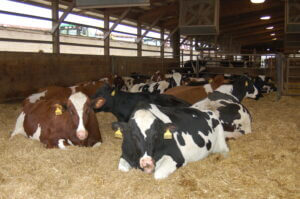
Schuenemann, who spoke at the 2022 Dairy Cattle Reproduction Council (DCRC) Annual Meeting, explained that excess neutral detergent fiber (NDF) content in prepartum cow diets almost always limits DMI. In early lactation (<30 days in milk [DIM]), gut fill usually limits DMI. Therefore, formulate diets with the highest quality forage available that contain adequate, but not excessive, amounts of forage NDF (fNDF).
In addition, Schuenemann explained that improving cow comfort provides the greatest opportunity to promote feeding behavior and optimize DMI. Ultimately, improving cow comfort helps boost milk production, reproductive performance, and overall animal welfare. Cow comfort is largely determined by people (e.g., management), facilities, and environment (e.g., heat stress). “People can overcome facility limitations, but great facility design cannot replace poor management,” he stated.
Optimize DMI
What impairs DMI? For diets based on hay forages, concentrations of fNDF >25% of diet dry matter can substantially limit intake. Early lactating cows are especially sensitive to large concentrations of fNDF. For corn silage-based diets, in vitro NDF digestibility is the best predictor for DMI. Additionally, Schuenemann said that excess rumen fermentable starch and long chain fatty acids can reduce DMI. To optimize DMI, group transition cows by parity (primiparous separated from multiparous) and lactating cows by similar stages of lactation.
For transition cows, formulate rations with 5% refusal. When the herd’s calving rate is above average and thus pens are overcrowded relative to linear feed bunk (<50 cm [20 inches] per cow) and resting space (e.g., >100% number of cows relative to number of stalls), offer more total mixed ration (TMR) at the bunk and plan for 8% feed refusal.
Cows need space. Provide 75 cm (30 inches) of linear feed bunk per cow and ensure the TMR is within reach of cows for at least 22 hours per day. To help achieve this goal, push up feed every hour. Also, provide 10 cm (4 inches) of linear water space per cow with at least 38 L (10 gallons) of water flow per minute.
Factors affecting DMI potential
Farm
- Facilities (e.g., robots, feed bunk)
- Management (e.g., cattle grouping)
- Environment (e.g., temperature humidity index [THI])
Cow
- Milk
- Stage of lactation
- Body weight
- Parity
- Body condition score (BCS)
Diet
- Ingredient
- Nutrients
- Particle size
- Water and toxins
Foster estrous cyclicity resumption
With optimal DMI during the transition period, cows should resume estrous cyclicity and optimize their health status, reproduction, and milk yield. Inadequate DMI leads to body condition loss. A BCS loss >0.50 (e.g., 3.25 to 2.75) during the first 30 DIM has been associated with reduced pre- and postpartum DMI, increased metabolic disorders, and reduced reproductive performance (Piñeiro et al., 2019a; Schuenemann et al., 2021).
Schuenemann noted that, on average, 1 kg (2.2 pounds) of prepartum DMI represents 1.5 to 1.8 kg (3.3 to 4 pounds) of postpartum DMI (<30 DIM). An increment of 1 kg per day in postpartum DMI (1.7 Mcal NEL [net energy of lactation]) can support 2 to 2.5 kg (4.4 to 5.5 pounds) of additional milk or resumption of estrous cyclicity.
“Resumption of postpartum estrous cyclicity depends on actual DMI of pre- and postpartum cows, which determines energy and calcium balance,” explained Schuenemann. “Excessive body condition loss, because of limited DMI, increases metabolic and uterine diseases in early lactation (increases inflammation, which negatively affects resumption of cyclicity, milk yield, and reproductive performance). Lactating cows typically resume cyclicity (first postpartum ovulation) during the first 20 DIM.
Transition dairy cows thrive when they are comfortable and have the dietary needs optimized. Are you meeting these recommendations?
- Feed twice daily. Under farm conditions, feeding twice daily compared with once daily was associated with an average increase of 1.4 kg (3.1 pounds) DMI, 2.0 kg (4.4 pounds) milk yield, and less sorting against long ration particles (>19 mm [>0.7 inch]). In controlled experimental conditions when TMR was available 22 hours per day, feeding twice or thrice daily had minimal effect on DMI but cows sorted less with reduced risk for subacute rumen acidosis compared with feeding once daily. Pushing up TMR every 2 hours, rather than every 4 or more hours, increased eating time by 20 minutes per.
- Update daily pen counts in management and feeding software (number of cows per pen) to ensure proper delivery of TMR and DMI.
- Regularly check the heat abatement system (e.g., fans, sprinklers, shade). There is a strong negative correlation (r = −0.82) between THI and DMI, in which DMI can be reduced by 0.45 kg (1 pound) per day for every 1-unit increment in THI above the THI threshold of 68 (cows with high milk yield had lowest DMI).
- Develop and implement a system to identify inconsistencies of DMI over time by assessing cows, nutrition, management, and environment. For instance, look at the effect of daily THI, accuracy of daily feeding schedule relative to actual TMR delivery, loading accuracy of ingredients (% error), stocking rate relative to linear feed bunk and resting space, and time that feed bunk is empty relative to feed refusal.
- For automated/robotic milking systems, in addition to the previous recommendations, match type and amount of feed concentrate to barn design, push up feed 12 times daily, and provide the best possible digestibility of diet in the partial mixed ration – to achieve optimal DMI.
To read Schuenemann’s DCRC Annual Meeting proceedings paper, log into the DCRC Member Center and click on the “Proceedings” icon.
Featured Member
Editor’s Note: For each issue, DCRC interviews a member to learn more about his/her career, involvement with DCRC and thoughts about dairy cattle and reproduction. We encourage you to recommend someone for this feature by contacting JoDee Sattler at: JoDee@dcrcouncil.org
Kris Gruenenfelder
Parnell Veterinary Pharmaceuticals
Blanchardville, Wisconsin
DCRC member since 2014
 A prolific nominator for Dairy Cattle Reproduction Council’s (DCRC) Excellence in Dairy Reproduction Awards program, Kris Gruenenfelder is a senior territory manager for Parnell Veterinary Pharmaceuticals. With nine years of experience, Gruenenfelder said the favorite part of her job is being on farms and helping create ideas and developing breeding strategies that help farms and management teams.
For those not familiar with Parnell, it is a global veterinary pharmaceutical business that markets estroPLAN, GONAbreed and RESPIRmycin in 15 countries. The company’s founder – Alan Bell – is a large animal veterinarian and remains active in the business. Parnell built an animal health platform with a strong track record in research and development with strong results in a U.S. Food and Drug Administration-accredited sterile manufacturing facility. Additionally, the company offers unique digital technology platforms (MySynch) that integrate with Parnell’s products that offer veterinarians and producers solutions to their animal health needs.
In addition, Gruenenfelder, with her husband and five children, own and operate a dairy farm near Blanchardville, Wis. “Along with the dairy, we raise other animals that our children have grown to love,” she noted.
Gruenenfelder earned a bachelor’s degree in kinesiology from the University of Wisconsin-Madison. “I love the science ‘behind the scenes’ that can overlap with what I do today.”
Regarding her interest in dairy cattle reproduction, Gruenenfelder said, “It fascinates me that dairy reproduction is so advanced – even compared to human health. There are SO MANY different ways that high fertility can be reached. Dairy reproduction is not ‘cookie cutter’ for every dairy producer and every dairy farm. It takes a team approach to make the repro strategy successful. I like learning from others and I’m always amazed at how smart and advanced our farmers and veterinarians are.”
Gruenenfelder also learns from DCRC and considers the group a resource that houses “all things related to dairy reproduction.” Reflecting on her nine-year career, she is truly impressed with what farmers and veterinarians are achieving. “They’re really ‘tipping the scales’ of what I thought could never be obtained,” she remarked. “But somehow, they continue to get better year after year.”
“DCRC provides those little tidbits of information that ‘move the needle’ and help fine-tune dairy operations,” Gruenenfelder commented. “Also, DCRC helps spawn reproduction conversations and ways to move dairy cattle reproduction to the next level.”
Gruenenfelder “loves” DCRC’s resources and calendars that help make reproduction visual. “Those really help apply protocols on farm and develop conversations around strategies,” she noted. Additionally, she finds the DCRC Annual Meeting speakers, presentations and networking opportunities really helpful – giving her “an edge” in her career.
While dairy cattle reproduction has made significant strides in the last 10-plus years, challenges remain. Gruenenfelder feels that the biggest opportunities lie in making estrous synchronization protocols simpler and having enough breeders within an area to service all the cows. “Sometimes, breeding strategies can get really complex,” she stated. “If the farm isn’t aligned to give all the injections on the right day, at the right time, the program will never meet its optimal potential,” she said. “Dairy cattle breeders will always be in high demand!” Gruenenfelder added.
Industry Calendar
- Four-State Dairy Nutrition and Management Conference, June 7-9, Dubuque, Iowa
- Gopher Dairy Camp, June 15-17, St. Paul, Minnesota
- Precision Dairy Conference, June 20-21, Bloomington, Minnesota
- On the Farm STEM Immersive Experience (Dairy), June 20-23, Lansing, Michigan
- American Milking Shorthorn Society National Convention and Sale, June 20-24, Norman, Oklahoma
- Annual Meetings of the American Jersey Cattle Association and National All-Jersey Inc., June 21-24, La Crosse, Wisconsin
- National Holstein Convention, June 23-27, Lexington, Kentucky
- American Dairy Science Association Annual Meeting, June 25-28, Ottawa, Ontario, Canada
- European Dairy Farmers Congress, June 27-29, Skövde, Sweden
- International Society for Animal Genetics Conference, July 2-7, Cape Town South Africa
- Council on Dairy Cattle Breeding Triannual Evaluation, August 8
- North American Manure Expo, August 9-10, Arlington, Wisconsin
- National Association of County Agricultural Agents Annual Meeting and Professional Improvement Conferences, August 12-17, Des Moines, Iowa
- European Federation of Animal Science Annual Meeting, August 26-September 1, Lyon France
- American Association of Bovine Practitioners Annual Conference, September 21-23, Milwaukee, Wisconsin
- World Dairy Expo, October 1-6, Madison, Wisconsin
- Council on Dairy Cattle Breeding Industry Meeting, October 4, Madison, Wisconsin
- Dairy Cattle Reproduction Council Annual Meeting, November 14-17, Salt Lake City, Utah
- Council on Dairy Cattle Breeding Triannual Evaluation, December 5
- National Mastitis Council Annual Meeting, January 29-February 1, Dallas, Texas
- World Ag Expo, February 13-15, Tulare, California
- Central Plains Dairy Expo, March 19-21, Sioux Falls, South Dakota
