
Newsletter – 2025 – April
President's Message
 Greetings!
Spring is here, but in California, it feels like we’re experiencing all seasons at once! Over the past four weeks, we’ve had a mix of rainy and snowy days, along with some 80° F days. This unpredictable weather is a reminder that summer is just around the corner!
In April 2025, the Council on Dairy Cattle Breeding (CDCB) released the base change for dairy breeds. I was eager to see how fertility in dairy cattle had evolved since the last base change in 2020. The final base revealed significant progress across many traits in all dairy breeds. However, fertility traits, such as Daughter Pregnancy Rate (DPR), showed a decrease. For instance, the Holstein breed experienced a decrease of 0.21 compared to the previous base. While this might seem like a step backward for fertility traits, it’s important to understand that DPR isn’t regressing. Instead, CDCB is shifting its focus to Cow Conception Rate (CCR) as a key fertility trait.
Another trait of interest is inbreeding, which increased with the new base. Inbreeding in dairy cattle is undesirable because it leads to inbreeding depression, resulting in reduced health, fertility and milk production, as well as increased susceptibility to diseases and genetic defects. Producers and their allied teams need to work together to continue improving dairy breeds in all aspects, including fertility traits, while also controlling inbreeding.
It’s time to nominate outstanding herds for the 2025 DCRC Excellence in Dairy Cattle Reproduction Awards. Industry professionals, veterinarians, consultants, genetic and pharmaceutical company representatives, DHI field personnel and Extension specialists can nominate herds through our website at: https://www.dcrcouncil.org/awards/nominate-a-herd by April 30.
The application deadline for the 2025 DCRC Scholars Program is also April 30. This program recognizes an outstanding graduate student studying some aspect of dairy cattle reproduction. The winner receives a travel scholarship (airfare, hotel, meeting registration and stipend) to attend the DCRC Annual Meeting. Click here to learn more about this program.
A few weeks ago, we had a very productive board meeting where we drafted the program for this year’s DCRC Annual Meeting, to be held in Middleton, Wis., from Nov. 11-13. The initial draft looks fantastic, with excellent topics and potential speakers. Stay tuned for updates as we finalize the program!
I encourage you to reach out to DCRC leaders and staff if you have questions, suggestions or would like to volunteer your time or resources to DCRC. If you’re interested in being a corporate sponsor, please let us know.
By Ralph Bruno, DCRC President
Research Summaries
Association between conditions affecting the vaginal portion of the cervix or the cranial portion of the vagina and reproductive performance in lactating dairy cows
M.B. Ugarte Marin, M.L. Newman, M.E. Hernandez, T.D. Gonzalez, C. Rouillon, E. Schmitt, T. Allard, Bliznyuk, K.N. Galvão, and R.S. Bisinotto
Objectives of this study were to characterize the prevalence of anatomical defects and pathological conditions involving the vaginal portion of the cervix or the cranial portion of the vagina at various postpartum intervals in lactating dairy cows; characterize risk factors associated with cervical fold definition and prolapse of the prevaginal portion of the cervix (i.e., portio prevaginalis); and evaluate the association between cervical and vaginal conditions and reproductive outcomes and removal from the herd.
Study population and outcomes assessed
- Primiparous (n = 1,675) and multiparous (n = 3,594) cows from 3 herds were enrolled in a prospective cohort study.
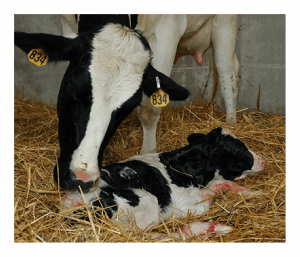
- The vaginal portion of the cervix and the cranial portion of the vagina were examined using a digital vaginoscope in cows ranging from 0 to 70 days in milk (DIM) or at insemination.
Results
- Proportion cows with well-defined longitudinal cervical folds (≥75% of surface) were affected by the interaction between DIM category and parity, as it was smaller for primiparous compared with multiparous cows evaluated 0 to 35 DIM, but not from 36 to 70 DIM.
- Proportion of cows with well-defined longitudinal cervical folds increased with greater postpartum intervals, but no further change was observed after 36 to 50 DIM.
- Cows with calving problems were less likely to have well-defined longitudinal cervical folds from 36 to 50 DIM.
- Cows diagnosed with adhesions (0.5%), double external uterine ostium (1.7%), vaginal septum (0.6%), masses (1.2%), urovagina (0.7%), and scar tissue (0.9%) represented a small proportion of the population; however, only cows with urovagina had greater odds of becoming reproductive ineligible.
- Proportion of cows with metritis was 5.1% (0 to 7 DIM) and 7.4% (8 to 21 DIM), which was not associated with outcomes of interest.
- Proportion of cows diagnosed with purulent vaginal discharge (PVD) was 11.9% (22 to 35 DIM), 8.5% (36 to 50 DIM), and 6.3% (51 to 70 DIM). Cows with PVD had reduced risk of receiving artificial insemination (AI) (51 to 70 DIM), smaller proportion of cows pregnant by 305 DIM (36 to 70 DIM), and increased odds of reproductive culling (36 to 70 DIM).
- The presence of bloody discharge at the day of AI was negatively associated with the odds of becoming pregnant.
In conclusion, data from this study support a negative association between calving problems and the proportion of cows with well-defined cervical folds between 36 and 50 DIM. Interestingly, close to half of postpartum dairy cows continue to display cervical prolapse from 51 to 70 DIM. Beyond well-established associations between PVD with subsequent fertility, outcomes from the present study highlighted the potential relevance of less studied cervical and vaginal conditions (e.g., urovagina).
Access the paper at: https://www.sciencedirect.com/science/article/pii/S0093691X25000305?via%3Dihub
Effect of gonadorelin dose and an additional gonadorelin treatment 2 days after the initiation of Resynch-25 on ovarian dynamics and fertility of lactating Holstein cows
Iago M. R. Leão, Carlos E. C. Consentini, Marcelo S. El Azzi, Everaldo Anta-Galván, Teresita Valdés-Arciniega, Lucas Oliveira e Silva, Roberto Sartori, and João Paulo N. Martins
Reducing the interval between inseminations (IBI) is crucial for improving reproductive efficiency on dairy farms. To achieve this, ovulation resynchronization programs were developed to shorten IBI and enhance the reproductive performance of nonpregnant cows. The objective of this study was to improve the ovulatory response at the start of the Resynch-25 protocol by increasing the GnRH dose from 100 µg to 200 µg, and administering a second GnRH treatment 56 hours after initiating the protocol.
Study population and outcomes assessed
- The experiment was conducted from March to September 2020 on a Wisconsin dairy farm (about 2,450 milking cows).
- The experiment consisted of a 2 × 2 factorial design.
- A total of 2,111 previous services were used: 1,931 artificial insemination (AI) and 180 embryo transfers (ET) in 1,438 Holstein lactating cows (510 primiparous and 928 multiparous).
- Cows received 100 or 200 µg GnRH, based on ear tag number (odd or even).
- Cows were assigned to receive GnRH once (25 days after AI or 18 days after ET) or twice (25 and 27 days after AI, or 18 and 20 days after ET).
- On day 32, nonpregnant cows (n = 1,076) were classified as with or without a corpus luteum (CL).
- Nonpregnant cows with a CL continued the Resynch-25 protocol, receiving PGF2α on days 32 and 33, GnRH 32 hours later, and timed AI 16 hours after the last GnRH.
- Blood samples were collected on days 25, 32, and 34 to measure serum P4 concentrations.
- Transrectal ultrasonographic exams were performed on days 25, 29, 34, and 36 to assess ovarian parameters and ovulatory response to the GnRH treatments.
Results
- Extra GnRH treatment on day 27 post-AI did not increase the ovulatory response between days 25 and 29.
- A greater proportion of cows receiving 200 μg GnRH had a follicle ≥9 mm compared with cows receiving 100 μg GnRH (91.0% [201/221] vs. 85.0% [199/234], respectively).
- GnRH dose and GnRH day did not affect pregnancy per AI (P/AI) 32days after the pretreatment AI that averaged 49.0%.
- Pregnancy per AI 32 days after insemination of cows that continued the Resynch-25 was not affected by GnRH dose.
- GnRH dose or GnRH day treatments did not affect circulating P4 concentration on day 32.
- The absence of a functional CL on day 25 and ovulation at the initiation of the protocol were positively associated with improved fertility.
In conclusion, a higher dose of GnRH on day 27 did not enhance the ovulatory response or improve fertility. Ovulation at the start of the protocol only improved fertility in cows with a functional CL on day 25. These findings suggest that technologies capable of accurately identifying CL functionality on day 25 could help optimize resynchronization strategies during nonpregnancy diagnosis, thereby improving fertility and optimizing hormone use on dairy farms.
Access the paper at: Effect of gonadorelin dose and an additional gonadorelin treatment 2 days after the initiation of Resynch-25 on ovarian dynamics and fertility of lactating Holstein cows – ScienceDirect
Genetics of twinning rate in Italian Holsteins
J.S. Katende, A. Costa, M. Santinello, F. Galluzzo, M. Marusi, R. Finocchiaro, M. Cassandro, and M. Penasa
Twinning is undesirable in dairy cattle since it is associated with higher risk of abortion, calving difficulty, and metabolic and reproductive issues. Moreover, twin calves are lighter at birth and generally have a lower survival rate. As a result, twinning leads to significant economic losses for the farmer. In the current study, genetic variance and h2 of twinning rate (TR) were estimated as the first step to investigate the feasibility of reducing or at least curb its increase in the Italian Holstein population through genetic strategies
Study population and outcomes assessed
- Calving records (n = 1,625,859) registered between 1992 and 2022 in 1,830 Holstein herds were available.
- A binomial logistic regression model was used to investigate the odds of TR across parities and calving seasons. Heritability and repeatability of TR were estimated using single-trait models, namely linear animal, linear sire, linear direct-maternal, threshold animal, threshold sire, and threshold direct-maternal models.
- A multiple-trait approach was adopted considering TR in different parities as different traits to estimate h2 within parity, as well as genetic and phenotypic correlations between parities.
- Parity and calving season were included as fixed effects, and animal, permanent environmental, sire, and direct-maternal genetic effects were included as random, depending on the model.
Results
- The overall TR was 2.71% and 90% of the herds had TR from 0.00% to 4.49%.
- The greatest TR was observed in parity 3 and ≥4 (odds ratio ∼20) compared with parity 1, and in summer (odds ratio = 1.32) compared with winter.
- Overall, the h2 increased with parity, ranging from 0.005 (parity 1) to 0.029 (parity ≥4) with linear models, and 0.061 (parity 1) to 0.142 (parity 3) with threshold models.
- Regardless of the model used, the genetic correlations between parities ranged from moderate to strong (0.66 to 0.99).
- Genetic correlations were stronger between multiparous than between primiparous and multiparous cows.
- Pearson correlations between sires’ estimated breeding value (EBV) for TR obtained from single-trait linear and threshold models were close to unity, hinting at a limited re-ranking of bulls.
In conclusion, this result suggests that there is room to carry out a genetic evaluation for TR with the linear animal model, which is easier to be implemented in routine genetic evaluation than the threshold model, and manipulate the occurrence of twins through genetic strategies in the Italian Holstein population to stabilize or reduce TR.
Access the paper at: https://www.journalofdairyscience.org/article/S0022-0302(25)00126-2/fulltext
Featured Column
Genomic selection fosters improved fertility

John Cole
During the last quarter century of the 1900s, dairy cattle reproduction started declining – with no end in sight. Looking in the rearview mirror, this decline coincided with a strong emphasis on genetic selection for increased milk production, which inadvertently negatively impacted fertility rates. However, recent advancements in genetic selection helped to reverse this trend in the past couple decades.
John Cole, Council on Dairy Cattle Breeding, explained that genomic selection has been a critical tool for slowing the decline in Holstein cow fertility – with a steady reversal of the declining trend within the breed, during his 2024 Dairy Cattle Reproduction Council (DCRC) Annual Meeting presentation. In addition to genomic selection, improved environmental and management strategies have contributed to improved repro performance in U.S. dairy herds – and beyond.
“Fertility within a herd can be improved by using bulls with high genomic breeding values for existing fertility traits and these improvements can be seen in a single generation,” Cole stated. He admitted that fertility traits, such as daughter pregnancy rate (DPR), heifer conception rate (HCR), and cow conception rate (CCR), possess low heritability. Yet, coupling these traits with effective management strategies and a “cow-friendly” environment helps improve dairy herds’ reproductive performance.
Correlations among fertility traits
Digging a little deeper into fertility traits, Cole discussed the genetic (rg) and phenotypic (rp) correlations among the four U.S. fertility traits – DPR, HCR, CCR, and early first calving (EFC). See Table 1. “Some traits are highly correlated, such as DPR and HCR (rg = 0.930, rp = 0.792), whereas others have lower correlations, such as DPR and EFC (rg = 0.293, rp = 0.041),” he explained. “All four traits are positively correlated, which means that an improvement in one measure of fertility will also result in gains in the other traits.” Heritabilities are shown on the diagonal in Table 1.
Table 1. Genetic correlations (above diagonal), heritabilities (on diagonal), and phenotypic correlations (below diagonal) for DPR, HCR, CCR, and EFC
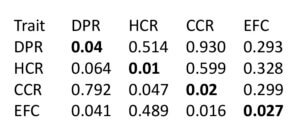
“While heritabilities for each of these traits are low, selection benefits can accrue steadily over time when index selection is used,” Cole explained. “A low heritability implies that the amount of genetic variation among individuals is low and affects the reliability of genetic evaluations.” He noted that the reliability of a bull’s evaluation changes as a function of the number of daughter records available and the trait’s heritability. Simply stated, as the number of daughter records increases, the bull’s genetic reliability increases.
Given the fertility traits’ low heritability, Cole recommends considering these traits as part of a selection index. In 2003, fertility was added to the Lifetime Net Merit selection index with a weight of 7%. Today, the fertility traits receive a combined total of 6.7% of the relative emphasis in the index.
“Using independent culling levels (thresholds) added on top of the index is strongly discouraged,” Cole stated. “We have known since the 1940s that this is less efficient than using a properly constructed index.”
When it comes to fertility traits, what still needs improvement? Where has the industry made progress? Noting that DPR is positively associated with favorable reproductive performance in heifers and cows, Cole reported that the downward trend in DPR has finally levelled off. HCR, CCR, and EFC trends reflect favorable progress. See Figure 1
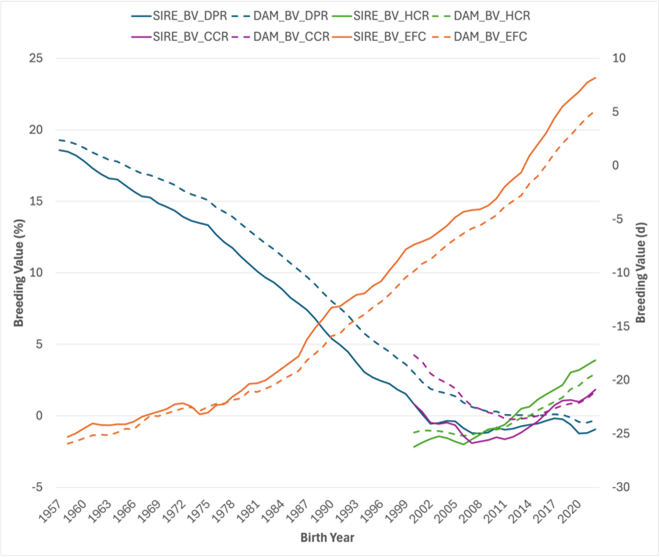
Figure 1. Genetic trends of bulls (solid lines) and cows (dashed lines) for DPR (blue lines), HCR (green lines), CCR (purple lines), and EFC (orange lines).
Sires’ fertility impact
Regarding the other half of the equation – sire fertility – the industry uses sire conception rate (SCR) evaluations to compare sires. “Sire conception rates are computed using confirmed pregnancies, rather than non-return rates used in older evaluations,” Cole explained. “Thus, they are more accurate.” Keep in mind that SCR is a phenotypic evaluation; differences among bulls reflect genetic, environmental, and management differences.
The United States is not an “island” when it comes to dairy cattle evaluations. With an eye on future opportunities for improving U.S. dairy cattle evaluations, Cole mentioned Interbull’s multi-trait across-country evaluations (MACE) for five fertility traits. Eight countries provide first service to conception (FSTC) or first service to last service (FSLS) for Trait 4, which measures a lactating cow’s ability to conceive. The United States currently fills in that trait with DPR.
“The genetic correlations between DPR and these countries’ FSTC or FSLS are only about 2% lower than the correlations among those countries for Trait 4,” Cole said. “Initially, the U.S. Department of Agriculture (USDA) did not consider FSTC or FSLS when developing DPR due to inconsistencies in the insemination records available before 2000. However, with modern synchronization programs and delayed breeding of high-producing cows, the inclusion of FSTC in current evaluations is recommended.” Why? Cole answered, “First service to conception allows for independent measurement of each cow’s fertility – offering more flexibility in reporting and evaluating fertility. This is necessary as new technologies allow for extending the voluntary waiting period further from the 50 days assumed by DPR.”
The current FSTC phenotypic definition is the subtraction of the reported day of conception by the first insemination attempt. If a cow fails to conceive by the 200th day, she is assigned a value of 200 days + 30-day penalty for that lactation cycle. Current estimates from the USDA-AGIL (Animal Genomics and Improvement Laboratory) for FSTC found a mean value of 63 days and a median value of 53 days. “This means, that on average, it takes roughly three cycles for a cow conceive,” Cole noted. Preliminary estimates of FSTC’s heritability range from 1.2% to 4.7%, which is on par with other fertility traits currently under evaluation. “This trait could replace DPR or CCR, or be added to the existing portfolio of fertility measures.”
What does the future hold?
“Developing new devices for measuring cows’ reproductive physiology may make it feasible to incorporate new traits into fertility selection indices,” Cole remarked. For example, anti-Müllerian hormone concentrations in blood are quite heritable. Also, the intervals from calving to estrus and calving to first postpartum elevated progesterone concentrations are moderately heritable. Furthermore, anogenital distance is easy to measure, has moderate heritability, and is associated with lower pregnancy rates at first artificial insemination.
In contrast, heritabilities are low for duration and intensity of estrus, progesterone concentrations during the luteal phase, and embryo survival after embryo transfer. Martin, et al. (2022b) reported that the size and position of the reproductive tract has a higher heritability (0.11) than, and favorable correlations with, traditional fertility traits. Heringstad and Wethal (2023) also showed that cow activity measurements are heritable and useable for genetic evaluations.
“The most substantial challenge with new traits is always the development of sustainable data flows to support – not only initial development of a trait – but also ongoing evaluations,” Cole commented. “A related issue is that of data collection frequency. Monthly observations are adequate for some phenotypes but not others.”
In conclusion, Cole said that genetic improvement is an important tool for improving reproductive performance, but environmental and management strategies are also very important because they explain much more of the total variance among individuals than genetic differences. He is optimistic about improving dairy cattle fertility, given the potential for new traits that are closer to the cow’s biology, such as FSTC. Plus, new technologies may allow researchers to develop phenotypes that are closely related to the cow’s underlying biology.
To read Cole’s complete DCRC Annual Meeting proceedings paper, log into the DCRC Member Center. References are provided in the paper.
Featured Member
Editor’s Note: For each issue, DCRC interviews a member to learn more about his/her career, involvement with DCRC and thoughts about dairy cattle and reproduction.
Eduardo Oliveira
Zoetis
DCRC member since 2019

Eduardo Oliveira
A fourth-generation cattle rancher, Eduardo Oliveira has immersed himself in the world of farm animals since childhood. In 2015, he earned a Doctor of Veterinary Medicine degree from the Federal University of Goiás. Oliveira completed a residency in dairy production medicine at the University of California-Davis Veterinary Medicine Teaching and Research Center seven years later. Additionally, he attained a master’s degree in veterinary medical sciences from the University of Florida in 2019 and a PhD in animal biology and physiology from UC-Davis in 2022. Currently, Oliveira works as a dairy production specialist for Zoetis Animal Health.
Zoetis, a world-leading animal health company, specializes in medicines and vaccines for animals. The U.S. cattle business unit is one of the largest within Zoetis’ global operations. “Zoetis builds lasting partnerships with veterinarians and producers – offering more than just products by providing targeted support to meet our customers’ needs,” Oliveira stated.
Engages with producers, consultants
Oliveira’s work responsibilities include engaging with dairy producers and their consultants (e.g., veterinarians and nutritionists) to identify inefficiencies in processes, personnel and protocols affecting production. “I focus on areas such as transition cow risk assessments, milk quality, reproduction, calf/heifer raising and genetics,” he explained. Furthermore, he prepares and presents reports on herd health, reproduction and genetics to recommend improvements. Oliveira is also in charge of conducting training to ensure adherence to standard operating procedures (SOP) on dairies and building relationships with key industry influencers, such as veterinarians, nutritionists, artificial insemination (AI) representatives and university faculty. Within Zoetis, he works with his account team to profile clients, identify growth opportunities and collaborate in team selling efforts for efficient use of resources, account follow-up and add value to the company’s products.
As a veterinary student, Oliveira became passionate about reproduction. During his graduate studies, Oliveira deepened his understanding of the critical role the transition period and uterine diseases play in reproduction outcomes for dairy cows.
“Reproductive efficiency is crucial to the financial success of dairy operations, which has only increased my interest in the field,” he remarked.” A strong understanding of dairy cattle reproduction is essential for distinguishing yourself as a professional in the dairy industry.”
DCRC provides ‘bridge’
A DCRC member since 2019, Oliveira understands the key role the organization has played in advancing dairy cattle reproduction education over the last two decades. “DCRC acts as a ‘bridge’ for producers, the dairy industry and academia,” he said. “By translating research into practical best practices, DCRC offers valuable insights that improve reproductive performance, reduce costs and enhance overall herd health and productivity. These contributions have a direct impact on the efficiency, productivity and sustainability of dairy operations.”
On a personal note, Oliveira complimented the bilingual reproduction protocols reviewed by DCRC. “They’re especially helpful to me,” he noted. “The bilingual reproduction protocols provide a valuable tool to offer added value to my customers and help establish SOPs for dairy farms. Furthermore, the webinars and annual conference offer invaluable opportunities to engage in meaningful discussions on routines established on dairy operations, explore the future of dairy farms and foster networking connections within the industry and academia.”
Webinars, meetings foster continuous learning
By being involved in DCRC, Oliveira has gained invaluable information. He listed two examples. During a DCRC webinar, Oliveira learned that employee training and retention tie back to the importance of focusing on the basics, which remains limited in some dairy operations. “Ensuring that everyone understands the basics of cow transitions and reproduction, that the employees are well-trained, that SOPs are clearly understood, and that accurate data are recorded on the dairies is essential for operation efficiency,” he explained.
“From my experience of working on various dairy operations, I believe there is still a lot of room for improvement,” Oliveira stated. “A common issue I have observed is the disconnection between protocols established by veterinarians (i.e., what’s documented on the dairy computer) and what the farm crew is actually doing. To address this, it’s crucial to prioritize training to foster successful employee performance and achieve employee retention.
“Robert Hagevoort’s presentation (2024 DCRC Annual Meeting and Feb. 3, 2025 webinar) provided many valuable insights,” Oliveira continued. “His talk helped me realize the importance of involving employees in decision-making, ensuring they understand metrics and keeping them informed about management decisions. Clear communication, leadership and excellence are essential for creating a positive impact.”
For his second example, Oliveira recalled a presentation on the use of monitoring systems and how dairies can integrate these advanced technologies into their daily routines to improve process efficiency and enhance animal health and reproduction performance. “These tools have become common in dairy operations and using them correctly is crucial for success,” he commented. “If not used properly, reproduction issues may arise within the operation.”
For the future, Oliveira said there are still dairies that struggle with low conception rates due to suboptimal management practices. “While genetic selection has improved milk production and influenced reproduction, fully understanding the benefits of genetics and how to build healthier and more profitable herds is essential,” he stated. “Proper use of genetics and reproductive protocols opens more opportunities for culling decisions, especially given today’s high replacement costs. Balancing herd size and maintaining healthy cows within a high fertility cycle are key to building a healthier, more productive and profitable herd.”
Industry Calendar
- Dairy Calf & Heifer Association Annual Conference and Trade Show, April 8-10, Westminster, Colorado
- Tri-State Dairy Nutrition Conference, April 14-16, Fort Wayne, Indiana
- ADSA Discover Conference, May 5-8, Itasca, Illinois
- Precision Dairy Conference, June 17-18, Bloomington, Minnesota
- ADSA Annual Meeting, June 22-25, Louisville, Kentucky
- Holstein Association USA National Convention, June 23-26, St. Louis, Missouri
- National Mastitis Council Regional Meeting, July 22-24, Rochester, New York
- Council on Dairy Cattle Breeding Triannual Evaluation, August 12
- World Dairy Expo, September 30-October 3, Madison, Wisconsin
- Dairy Cattle Reproduction Council Annual Meeting, November 11-13, Middleton, Wisconsin
- Council on Dairy Cattle Breeding Triannual Evaluation, December 2
- National Mastitis Council Annual Meeting, January 26-29, Birmingham, Alabama
- World Ag Expo, February 10-12, Tulare, California
- Central Plains Dairy Expo, March 17-19, Sioux Falls, South Dakota
