
Newsletter – 2026 – February
President's Message
 President’s Message
By Jennifer Spencer, Texas A&M AgriLife
2025-2026 DCRC President
Happy New Year, everyone! As we step into 2026, I hope the year has started strong for you, your teams, and your herds. It’s an exciting time for dairy reproduction, with new challenges shaping strategic decisions on farms and fresh opportunities emerging from technology, data, and workforce development.
Looking back, I want to thank everyone who engaged with DCRC in 2025. Our annual meeting in Middleton, Wis., was a tremendous success. The enthusiasm, collaboration, and passion for advancing reproductive performance reaffirmed DCRC’s role as the trusted hub for applied science and practical solutions.
We kicked off the year with a fascinating webinar on Jan. 20, “Deciphering the Roles of FSH in the Ovary Beyond Antral Folliculogenesis,” featuring Anna Denicol, University of California-Davis associate professor. Denicol explored new insights into follicular biology and the implications for assisted reproduction. Looking ahead, we have two more webinars scheduled:
- Feb. 4, 2 p.m. Central time (Chicago time) – “Strategic Economics of Breeding: Optimizing Beef-on-Dairy and Replacement Heifer Needs,” presented in Spanish, by Victor Cabrera, University of Wisconsin-Madison.
- March 12, 2 p.m. Central time (Chicago time) – “Effects of Rumen-protected Choline on Health and Reproduction of Dairy Cow,” presented by Fabio Lima, University of California-Davis.
DCRC members can view webinars free of charge at www.dcrcouncil.org. (Log into the DCRC Member Center.) Veterinarians can earn one Registry of Approved Continuing Education (RACE) credit for attending webinars presented in English. To learn more about this opportunity, contact JoDee Sattler at: jodee@dcrcouncil.org. Go to: www.dcrcouncil.org to register for webinars.
All webinars are free for members and will be archived for later viewing. These webinars continue our mission to deliver cutting-edge information that producers, veterinarians, consultants, and allied partners can apply immediately on farm. If you have ideas for future webinar topics or suggestions for speakers and formats, please reach out to DCRC Education Chair Eduardo Oliveira at: eduardo.oliveira@zoetis.com.
I am also delighted to share that DCRC is hosting a pre-conference session at the High Plains Dairy Conference on March 3. The High Plains Dairy Conference will be held March 3-4, at the Embassy Suites in Amarillo, Texas. This event is a great opportunity to connect with dairy professionals from across the region, expand your network, and discuss reproduction, workforce development, automation, and herd performance. I hope to see many of you there!
Industry updates, key reproductive issues
The dairy reproduction landscape continues to evolve rapidly – driven by changing herd demographics, genetics, economics, and technology:
Dairy Heifer Inventories & Reproduction Strategy: Replacement heifer inventories in the United States are at historic lows, driven in part by shifts in breeding strategies and long-term demographic trends that have tightened the pipeline of replacements entering the milking herd. Current projections suggest that replacement numbers may not rebound until approximately 2027. As a result, effective reproductive management is more critical than ever, as fewer heifers entering the herd place greater strategic value on each successful pregnancy and calving.
Beef-on-Dairy Breeding Trends: Beef-on-dairy matings continue to play a significant role in breeding decisions and have increased rapidly over the past decade as producers seek greater economic value from calves compared with traditional dairy bull calves or surplus heifers. While this strategy offers important economic opportunities, it also influences the availability of replacement females and underscores the need for intentional, data-driven reproductive planning.
Reproductive Data and Precision Management: Advanced tools, including machine learning models that integrate herd history, health events, environmental conditions, and genomic information, are increasingly being used in research and applied settings to predict reproductive outcomes and optimize breeding decisions. In parallel, precision livestock technologies, such as automated heat detection systems, activity and rumination monitors, and reproductive event detection software, are becoming standard components of herd management programs. These tools enable earlier identification of reproductive challenges, support timely intervention, and improve the precision and consistency of breeding programs when implemented effectively.
These developments underscore the growing complexity of reproduction management on modern dairies. DCRC remains committed to translating science into practical, on-farm solutions that support reproductive success and herd sustainability.
Gratitude and looking forward
I extend my sincere appreciation to the DCRC board of directors, committee chairs, and our dedicated staff, including Kristy Mach, JoDee Sattler, Sue Schatz, Kyle Wieskus, and Christie Nissen, for their tireless efforts to make our programs, webinars, and annual meeting exceptional.
To our members, thank you for your continued engagement, whether you attend live events, participate virtually, join committees, or help expand our reach through your networks.
To our sponsors, your partnership enables us to deliver high-quality education, research dissemination, and community connection. We are deeply grateful for your support.
As we look ahead to the 2026 DCRC Annual Meeting in Columbus, Ohio (Nov. 10-12), I am energized by the opportunity to build on our momentum and continue advancing reproductive efficiency, innovation, and professional development for all who serve the dairy industry.
Please stay connected through our website and social media channels on Facebook and LinkedIn. Your engagement helps extend DCRC’s impact across the dairy community.
Serving as your president is an honor. Let’s make 2026 another exceptional year for DCRC and dairy reproduction around the globe.
Research Summaries
Incidence and timing of pregnancy loss following timed artificial insemination or timed embryo transfer with a fresh or frozen in vitro-produced embryo
A.D. Crowe, J.M. Sánchez, S.G. Moore, M. McDonald, M.S. McCabe, F. Randi, P. Lonergan, and S.T. Butler
The primary aim of this trial was to characterize the incidence and timing of pregnancy loss (PL) in lactating dairy cows from the service event (timed artificial insemination [TAI] or timed embryo transfer) through to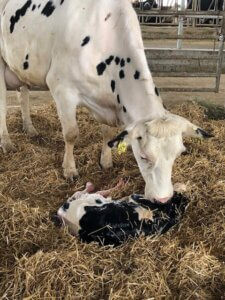 parturition and to compare outcomes between TAI and embryo transfer using fresh or frozen in vitro-produced (IVP) blastocysts. This study integrated early biomarkers, including progesterone (P4), interferon-stimulated gene-15 (ISG15), and pregnancy-specific protein B (PSPB), with ultrasound diagnoses and calving records to screen the key periods of pregnancy loss in cows after AI and embryo transfer (ET) with fresh or frozen embryos. The research highlights differences in pregnancy establishment and maintenance across treatments, emphasizing the challenges with cryopreserved IVP embryos in reproductive programs for lactating dairy cows.
Study population and outcomes assessed
- The study involved 1,106 lactating Holstein cows in a seasonal pasture-based system in Ireland synchronized using a progesterone-Ovsynch protocol, blocked by parity, calving date, and Economic Breeding Index, and randomly assigned to (TAI; n=243) or timed embryo transfer (ET; n=954), with fresh (ET fresh; n=482) or frozen (ET frozen; n=472) grade 1 IVP blastocysts (see Table 2 in manuscript).
- Predicted probability of pregnancy per service event (P/S) at multiple time points: day 7 (serum P4 for AI, assumed 100% for ET), day 18 (peripheral blood mRNA abundance of ISG15), day 25 (PSPB), day 32/62/125 (transrectal ultrasound), and full-term parturition (mean day 280).
- Incidence and timing of pregnancy loss between these diagnosis points.
Results
- Predicted P/S declined over time, AI: 77.0% (day 7) to 44.0% (term); ET fresh: 100% (day 7) to 45.5% (term); ET frozen: 100% (day 7) to 30.2% (term); greater for AI and fresh ET than frozen ET from day 32 onward (P<0.05).
- Cumulative PL from day 7 to term was greater for ET frozen (69.8%), intermediate for ET fresh (54.7%), and less than AI (42.0%), P<0.05.
- Higher day 7 P4 quartiles associated with greater P/S from day 18 onward (Q1: ~23-50% vs. Q4: ~51-70%, P<0.05) and lower loss days 7-18; day 7 P4 positively correlated with day 18 ISG15 (P<0.0001) and day 25 PSPB (P=0.002).
- Longer days in milk (≥83) compared with shorter (≤75) had greater P/S on day 62 (49.4% vs. 40.0%; P=0.04), day 125 (46.8% vs. 37.8%; P=0.047), and at full term (45.3% vs. 35.6%; P=0.027).
In conclusion, timed AI and fresh IVP embryo transfer yield comparable term pregnancy rates in dairy cows, whereas frozen IVP embryos yield lower rates due to greater overall pregnancy losses. The authors underscore the need for advancements in cryopreservation to reduce PL and enhance the reproductive efficiency of lactating dairy cows.
Access the paper at: https://doi.org/10.3168/jds.2024-25139
Inflammatory and metabolic markers in postpartum dairy cows developing chronic reproductive tract disease: A case-control study
T.C. Bruinjé, O. Bogado Pascottini, and S.J. LeBlanc
The objective of this study was to investigate the associations between early postpartum inflammatory and metabolic markers, and different forms of chronic reproductive tract inflammatory disease (RTID) in Holstein cows. The authors hypothesized that, in clinically healthy cows, inflammatory or metabolic markers during the early postpartum period are associated with the risk of RTID, purulent vaginal discharge (PVD), subclinical endometritis (SCE), or concurrent endometritis and PVD (CE) at week 5 postpartum. The secondary hypothesis was that risk factors for PVD (without endometritis) differ from those for SCE and CE.
Study population and outcomes assessed
- This study is a retrospective case-control study.
- The study was conducted using data from 1,509 cows across 2 commercial dairy herds in Ontario, Canada.
- Herds were visited twice weekly and blood samples were collected at multiple time points postpartum:
- 2 and 6 ±2 days in milk (DIM): to measure serum haptoglobin (Hp), total calcium (Ca), and nonesterified fatty acids; at 5, 8, 11, and 15 ±2 DIM for blood β-hydroxybutyrate (BHB); and at 21 and 35 ±3 DIM: for serum haptoglobin (Hp).
- Cows with calving-related or clinical disorders before 35 ±3 DIM were excluded, resulting in a study population of 355 primiparous and 548 multiparous clinically healthy cows.
- Reproductive tract health was assessed at 35 ±3DIM using Metricheck to detect purulent vaginal discharge (PVD) and Cytobrush to diagnose endometritis (≥6% polymorphonuclear cells).
- Disease status was categorized as subclinical endometritis (SCE): endometritis without PVD (n = 147), PVD: PVD without endometritis (n = 64), clinical endometritis (CE): endometritis with PVD (n = 73), or healthy controls: no PVD or endometritis (n = 619).
Results
- Concentrations of Ca were lower in CE than in SCE, PVD, or healthy cows at 2 and 6 DIM.
- Haptoglobin concentrations at 2 and 6 DIM were higher in cows with CE or SCE compared with cows with PVD or healthy controls.
- At 6 DIM, increased Hp concentrations were associated with higher odds of SCE or CE.
- Elevated BHB concentrations at 15 DIM were associated with increased odds of SCE or PVD.
- In primiparous cows only, lower Ca concentration at 2 DIM was associated with higher odds of CE.
In conclusion, overall, the findings suggest that maladaptation during the transition period, reflected by systemic inflammation and metabolic imbalance, predisposes cows to different manifestations of RTID.
Access the paper at: Inflammatory and metabolic markers in postpartum dairy cows developing chronic reproductive tract disease: A case-control study
Evaluation of machine learning predictions for early reproductive success in commercial U.S. dairies
B. Fessenden, D.J. Weigel, D. Liang, M. Borchers, F. Di Croce, and M.I. Endres
Reproductive performance has a significant impact on the profitability of dairy herds. Understanding the reproductive potential of individual cows and applying targeted reproductive management can help optimize herd reproductive performance. The objective of this study was to evaluate the ability of the early reproductive success algorithm to predict pregnancy probability by 110 days in milk (DIM) using data available at 43 DIM, which was before the end of the voluntary waiting period (VWP) for enrolled herds. The authors hypothesized that groups of cows with the highest early reproductive success machine-learning predictions would have a greater observed proportion pregnant by 110 DIM than groups of cows with the lowest predictions.
Study population and outcomes assessed
- This was a retrospective observational study.
- An early reproductive success prediction model was developed using a light gradient-boosting machine algorithm.
- The model incorporated multiple data sources, including:
Herd-level reproductive data, weather data, genomic-enhanced predicted transmitting ability (PTA), individual cow information, milk production records, health events, and previous lactation performance data.
- The study population included 9,969 multiparous Holstein cows and 9,464 multiparous Jersey cows that calved in 2022 from seven U.S. commercial dairy herds.
Results
Comparisons between the worst 10% and best 10% prediction deciles showed significant differences in:
- Pregnancy at first insemination (25.3% vs. 44.2%; 75% improvement)
- Proportion pregnant by 110 DIM (35.6% vs. 64.8%; 82% improvement)
- Proportion of cows that gave birth to a live calf to initiate the following lactation (49.1% vs. 77.8%; 58% improvement)
Additional differences between the worst and best deciles were observed for:
- Abortion incidence (20.9% vs. 6.8%; 67% improvement)
- Proportion of cows sold during the enrollment lactation (43.8% vs. 17.2%; 61% improvement)
In conclusion, these results demonstrate that the early reproductive success algorithm can effectively predict differences in pregnancy per insemination across all services, abortion incidence, cow retention, and live calf production. Further research is needed to determine whether this prediction tool can be used to help dairy producers develop targeted reproductive management strategies.
Access the paper at: Evaluation of machine learning predictions for early reproductive success in commercial US dairies
Featured Column
Manage culling on an individual basis
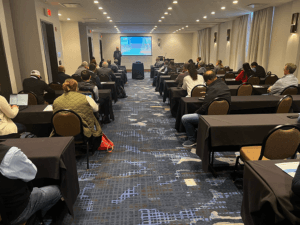 How do you define “productive life”? Currently, there are disparate views around the world on the expectations for the productive life of a dairy cow, explained Nigel B. Cook, University of Wisconsin-Madison, during the 2025 Dairy Cattle Reproduction Council Annual Meeting, held in Middleton, Wis., USA. Cook defined productive life as the period from first calving to the time of death or removal from the herd.
Cook noted that, in Europe, there has been a focus on ensuring that all cows lactate for at least five lactations. Whereas, in the United States, the focus has been on ensuring that each cow in the herd is contributing to herd profitability (Overton and Dhuyvetter, 2020). However, the U.S. national inventory of replacement heifers has fallen sharply over the last decade, leading to similar discussions about reducing herd turnover rates and increasing cow life expectancy (Dallago et al., 2021).
Proponents of increasing the duration of productive life and thereby reducing herd turnover rate claim that longer lives are reflective of healthier cows and improved animal welfare. Additionally, these proponents believe that lower turnover rates result in the need for fewer heifer replacements, thereby decreasing enteric methane emissions per kilogram of milk produced by the farm. Plus, they say that milking a cow through her third lactation ensures that her rearing costs are paid off (Dallago et al., 2021).
Cook stated, “When models are developed to optimize culling rates, they frequently point to turnover rates in the range of 19% to 29%, optimizing profit per unit of whatever is chosen as the most limiting factor (e.g., space, fat quota, etc.) (De Vries, 2020). Superficially, while each of these arguments may have some merit, a closer look at actual farm data reveals significant flaws in these arguments.”
Turnover rate can be misleading
First, when comparing herds across a range of turnover rates, analysts find herds with low turnover rates and excellent health, welfare, and productivity, but they also find herds with low turnover rates, poor health, high somatic cell counts, lame cows, and low fertility. “They are forced to have lower rates of turnover because they lack sufficient heifer replacements,” Cook remarked. In contrast, there are high turnover rate herds with good health and welfare, and excellent fertility – maintaining those high rates of culling because of a plentiful replacement supply (Brotzman et al., 2015).
Cook explained that herd turnover rate and hence mean cow longevity is an imperfect indicator of health and welfare. This phenomena led Swedish researchers to conclude that turnover rate hinges on a dairy producer’s investment decisions, farm-specific characteristics, and management practices – and not health and welfare (Owusu-Sekyere et al., 2023).
“Second, herd replacement heifers may contribute 20%-33% of a whole herd’s methane emissions, but the potential for improvement when turnover rates fall from 35% to 25% is only a 6% reduction (Knapp et al., 2014),” Cook stated. “Since dairy cattle contribute less than 2% of the overall greenhouse gas (GHG) emissions in the United States, a slight reduction, while welcomed, is perhaps somewhat insignificant, compared to improvements in electricity generation and transportation emissions. The dairy industry has had a much greater impact on its GHG emissions over the last 50 years by focusing on increasing milk yield per cow (Naranjo et al., 2020), compared to the modest expected improvement from maintaining fewer replacement heifers.”
Third, the mean time from calving to breakeven to cover heifer-rearing costs is about 1.5 lactations (Boulton et al., 2017). However, there is wide variation among herds. Ponder this question. Does it make economic sense to keep a low-producing cow in poor health in the herd long enough to pay off her rearing cost, rather than remove that cow and replace her with a higher-producing, healthier cow, thereby improving overall herd profitability? Very few U.S. dairy producers would answer, “yes.”
“Finally, models attempting to define an optimal economic culling rate are typically based on optimizing future cash flow of a cow, comparing that of an incumbent cow to a replacement,” said Cook. The models consider rearing costs and calf value, changes in milk production with age, and the rate of genetic progress. A simple model with these factors will typically yield an optimal turnover rate of 20%, hence a productive life of five complete lactations (De Vries, 2020).
U.S. herd turnover rate hovers at 36%
Cook noted, “Interestingly, from 2012 to 2022 in the United States, despite improvements in milk yield, milk components, fertility, and somatic cell count, herd turnover rate did not change and has stayed around 36%. Despite making huge improvements in housing, genetics, management, and nutrition, U.S. dairy producers have steadfastly refused to adopt an ‘optimal’ model of culling.” This poses the question, “Why?”
Cook offered two primary answers to that question. “First, dairy producers knew something that wasn’t put in the models and that ‘something’ is health,” he explained. “From a dairy producer’s perspective, the cost of not having enough heifers to replace a sick cow is greater than the cost of rearing a few extra replacements.”
Second, Cook believes that dairy producers don’t “manage” culling; they manage breeding. A decade ago, a typical U.S. dairy producer bred all his/her cows to a Holstein bull. Assuming that about 95% of the herd became pregnant, 48% of calves were female, and a 20% heifer-rearing completion rate (birth to calving), the replacement supply hit 37%. This means that 37 cows would be removed from the herd each year per 100 cows – leading to a mean productive life of 2.7 lactations.
A similar European herd would not breed the entire herd to a Holstein bull. Instead, they would take advantage of higher returns from a beef-cross calf. In this situation, it was more common to breed only half the herd to a Holstein replacement bull. Following a similar calculation, this led to 18 replacement heifers for every 100 cows in the herd – yielding a mean productive life of 5.5 lactations. “This increase in longevity for the average cow in the herd was not due to a difference in culling philosophy, or animal welfare, or health, but a difference in breeding management,” Cook stated.
For the last decade, the U.S. beef industry has declined due to constant drought, leading to an opportunity for the dairy industry to supply beef animals from a beef cross. This has led to a rapid increase in using beef semen in dairy herds. Concurrently, the dairy industry has switched to using sexed semen, rather than conventional semen. “These two breeding management changes resulted in a near identical or slightly lower supply of replacement heifers, and no major change in turnover rate and mean productive life,” Cook noted.
Healthspan vs. Lifespan
Because most dairy producers do not manage culling, they replace cows when they have a replacement heifer available. “In other words, they cull cows ‘one cow at a time’,” Cook remarked.
While mean cow longevity is determined by breeding management, individual cow longevity is determined by health and performance. “That should be the focus,” Cook recommended. In human medicine, there is increasing interest in the process of ageing and the ways in which we can maximize, not only lifespan – how long we live, but healthspan – how much of our lifespan is spent healthy and free of chronic ailments. “I believe the same philosophy should apply to dairy cows. We should aim for their healthspan to equal their lifespan.”
Cook added, “To that end, dairy producers should be held accountable – not to the quantity of animals that leave their farm – but to the quality of animals that leave. This is the area where we need to see improvement (Vogel et al., 2018). We see too many thin cows, lame cows, and mastitic, high somatic cell count cows in our culled population.” He encouraged dairy producers “to do better.”
Monitoring culling
Cook noted that culling reasons are notoriously unreliable and difficult to analyze. A team examined the written reason for herd removal in a group of more than 85,000 cows over a four-year cohort from 46 DairyComp305 Wisconsin herds. Overall, 26% of the cows culled were pregnant at time of herd removal. “This suggests an enormous waste in reproductive management effort,” Cook commented. In 25% of the cases, the typed removal remark was different from the disposal code reported to DHIA, suggesting that summaries using these data may be quite inaccurate (Hadley et al., 2006). The most common reasons for removal in these herds were low milk production (18%), udder health (15%), death (15%), reproduction (14%), illness (10%), lameness (7%), and injury (4%). “This suggests that we need to continue to make improvements in our herds to promote healthspan,” said Cook
“By taking measures to address and prevent chronic diseases on dairy farms and by training dairy producers to make better, earlier culling decisions, we will improve the quality of cows leaving our dairy herds,” Cook concluded. “Plus, cows will experience increased healthspan.”
Featured Member
Editor’s Note: For each issue, DCRC interviews a member to learn more about his/her career, involvement with DCRC and thoughts about dairy cattle and reproduction.
Tyler Hendriks
Hendriks Dairies Ltd.
DCRC Member since 2020
Meet Tyler Hendriks – no stranger to DCRC’s Excellence in Dairy Reproduction Awards winners’ circle. His dairy, Hendriks Dairies Ltd., earned Platinum in 2025, 2023, and 2020 in this highly respected awards program.
Hendriks Dairies Ltd., Brucefield, Ont., Canada, consists of 120 Jerseys and 250 acres of farmland. Milking three times daily, the Jerseys average 74.5 pounds of milk a day, with 5.7% fat and 4.2% protein.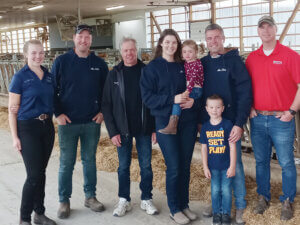 Currently, the herd’s preg rate sits at 43%.
“We run a high percent sexed Jersey semen to make a large surplus of heifers to maintain a fresh cow sales stream,” Hendriks remarked. “With more stagnant growth within the Canadian dairy industry, the fresh cow Jersey sales is where we expect our farm to grow.”
Making his presence known
At Hendriks Dairies Ltd., Hendriks serves as the herdsman/field crop manager. “I try to be present for one milking shift per day – or at least see the fresh group go through the parlor,” he commented. “Also, I try to cover one of the daily calf feedings.
Additionally, Hendriks does all the shots and herdwork, with outside technicians taking care of hoof trimming and breeding services. “We run all of our land and look after all aspects of cropping – other than owning a harvester,” he commented. “We like to have as much control as possible over our feed quality.”
A third-generation, Canadian dairy farmer, Hendriks started his dairy farming career by taking over his uncle’s Holstein herd and quota when he was 21 years old. Then, the family transitioned to Jerseys and built equity until they could afford to partially join his father’s dairy and build a green site. “We have hopes for the fourth generation to keep Hendriks Dairies Ltd. going,” Hendriks stated.
Reproduction: Overall herd health metric
The three-time Platinum winner places a strong emphasis on dairy reproduction because it is a great metric on overall herd health and performance. “Being in the high fertility cycle helps ensure our herd has high milk peaks, better feed efficiency, and a consistent and predictable calving stream many months out,” said Hendriks. “There is research correlating pregnancy rates to financial success, which helps our lenders have confidence in our business plans as we look to our next expansion phases.”
With two in-person DCRC Annual Meetings under his belt, Hendriks described the meeting as a “great time” and plans to attend future meetings – even if he’s not in the winners’ circle. He commented, “At a DCRC event, there is direct access to researchers at the forefront of reproductive research. Plus, the speakers of the webinars and podcasts I listen to are accessible in a way no other event can create.”
After attending his first DCRC Annual Meeting, his dairy started a second prostaglandin shot on its Ovsynch program. “We saw our results climb 8% within four months,” Hendriks stated.
“At the 2025 DCRC Annual Meeting, there were some very effective breakout sessions discussing the optimal time a cow should be present in your herd,” he noted. “There is a lot of ‘noise’ within the dairy world that cows need to last forever. It was very refreshing to see research showing that sometimes an extra lactation out of every cow isn’t the best decision.”
Industry Calendar
- DCRC Webinar (presented in Spanish) with Victor Cabrera, February 4
- World Ag Expo, February 10-12, Tulare, California
- Professional Dairy Producers Business Conference, March 4-5, Madison, Wisconsin
- DCRC Webinar with Fabio Lima, March 12
- Central Plains Dairy Expo, March 17-19, Sioux Falls, South Dakota
- Council on Dairy Cattle Breeding Triannual Evaluation, April 7
- Dairy Calf & Heifer Association Annual Conference and Trade Show, April 7-9, Tucson, Arizona
- NMC Regional Meeting, June 16-18, Green Bay, Wisconsin
- Council on Dairy Cattle Breeding Triannual Evaluation, August 11
- World Dairy Expo, September 29-October 2, Madison, Wisconsin
- Dairy Cattle Reproduction Council Annual Meeting, November 10-12, Columbus, Ohio
- Council on Dairy Cattle Breeding Triannual Evaluation, December 1
- NMC Annual Meeting, January 25-28, Jacksonville, Florida
Upcoming Webinars
DCRC schedules February 4 and March 12 webinars
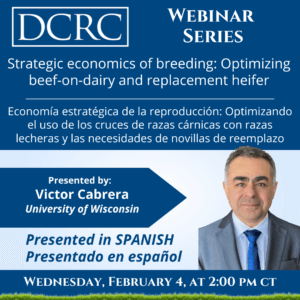 “Strategic economics of breeding: Optimizing beef-on-dairy and replacement heifer” (Economía estratégica de la reproducción: Optimizando el uso de los cruces de razas cárnicas con razas lecheras y las necesidades de novillas de reemplazo), presented in Spanish, headlines the Feb. 4 Dairy Cattle Reproduction Council (DCRC) webinar. The free webinar starts at 2 p.m. Central time (USA/Canada). Victor Cabrera, University of Wisconsin, will serve as the instructor for this one-hour webinar.
To register for this webinar, go to: https://bit.ly/DCRCFeb4Web. If you are a DCRC member and cannot attend the live program, you may access the webinar at www.dcrcouncil.org after Feb. 18.
Breeding strategies on dairy farms are increasingly influenced by the economic opportunities of beef-on-dairy matings alongside the need to maintain an adequate supply of replacement heifers. This presentation will explore the economic trade-offs involved, focusing on how herd demographics, reproductive performance, and market conditions affect optimal breeding strategies. Practical decision frameworks and economic modeling will be presented to illustrate how producers can balance short-term cash flow with long-term herd sustainability. Attendees will gain insights into applying these principles to maximize profitability under varying farm conditions.
(Las estrategias reproductivas en las granjas lecheras están cada vez más influenciadas por las oportunidades económicas de los cruces de razas cárnicas con razas lecheras, junto con la necesidad de mantener un suministro adecuado de novillas de reemplazo. Esta presentación explorará las compensaciones económicas involucradas, centrándose en cómo la demografía del hato, el desempeño reproductivo y las condiciones del mercado afectan las estrategias óptimas de reproducción. Se presentarán marcos prácticos de toma de decisiones y modelos económicos para ilustrar cómo los productores pueden equilibrar el flujo de caja a corto plazo con la sostenibilidad del hato a largo plazo. Los participantes obtendrán información sobre cómo aplicar estos principios para maximizar la rentabilidad bajo diversas condiciones de la granja.)
Cabrera is a leading expert in data-driven decision support for dairy farm management, integrating applied research, interdisciplinary approaches, and participatory methods to develop practical, user-friendly tools that enhance farm profitability, environmental stewardship, and long-term sustainability. He leads the Dairy Brain project, a pioneering initiative in data integration and analytics for dairy farming, and actively contributes to the RuFaS project, which advances resilient and climate-smart agricultural systems.
March webinar address effects of rumen-protected choline
Register for the Dairy Cattle Reproduction Council’s (DCRC) March 12 webinar – Effects of Rumen-protected Choline on Health and Reproduction of Dairy Cows – starting at 2 p.m. Central time (Chicago time). Fabio Lima, University of California-Davis associate professor of livestock health and theriogenology, will lead this free, one-hour webinar.
Rumen-protected choline (RPC) has emerged as a critical nutritional tool to support metabolic health, lactation performance, and reproductive efficiency in modern dairy systems. This webinar will review the biological role of choline, summarize evidence from meta-analyses and recent large-scale field trials, and highlight its effects on milk yield, metabolic disorders, and reproductive outcomes. Practical implications for transition cow management, profitability, and dairy sustainability will be discussed based on published data and ongoing field research.
Go to: https://bit.ly/DCRCMar12Web to register for this DCRC webinar. If you are a DCRC member and cannot attend the live program, you may access the webinar at www.dcrcouncil.org by March 26.
Lima received his Doctor of Veterinary Medicine degree from São Paulo State University in Brazil and completed his master’s degree and PhD training at the University of Florida. He then served as a postdoctoral associate at Cornell University, followed by a faculty appointment at the University of Illinois, before accepting his current position in the department of population health and reproduction at the School of Veterinary Medicine, University of California-Davis, in 2020.
Veterinarians may earn one Registry of Approved Continuing Education (RACE) credit for attending the March 12 DCRC webinar. To learn more about this opportunity, contact JoDee Sattler at: jodee@dcrcouncil.org.
