
Newsletter – 2026 – August
President's Message
 President’s Message
By Jennifer Spencer, Texas A&M AgriLife
2025-2026 DCRC President
Dear DCRC Members,
As we move into another exciting year for the Dairy Cattle Reproduction Council, I continue to be reminded of what makes this organization so unique. DCRC has always been more than an annual meeting; it is a community where researchers, veterinarians, consultants, industry professionals, dairy producers, and students come together with one common goal: advancing reproductive efficiency through science, innovation, and collaboration.
The dairy industry continues to evolve at a remarkable pace. From genomic advancements and artificial intelligence to precision technologies, reproductive management strategies, and workforce development, our industry is embracing new opportunities while navigating increasingly complex challenges. Staying informed and connected has never been more important and I believe this year’s DCRC Annual Meeting – November 10-12 – in Columbus, Ohio, will provide exceptional opportunities to do exactly that.
Our program committee has assembled an outstanding lineup of speakers, representing universities, industry, and consulting organizations from across North America. While additional presentations are still being finalized, attendees can look forward to sessions covering many of the most relevant topics in dairy reproduction, including:
- Advancing sustainability through genetics – Phil Bachman, PEAK Genetics
- Insights on heifer reproduction: Rethinking heifer reproductive management – Douglas Duhatschek, GPS Dairy Consulting
- Optimal body measurements and body condition score of heifers at breeding – Amin Ahmadzadeh, University of Idaho
- Transition health and its impact on reproductive performance – Gustavo Schuenemann, The Ohio State University
- Uterine health, resilience, and reproductive efficiency – John Bromfield, University of Florida
- Farm transition planning and leadership – Liz Griffith, Family Farm Consulting
- Training reproductive teams to achieve success – Javier Cheng, GENEX
- Data, technology, and sustainability in modern dairy systems – Luiz Brito, Purdue University
- Data-driven management and its impact on fertility – Ronaldo Cerri, University of British Columbia
Our plenary sessions will also feature outstanding presentations from:
- Taylor McWhorter, Council on Dairy Cattle Breeding, discussing new reproductive traits from CDCB
- Jeffrey Bewley, Holstein Association USA, presenting on the use of artificial intelligence in the dairy industry
Before the scientific sessions begin, I also want to encourage everyone to take advantage of the Select Sires Educational Forum and Tour on Nov. 10. Participants will have the opportunity to visit the Kellgren Center and the Select Sires Global Distribution Center, hear directly from Select Sires leadership, participate in educational rotations on the EU Laboratory, bull health and care, visit the global distribution facility, enjoy a producer panel, witness the always-popular bull parade, and even finish the afternoon with liquid nitrogen ice cream before returning to the hotel. It will be an informative and enjoyable program to kick off the meeting!
One of the greatest strengths of DCRC has always been the willingness of our members to openly share ideas, challenge one another, and collaborate to solve real-world problems facing dairy producers. Every year, I leave our annual meeting with new ideas, new collaborations, and a renewed appreciation for the people who make this organization so valuable.
Whether you are a long-time member or attending your first DCRC meeting, I encourage you to take advantage of every opportunity you have to engage with fellow attendees. Ask questions during sessions, introduce yourself to someone new, reconnect with colleagues, and participate in the discussions that continue to make DCRC a premier organization dedicated to dairy cattle reproduction.
On behalf of the board of directors, thank you for your continued support of DCRC. We look forward to welcoming you this November for another outstanding meeting filled with cutting-edge science, meaningful conversations, and opportunities to strengthen the future of dairy reproduction.
I look forward to seeing everyone soon!
Research Summaries
Early postpartum estrous characteristics: Unveiling their predictive potential for fertility in dairy cows
Ricardo C. Chebel, Ahmadreza Mirzaei, Haipeng Yu, Guilherme Lopes Jr., and Rafael S. Bisinotto
The primary aim of this study was to investigate associations among early postpartum estrous characteristics (EPEC) detected by automated monitoring devices (AMD) within 41 days in milk (DIM) and subsequent reproductive outcomes in lactating Holstein cows. The research evaluated EPEC (occurrence and number of estrous events, duration, rumination nadir, activity peak, and heat index) as indicators of physiological resilience and predictors of fertility. Predictive algorithms integrating EPEC with health, genomic, and environmental data were developed and tested to classify cows into fertility groups. This addresses optimization of targeted reproductive management (TRM) using early estrous data to improve pregnancy rates and efficiency in commercial dairy herds.
Study population and outcomes assessed
Data came from 4,578 Holstein cows (primiparous n ≈ 1,844; multiparous n ≈ 2,734) across 3 commercial dairy herds in Florida and Georgia (pooled from 4 experiments, 2015-2023). Cows were managed in sand-bedded freestalls with 3X daily milking and total mixed ration (TMR) feeding. Key variables included calving characteristics, postpartum health disorders (e.g., metritis, ketosis, lameness), milk yield (first 4 weeks), genomic daughter pregnancy rate (gDPR), temperature-humidity index (THI) exposure, and EPEC from AMD (SenseHub) recorded 8-41 days in milk (DIM). Reproductive outcomes: pregnancy per artificial insemination (P/AI) at first service (77 ± 14 days post-AI via ultrasound/palpation), high-fertility classification (HFERT: pregnant to first service), low-fertility classification (LFERT: nonpregnant after 3 services), hazard of pregnancy, and median days open up to 250 DIM.
Results
- Overall, 38% pregnant to first service; cumulative pregnancy 67% by third service.
- EPEC prevalence (8-41 DIM): 57.6% of cows had 0 estrous events (primiparous 57.7%; multiparous 45.4%); 33.3% had 1 event; 9.1% had ≥2 events.
- Occurrence of ≥1 estrous event within 41 DIM increased odds of pregnancy to first service (odds ratio [OR] = 1.20 for 1 event, 95% confidence interval [CI] 1.01-1.44; OR = 1.16 for ≥2; P = 0.05) and HFERT (OR = 1.26 for 1 event; P = 0.07), with stronger effects in primiparous cows.
- Hazard of pregnancy to 250 DIM was greater with ≥1 estrus (adjusted hazard ratio [AHR] = 1.17 for 1 event; AHR = 1.19 for ≥2; P < 0.01).
- Median days open: 115.0 days (0 events) vs. 94.0 days (1 event) vs. 89.0 days (≥2 events; P < 0.01). Lower minimum rumination nadir was associated with improved pregnancy odds and hazard of pregnancy.
- Predictive models (incorporating EPEC + gDPR + health + environment): Bottom vs. top 25% fertility groups differed by ~23 days in median days open (127 vs. 104 days) and censoring rates by 250 DIM (28.6% vs. 23.3%). The risk of an estrous event within 41 DIM was associated with calf sex, uterine disease, nonuterine disease, quartile of gDPR, and days exposed to THI ≥68.
In conclusion, lactating dairy cows with no estrous events within 41 DIM had reduced fertility (longer days open and lower pregnancy rates), whereas a single early estrous event provided most benefits, with no consistent advantage to multiple events. The authors concluded that early postpartum estrous monitoring via AMD is a powerful tool for assessing physiological resilience and enabling targeted reproductive strategies.
Access the paper at: https://doi.org/10.3168/jds.2025-27175.
The physiological effects of induced prepartum subclinical hypocalcemia in multiparous Holstein cows
W.S. Frizzarini, P.L.J. Monteiro, J.P. Nascimento Andrade, A.L. Vang, T.O. Cunha, A.D. Beard, R.R. Domingues, M.K. Connelly, H.P. Fricke, M.C. Wiltbank, and L.L. Hernandez
Subclinical hypocalcemia (SCH) is common in dairy cows during the transition period because of the increased calcium demand for colostrum and milk production. This study aimed to assess the impact of prepartum-induced SCH on postpartum calcium homeostasis and determine the effects of prepartum SCH on postpartum dry matter intake (DMI) and milk production. The authors hypothesized that cows experiencing prepartum SCH induction would result in primed calcium homeostatic mechanisms before parturition, thereby mitigating the incidence of postpartum SCH.
Study population and outcomes assessed
- 30 multiparous Holstein cows enrolled 21 days before expected calving
- Randomized into 2 groups (n = 15/group):
- Control (CON): 6-hour intravenous saline infusion
- 5% egtazic acid solution (EGTA): 6-hour intravenous infusion to induce SCH
- Treatments were administered for a minimum of 3 days and a maximum of 14 days until parturition
- Blood samples were collected daily from enrollment to the onset of infusion and from 1 to 49 days in milk (DIM; day 1 to 49)
- During infusions, blood samples were collected immediately before infusion, hourly during infusion, and 1 hour post-infusion termination
- Milk yield was recorded daily
Results
- EGTA successfully induced prepartum SCH by reducing ionized and total calcium concentrations.
- EGTA-treated cows showed improved postpartum calcium status, with higher ionized calcium during the first 2 days after calving and higher total calcium through day 5.
- EGTA-treated cows developed resistance to induced SCH and had higher postpartum parathyroid hormone (PTH) concentrations, indicating enhanced calcium homeostasis.
- Milk yield was lower on days 16 and 18-24 in the EGTA group, but total milk production over the study period was not different between treatments.
In conclusion, prepartum EGTA infusion improved postpartum calcium homeostasis and helped prevent subclinical hypocalcemia, likely through increased PTH and serotonin concentrations. Although early milk yield was temporarily reduced, overall milk production and DMI were unaffected; suggesting this strategy may help reduce postpartum SCH. Further research is needed to clarify the underlying mechanisms.
Access the paper at: The physiological effects of induced prepartum subclinical hypocalcemia in multiparous Holstein cows
Cost-benefit analysis of feeding market dairy cows prior to slaughter compared to shipping direct
M.W. Overton, E.H.M. Goetz, S.M. Roche, J. Byrne, and T.F. Duffield
Cull (market) dairy cows often arrive at auction facilities and slaughterhouses in poor body condition, which can negatively affect animal welfare and reduce carcass value. Improving body condition before slaughter may provide economic benefits while addressing welfare concerns. This study evaluated the potential economic value of feeding market-designated dairy cows for 60 days before shipping compared with sending cows directly to slaughter.
Materials and methods
A deterministic partial budget model was developed to compare the costs and benefits of feeding cull dairy cows before slaughter. The analysis considered:
- Initial and final body condition score (BCS)
- Feed costs, including lactating cow total mixed ration (TMR) price
- Management and maintenance costs during the feeding period
- Market value changes and carcass discounts associated with different BCS levels
- Sensitivity of economic outcomes to changes in BCS, market prices, and feed costs
Results
- Feeding cows for 60 days improved body condition and increased their market value.
- Cows improving from a BCS of 2.0 to 3.0 had an estimated increase in sale value of approximately 664 Canadian dollars (CAD) compared with cows shipped directly to slaughter.
- Additional feeding costs reduced the overall benefit but could still result in profitable outcomes.
- The highest benefit-to-cost ratio (BCR) of 1.9 occurred when cows started with a BCS of 2.0 and lactating cow TMR costs were CAD $0.23-0.24/kg.
- A BCR of 1.7 was observed when market prices were CAD $4.00-4.50/kg.
- Profitability was greatest when thin cows were retained under favorable feed and market conditions.
In conclusion, feeding market dairy cows for 60 days before slaughter can improve carcass value, economic returns, and animal welfare. The approach is most beneficial for cows with low initial BCS and when feed costs are manageable. The economic value of this practice is dependent on a multitude of factors, primarily feed cost, variable market price of cull dairy cattle, and individual farm factors, such as capacity to house these cattle without affecting other animals in the dairy herd.
Access the paper at: Cost-benefit analysis of feeding market dairy cows prior to slaughter compared to shipping direct – ScienceDirect
Featured Column
How long should a cow live? It depends
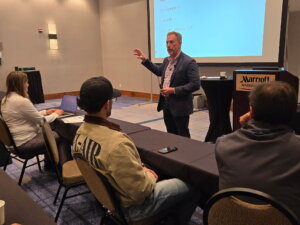 The longer we can keep a cow, the better. Right? Not necessarily.
During the 2025 Dairy Cattle Reproduction Council Annual Meeting, Stephen LeBlanc, University of Guelph, “poked holes” in the strategy to increase cow longevity and/or extend lactation length. He explained why longevity is not a measure of animal welfare or profitability. Instead, he advocated for optimizing – not maximizing – cow longevity. Think “healthspan,” rather than “lifespan,” referred to in the book “Outlive: The Science & Art of Longevity,” by Peter Attia and Bill Gifford.
LeBlanc noted that some believe that retaining cows for longer lactations or more years contributes to sustainability because fewer replacement animals would be needed; thus, reducing the environmental costs of these non-productive animals. “However, the questions should be considered critically,” he stated.
“The basis of economic decisions should be the most limiting resource for the ability of the business to sell milk to feed people,” LeBlanc believes. “That is rarely the cow.” Often, the most limiting resource is a “slot” (available space, such as milking parlor or robot capacity, water availability, land for nutrient management, or milk quota) on the dairy.
Admittedly, culling before the optimal time is costly to profit, animal well-being, and social license, so avoid poor animal health management. Instead, make it a priority to achieve good animal health, fertility, and production. This strategy allows for optimal – not always later – replacement of cows.
Premises for assessing optimal longevity
- Culling is an economic decision. The economically optimal time to sell a cow is when her net present value is less than an available replacement animal.
- Net present value refers to the expected future returns from a cow over her expected lifetime, adjusted for the time value of money. It allows for fair comparison of cows at a variety of ages and stages of lactation.
- Poor health will reduce productive lifespan, but longevity is a poor measure of health or welfare.
- Ethics and social license require quality of life for cows – not quantity.
- There are some parallels between dairy cows and high-performance athletes. Bovine “metabolic athletes” live demanding – not distressed – lives.
LeBlanc explained that a long productive lifespan dilutes the cost of bringing a heifer into the herd. However, that does not mean every cow should be kept as long as possible. “The right time to sell a cow is not after she has ‘paid for herself’,” he stated.
Despite the significant investment made when raising a heifer into a lactating cow, don’t be afraid to cull a poor-performing 2-year-old cow. “It’s ‘perverse logic’ to not cut your losses,” said LeBlanc.
“The best time to replace any animal – young or old – is when their future contribution to profit is less than an available replacement,” LeBlanc stated. “That time varies as a function of production, health, and fertility, and the prices of milk, market cows, and replacements.”
LeBlanc added that each cow has her own “age optimum,” which varies over time, and there is no ideal herd culling rate. Simply stated, don’t strive to maximize the proportion of older cows in your herd.
Replacement supply influences culling, longevity
The supply of replacements drives culling rate and average longevity. With dairy x beef calf prices high in recent years, some managers created too many dairy x beef calves and consequently fell short with replacements (to optimize culling). In this scenario, the milking herd culling rate decreased and cow longevity increased. “This does not reflect an improvement in cow welfare,” LeBlanc stated. “In fact, cows with chronically high somatic cell count (SCC), long days open, or persistent mild lameness may be retained when milk quality, animal welfare, and profitability would be improved if they were replaced. This illustrates the disconnection of dairy cow average lifespan with health, welfare, or herd profit.”
Admittedly, it’s challenging to determine a cow’s optimal time of replacement and optimal length of lactation. LeBlanc noted that a few economic models met this challenge.
“Even for high-producing, persistent cows, these models still suggest that calving every 12-13 months is economically optimal,” he commented. “This maximizes the amount of a cow’s life spent closer to peak, which is the most profitable. While high-producing or persistent cows can go longer before becoming unprofitable, they are more profitable by having one more peak of lactation in their normally expected herd life than by extended lactation and spending more of their life on the lower end of the lactation curve.”
LeBlanc added, “Considering profit over 1.5 to several years, there is scant evidence that delayed insemination and pregnancy is better than the current best practice of maximizing pregnancies between 80 and 125 days in milk.” He noted, however, that many models do not account for the risks of going through the transition period. “Rather than avoiding the transition period, invest in excellent transition period management.”
The University of Guelph professor concluded, “We owe our cows good quality of life for as long as they contribute to a high-performance team for feeding people. The goal is to optimize longevity and lactation length – not to uncritically aim for herds of older cows.”
Featured Member
Editor’s Note: For each issue, DCRC interviews a member to learn more about his/her career, involvement with DCRC and thoughts about dairy cattle and reproduction.
Jason Felling
Felling Dairy, LLC
DCRC member since 2022
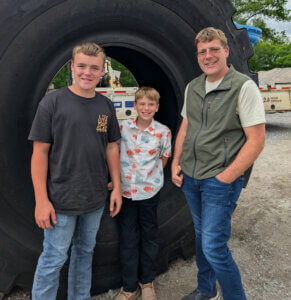 You’ve seen him in the spotlight at the Dairy Cattle Reproduction Council Annual Meeting and now it’s time to “spotlight” him in the DCRC newsletter. Meet Jason Felling of Felling Dairy, LLC, Sauk Centre, Minn., who has earned a spot in the Platinum category of DCRC’s Excellence in Dairy Reproduction Awards program – multiple times.
A family-owned dairy, Felling Dairy, LLC is a mid-size dairy. Continually, they invest in their facilities, people, and management systems to improve cow comfort, efficiency, and sustainability. “We believe long-term success comes from continually improving every aspect of the operation – from genetics and reproduction to transition cow management, milk quality, employee development, and environmental stewardship,” Felling stated. “Our goal is to build a dairy that will be successful for future generations,” Felling stated.
As the owner, Felling oversees the dairy’s overall direction. His responsibilities include strategic planning, financial management, capital projects, nutrition, reproduction, milk quality, employee leadership, and working with the dairy’s management team to continually improve performance. “I enjoy using data to identify opportunities and then working with our team to implement practical solutions that improve both cow performance and employee success.”
Surround yourself with good people
Felling grew up on his family’s dairy farm and has been involved in agriculture his entire life. “Over the years, I’ve had the opportunity to help grow our operation from a much smaller herd into the business it is today,” Felling remarked. “That growth has reinforced the importance of surrounding yourself with good people, embracing new ideas, and never stopping the pursuit of improvement.”
Realizing that reproduction impacts nearly every aspect of a dairy – from milk production and replacement heifers to cow health, longevity, and overall profitability – Felling places a high priority on optimizing his dairy herd’s reproductive success. “I’ve always enjoyed understanding how management, nutrition, genetics, transition cow care, and reproductive programs all work together,” he commented. “Improving reproduction isn’t about one silver bullet; it’s about consistently improving many small details that ultimately lead to healthier cows and a stronger dairy.”
DCRC provides helpful take-home messages
As a Platinum winner in DCRC’s Excellence in Dairy Reproduction Awards program, Felling earned the opportunity to attend DCRC annual meetings. Those events provided him with an opportunity to boost his dairy cattle reproduction knowledge. He shared two “lessons learned.”
First, reproduction begins before breeding. One of the biggest takeaways has been that reproductive success starts long before a cow is inseminated. Transition management, fresh cow health, nutrition, heat abatement, and minimizing stress all have a significant impact on fertility. “Improving these areas has helped us think more holistically about reproduction,” Felling commented.
Second, small improvements in management create measurable reproductive gains. “DCRC has reinforced the value of measuring performance, following standardized protocols, and continually evaluating data,” Felling stated. “Whether it’s improving heat detection, synchronization compliance, pregnancy diagnosis, or transition management, consistently executing the fundamentals can have a major impact on overall herd performance.”
A strong believer in DCRC, Felling added, “One of the things I appreciate most about DCRC is that it brings together research and practical dairy management. I always come away with ideas that can be applied on our farm. Even small improvements can make a significant difference when you’re managing a dairy.”
Upcoming Webinar
DCRC’s August 20 webinar features the use of monitoring technologies to increase employee efficiency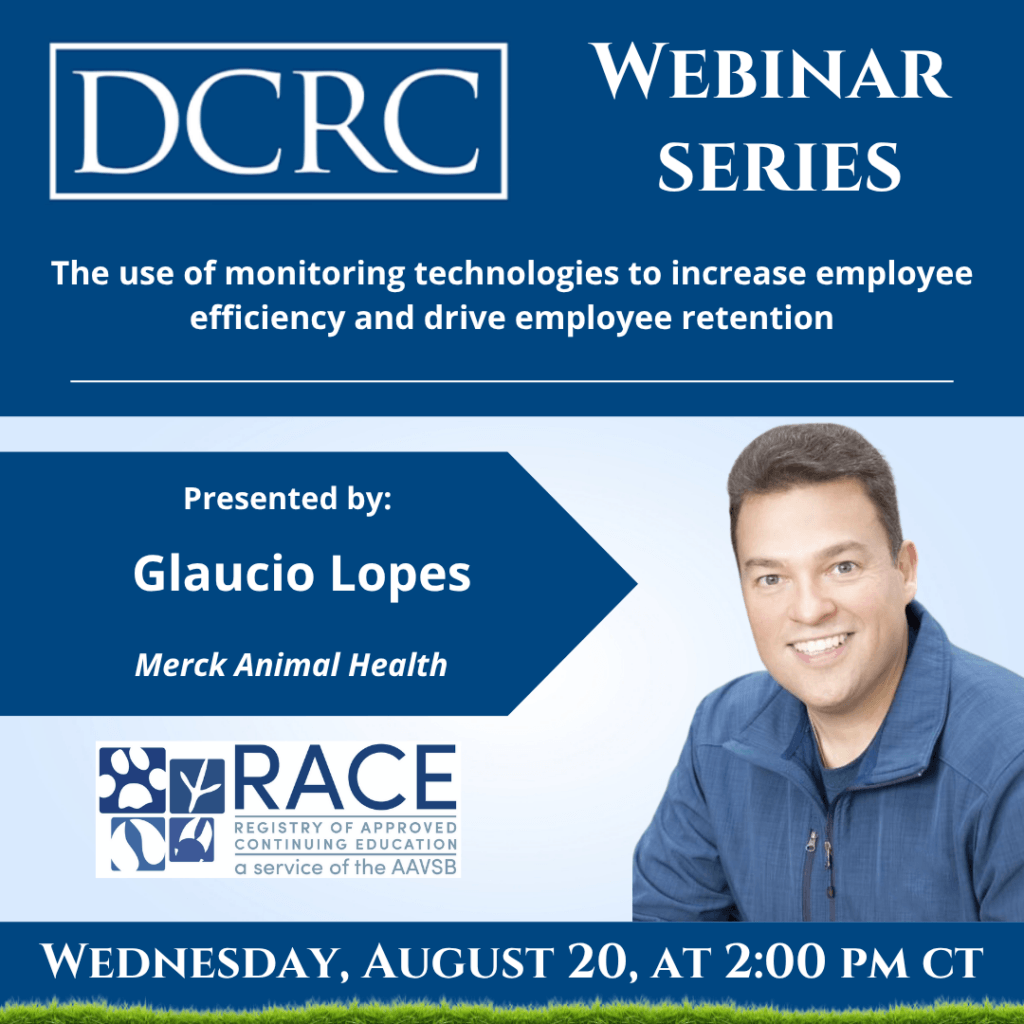
Mark your calendar to attend the Aug. 20 Dairy Cattle Reproduction Council (DCRC) webinar, scheduled to start at 2 p.m. Central time (USA/Canada). Glaucio Lopes, Merck Animal Health, will address “The use of monitoring technologies to increase employee efficiency and drive employee retention.” This one-hour webinar is free.
To register for this DCRC webinar, go to: https://bit.ly/DCRCWebAug20. If you are a DCRC member and cannot attend the live program, you may access the webinar recording at www.dcrcouncil.org after Sept. 3.
The Aug. 20 webinar will explore how monitoring technologies have been used in large, progressive dairy operations in the United States. Lopes will describe the process of having different stakeholders at the dairy to embrace and use technology, and the challenges they face during implementation. With farm performance data, attendees will learn how using technology is paramount to increasing efficiency and driving employee satisfaction and retention. Furthermore, the presentation will include a discussion of the benefits of using monitoring technologies and how the adoption and implementation of these technologies are helping owners increase their bottom line – driving efficiencies with animals and animal handlers.
A native of Brazil, Lopes received his Doctor of Veterinary Medicine degree from the Universidade Federal Fluminense in Niterói, Rio de Janeiro. Upon graduation, he practiced in small commercial dairy farms and beef operations as a veterinarian before joining Ricardo Chebel at the University of California-Davis. In California, Lopes worked in several research studies focused on reproduction of dairy cows and heifers, calf management, growth, and feed additives, and dairy production and health in large dairy farms. In 2011, he completed his master’s degree in reproductive physiology from the University of Wisconsin. His research focused on synchronization and resynchronization of ovulation protocols for fixed-time artificial insemination, use of electronic devices for estrous detection, and assessment of accuracy of blood tests for pregnancy diagnosis in dairy cattle. Lopes has worked for Accelerated Genetics, World Wide Sires, SCR Dairy, and the URUS Group. Three years ago, he joined the Technology Solutions Team at Merck Animal Health.
Veterinarians and veterinary technicians may earn one Registry of Approved Continuing Education (RACE) credit for attending this DCRC webinar. To learn more about this opportunity, contact JoDee Sattler at: jodee@dcrcouncil.org.
Industry Calendar
- Council on Dairy Cattle Breeding Triannual Evaluation, August 11
- DCRC webinar with Glaucio Lopes, August 20
- American Association of Bovine Practitioners Conference, August 27-29, Minneapolis, Minnesota
- Discover Conference 49 | Dairy and the Environment: Challenges and Opportunities, August 31-September 3, Itasca, Illinois
- European Federation of Animal Science Annual Meeting, September 7-11, Hamburg, Germany
- World Dairy Expo, September 29-October 2, Madison, Wisconsin
- S. Animal Health Association Annual Meeting, October 15-20, Madison, Wisconsin
- Joint Annual Meeting of the National Dairy Promotion and Research Board, National Milk Producers Federation, and United Dairy Industry Association, October 19-21, Kissimmee, Florida
- Dairy Cattle Reproduction Council Annual Meeting, November 10-12, Columbus, Ohio
- Council on Dairy Cattle Breeding Triannual Evaluation, December 1
- NMC Annual Meeting, January 25-28, Jacksonville, Florida
- World Ag Expo, February 9-11, Tulare, California
- Professional Dairy Producers Business Conference, March 16-17, Wisconsin Dells, Wisconsin
- Central Plains Dairy Expo, March 23-25, Sioux Falls, South Dakota
- Dairy Calf & Heifer Association Annual Conference and Trade Show, April 13-15, Sioux Falls, South Dakota
- American Dairy Science Association Annual Meeting, June 27-30, Raleigh, North Carolina
- Holstein Association USA National Convention, June 29-July 2, Addison, Texas
- NMC Regional Meeting, July 13-15, Sioux Falls, South Dakota
