
Newsletter – 2020 – June
President's message
 From the DCRC President’s Desk
By Julio Giordano
Hats off to Fabio Lima, University of California, Davis, and Ronaldo Cerri, University of British Columbia, who prepared DCRC’s first “Ask the Expert” video, which is now available to the public. This video, available at www.dcrcouncil.org/members/ask-the-experts, focuses on activity monitoring systems. If you have a question you would like to ask an expert, e-mail Kellie at kellie@dcrcouncil.org. Stay tuned for future Ask the Expert and How To videos. These new tools are a result of actions taken by DCRC’s Strategic Plan Content Committee.
Committee selects DCRC Scholar
For the second year, DCRC offered its Scholar program, which provides an expense-paid trip to a graduate student to attend the DCRC Annual Meeting. This year’s recipient is Tony Carreira Bruinjé, a Ph.D. student at the University of Guelph. Bruinjé, a veterinarian from Brazil, earned his master’s degree from the University of Alberta. He has 10 peer-reviewed scientific papers published, including five as first author. Seven of his publications are published in the Journal of Dairy Science.
Stephen LeBlanc, Bruinjé’s supervisor, said Bruinjé brings a rare combination of understanding and ability in all three of reproductive biology, quantitative “big data” analysis and application of research in the field. His doctoral research is examining the links between metabolic and clinical health and fertility in dairy cows. Lactating dairy cows in high production perform the caloric equivalent of a human running more than two marathons every day. “To sustain this elite performance while maintaining health, welfare and fertility, cows must be supported to meet a fine balance of metabolic demands,” said LeBlanc. “Farmers and consumers alike prefer to achieve these ends as naturally and simply as possible. Therefore, Tony is conducting a large-scale field research study on commercial dairy farms to probe and quantify the key health determinants of cows’ ability to express normal and fertile reproductive behavior. This research will leverage leading-edge precision technology used on dairy farms and in a sub-study will validate a novel in-line milk sensor in partnership with a start-up technology company. This research leverages Tony’s knowledge and experience in working with both the physiology of dairy cows and analytic techniques for working with complex data sets.”
Bruinjé’s main career goal is to work as a researcher and extension specialist in academia – developing and implementing strategies for dairy cow reproductive management that involve data assessment and optimization of precision technologies. “Such strategies will not only result in more efficient management overall but will also play a role in improving our understanding of dairy cow physiology and enhancing animal welfare and sustainability,” he said. “Both of these are priorities for the dairy industry’s future.”
Judges select Herd Repro Award finalists
Thank you to those of you who submitted nominations for the 2020 DCRC Herd Reproduction Awards program. We received 107 entries – the second most during the program’s decade-plus history. Forty-nine dairies were chosen to advance to the next round. From these outstanding dairies, judges will select the Platinum, Gold, Silver and Bronze recipients. The 2020 DCRC Annual Meeting will feature a discussion with the top award winners – a highlight of every DCRC Annual Meeting.
Sneak peek at annual meeting agenda
Speaking of the DCRC Annual Meeting, do you have Nov. 11 and 12 blocked off to attend the meeting? If not, do so today. Program Chair Eduardo Ribeiro and his committee have lined up a phenomenal list of speakers who will address cutting-edge topics. Presenters will discuss:
- 25 years of timed AI programs: Past, present and future
- Producer panel: Revamping estrous detection and reproductive efficiency with digital technology
- Cattle fertility in 12 years of genomics: Lessons learned, current applications and future development
- Future of dairy management decisions based on big data analytics
- From colostrum to weaning: How to better prepare your replacement heifers for the future
- Economics of rearing replacement heifers and culling strategies in times of good fertility and genomics
- Dry cow management: How to optimize udder health and colostrum quality
- Can uterine infections be treated or managed without antibiotics?
- The importance of using transition cow records for decision making
- Establishing a high fertility cycle in the lactating herd
- Optimization of embryo transfer technologies in dairy herds
- Using digital technology to optimize health and reproductive management
- Troubleshooting nutritional problems that affect health and fertility
- Future of DHI and diagnostic services in modern dairy management
- Development of employees and future leaders in the dairy industry
- Understanding dairy personnel motivations for adoption of new practices
To keep DCRC Annual Meeting attendance affordable, we rely significantly on sponsors. Is your company a DCRC sponsor? If not, please contact DCRC Executive Director Kristy Mach (kristym@dcrcouncil.org or 952-758-2395) to learn more about sponsorship opportunities and benefits. Can we count on your support and recognize your company as a DCRC sponsor? Sponsorship recognition occurs throughout the year – not just during the DCRC Annual Meeting. This is a great opportunity to share how your company supports DCRC’s goals of enhancing reproductive performance and fertility on today’s forward-thinking dairy operations.
Research Summaries
 A meta-analysis and meta-regression of the effects of vitamin E supplementation on serum enrichment, udder health, milk yield, and reproductive performance of transition cows
MohammadHossein Moghimi-Kandelousi, Ali A. Alamouti, Mahdi Imani, and Qendrim Zebeli
Transition dairy cows experience severe energy and nutrient deficits accompanied by peripartum stress, excessive fat mobilization, cellular damage, and inflammation. As a result, a disequilibrium in oxidant or antioxidant capacity of the body causes oxidative stress, which is associated with immunosuppression (Kehrli and Shuster, 1994) and increased risks of periparturient diseases (Pontes et al., 2015; Schafers et al., 2018). Vitamin E has essential antioxidant functions: trapping peroxyl radicals (Baldi, 2005), minimizing the formation of secondary radicals, reducing the oxidative stress, and helping to stabilize the cell membranes (Bass, 1999; Morgante et al., 1999; Torsein et al., 2018). However, the effect of vitamin E supplementation is often controversially discussed in published literature. Therefore, the authors’ main goal in this meta-analysis was to evaluate the effects of vitamin E supplementation on its serum and colostrum concentrations, milk yield, somatic cell counts (SCC), and reproductive parameters of transition cows.
Treatments
- 36 papers related to transition cows supplemented with vitamin E, including 53 trials, were selected and their data were extracted into a database.
- In 10 studies, primiparous and multiparous cows were studied, whereas in the remainder, treatments were applied only in multiparous cows.
- A meta-analysis was conducted on the extracted data. The variables used in the final meta-analysis as potential influencers of the outcomes were Se supplementation, method of vitamin E administration, number of days treated pre- and postpartum, parity, and breed of cows.
Results
- The analysis showed increase in serum vitamin E concentrations at parturition and postpartum, but no effects of vitamin E supplementation on IgG concentration in colostrum.
- There was a tendency for supplemented cows to produce more milk during the first month of lactation (1.06 kg [2.34 pounds] of milk/day).
- Milk SCC was unaffected by vitamin E supplementation.
- Vitamin E supplementation tended to decrease the calving to first estrous interval (-7.05 days) and supplementing Se and taking parity into account in the analysis significantly lowered the calving to first estrous interval.
- Cows receiving additional vitamin E had, on average, 6.1% fewer cases of retained placenta, whereby Se supplementation and breed were key factors improving the effect of vitamin E to reduce retained placenta.
- The supplemented cows showed fewer days open (-11.37 days) and this improvement was affected linearly by increasing the dosage administered. Also, cows showed fewer services per conception (0.21-unit reduction) with increasing dosage of vitamin E.
The authors concluded that supplementing vitamin E significantly increased its serum concentration around parturition; it did not affect SCC or colostrum quality but improved productive and reproductive performance of transition cows. Despite the involvement of many interacting factors, results suggest a linear effect of vitamin E supplementation (up to 3,600 IU/day) on milk production and reproduction, an effect that could be synergistically amplified by Se supplementation.
Access the paper: https://www.journal ofdairyscience.org/article/S0022-0302(20)30346-5/fulltext
Effect of estrous detection strategy on pregnancy outcomes of lactating Holstein cows receiving artificial insemination and embryo transfer
Odinei Marques, Anderson Veronese, Victória R. Merenda, Rafael S. Bisinotto, and Ricardo C. Chebel
Profitability of dairy herds is associated with improved efficiency and accuracy of estrous detection (Giordano et al., 2012). Strategies that enhance estrous detection are extremely important in a scenario where 71 and 53% of surveyed dairy operations in the United States use estrous detection for first and subsequent services, respectively (USDA, 2016). Often, the efficient and accurate visual detection of estrus by observation of estrous signs is impaired because of animal- and management-related factors. The authors hypothesized in this experiment that incorporation of automated estrous detection (AED) devices in the reproductive management of lactating Holstein cows would improve reproductive performance compared with cows managed exclusively with mounting devices. Also, authors wanted to determine whether the AED device would equally influence the reproductive performance of cows receiving artificial insemination (AI) and those receiving embryo transfer (ET), or if the benefits from the AED devices would be more evident among cows receiving AI than among cows receiving ET.
Treatments
- Cows (n = 1,244) were observed daily for estrous detection by trained farm personnel using a tailhead mounting device.
- Cows enrolled in the AED treatment (n = 641) were fitted with a neck-mounted, automated estrous detection device.
- Cows enrolled in the control treatment (CTRL, n = 603) were not fitted with the AED device.
- Cows not detected in estrus by 54 ± 3 days in milk (DIM) received 1 injection of prostaglandin F2α (PGF2α) and those not detected in estrus by 68 ± 3 DIM were enrolled in an ovulation synchronization protocol.
Results
- The hazard of first service tended to be affected by treatment [CTRL: referent, AED: adjusted hazard ratio (AHR) = 1.11, 95% confidence interval (CI) = 0.98, 1.25].
- A tendency was observed for the AED treatment to reduce the proportion of cows receiving the first service at fixed time (39.7 ±7 vs. 45.5 ± 5.8%).
- After the first service, high-producing cows enrolled in the AED treatment were more likely to be pregnant (19.1 ±4 vs. 31.8 ± 3.0%), but no differences between the AED and CTRL treatments were observed among low-producing cows (24.9 ± 2.9 vs. 24.7 ± 2.9%).
- The hazard of second service was affected by treatment (CTRL: referent, AED: AHR = 1.22, 95% CI = 1.01, 1.47).
- The AED treatment reduced the proportion of cows receiving the second service at fixed time compared with the CTRL treatment (15.7 ±2 vs. 21.9 ± 2.5%).
- After the second service, the AED treatment tended to increase the proportion of cows pregnant (31.0 ±0 vs. 24.9 ± 2.6%) and tended to reduce the proportion of cows that lost pregnancy between the first and second pregnancy exams (9.7 ± 3.3 vs. 16.7 ± 4.6%).
- The interaction between treatment and type of service did not affect percentage of cows pregnant and pregnancy loss to the first and second services.
- The hazard of pregnancy was affected by the interaction between treatment and milk yield.
- Cows producing more than the median milk yield in the AED treatment became pregnant at a faster rate than CTRL cows, but no difference between treatments was observed among cows with milk yield less than the median.
- Cows with more than the median milk yield had shorter duration of estrus and were less likely to have activity peak at estrus ≥89 (0 = minimum, 100 = maximum).
The authors concluded that AED devices may improve reproductive performance by increasing service rates and improving accuracy of estrous detection. According to the current experiment, high-producing cows may benefit most from the addition of AED devices to reproductive management. The use of an AED device proved to be minimally beneficial for hazard of first and second services. However, significant benefits to pregnancy per service and, surprisingly, pregnancy loss were observed when the AED device was used to detect estrus. The benefits of AED devices were more evident among cows receiving ET than among cows receiving AI. The authors speculated that using AED devices improved the synchrony between stage of the estrous cycle of the recipient and the transferred embryo and, consequently, improved fertility. When determining whether an AED device may benefit a herd’s reproductive performance, authors recommend considering the efficiency and accuracy of the estrous-detection strategy currently used by the herd in question.
Access the paper: https://www.journalofdairyscience.org/article/S0022-0302(20)30368-4/fulltext
Associations of reproductive indices with fertility outcomes, milk yield, and survival in Holstein cows
Pinedo, J.E.P. Santos, R.C. Chebel, K.N. Galvão, G.M. Schuenemann, R.C. Bicalho, R.O. Gilbert, S.L. Rodriguez-Zas, C.M. Seabury, G. Rosa, and W. Thatcher
Fertility is a critical component of efficient dairy production and profitability. Consequences of low fertility include a reduced percentage of cows at peaks of lactation, increases in insemination costs, and delayed genetic progress (Santos et al., 2010). Impaired fertility leading to low milk production is one of the main reasons for culling (Pinedo and de Vries, 2010). The authors conducted this study to investigate potential associations between genomic variation and fertility of Holstein cows. The authors’ objective was to compare the reproductive performance of Holstein cows in 3 categories of 2 reproductive indices (RI) that were developed for the allocation of cows in a ranking for potential fertility, based on the predicted probability of pregnancy. In addition, associations among the RI categories with milk yield and survival were analyzed.
Methods
- The associations between categories of the developed indices and multiple fertility variables in a large multistate population of Holstein cows were tested.
- Data came from 11,733 cows calving in 16 farms located in 4 regions of the United States (Northeast, Midwest, Southeast, and Southwest).
- Cows were enrolled at parturition and monitored weekly for reproductive events, health status, milk yield, and survival.
- Based on phenotypic information from individual cows, 2 reproductive indices (RI1 and RI2) were developed:
- The indexes represent the predicted probability that a cow will become pregnant at first artificial insemination (AI) postpartum, as a function of explanatory variables with significant effects (P ≤ 0.05) used in a logistic model.
- The final model for RI1 included:
- Random effect of farm and significant fixed effects as explanatory variables influencing a pregnancy outcome: (1) incidence of retained fetal membranes; (2) metritis; (3) clinical endometritis; (4) lameness at 35 days in milk (DIM); (5) resumption of postpartum ovulation by 50 DIM; (6) season of calving; and (7) parity number.
- The final model for RI2 included:
- (1) parity number; (2) body condition score at 40 DIM; (3) incidence of retained fetal membranes; (4) metritis; (5) resumption of postpartum ovulation by 50 DIM; (6) region; (7) subclinical ketosis; (8) mastitis; (9) clinical endometritis; and (10) milk yield at the first milk test after calving; as well as the interaction effects of postpartum resumption of ovulation by 50 DIM × region; mastitis × region; and milk yield at the first milk test after calving × parity number.
- To facilitate the analyses, the resulting RI values were categorized as low for cows in the lowest quartile, medium for cows within the interquartile range, or high for cows in the top quartile.
Results
- There was consistent agreement between categories of the predicted RI (low, medium, and high) and the measures of fertility and survival collected from individual cows.
- The categorized indexes RI1 and RI2 predicted and were significantly associated with the outcomes of interest:
- Reproductive: Calving to first service interval; Calving to conception interval; Services per conception; Pregnancy per AI at first and second AI; and Pregnancy loss after first and second AI.
- Productive: 90 DIM and 305 DIM average milk yields; Difference between third and second months of lactation; and culling by 305 DIM.
The authors concluded that the proposed RI represent a viable approach to refine the allocation of cows into potential low- and high-fertility populations, allowing selection of cows for genotyping investigation of fertility-related traits. Also, it can be used as a tool to assist in phenotypic determination of fertility-related traits in making herd management decisions to optimize herd performance and profitability.
Access the paper: https://www.journalofdairyscience.org/article/S0022-0302(20)30335-0/fulltext
Featured Column
The ‘best’ repro program for dairy is management dependent
What’s the best strategy to improve dairy heifer reproductive efficiency? Artificial insemination (AI) at estrus, Timed AI (TAI) or both? Like many scenarios involving biological creatures, the answer is, “It depends.” Much of the variation and “best answer” involves how effective a dairy is at protocol compliance and their particular interests to breed animals at detected estrus versus TAI.
Speaking at the 2019 Dairy Cattle Reproduction Annual Meeting, Julio Giordano, Cornell University, said that reducing the time to pregnancy after the beginning of the artificial insemination period (AIP) is one of the few opportunities to improve a heifer enterprise’s economics. Heifers that become pregnant earlier after the initiation of AIP have reduced days in rearing, and thus, reduced rearing costs and opportunity cost of delayed lactation. Figure 1A depicts the almost linear association between days to pregnancy and rearing cost. Figure 1B depicts the accumulated cost of extra days in rearing and delayed initiation of first lactation.
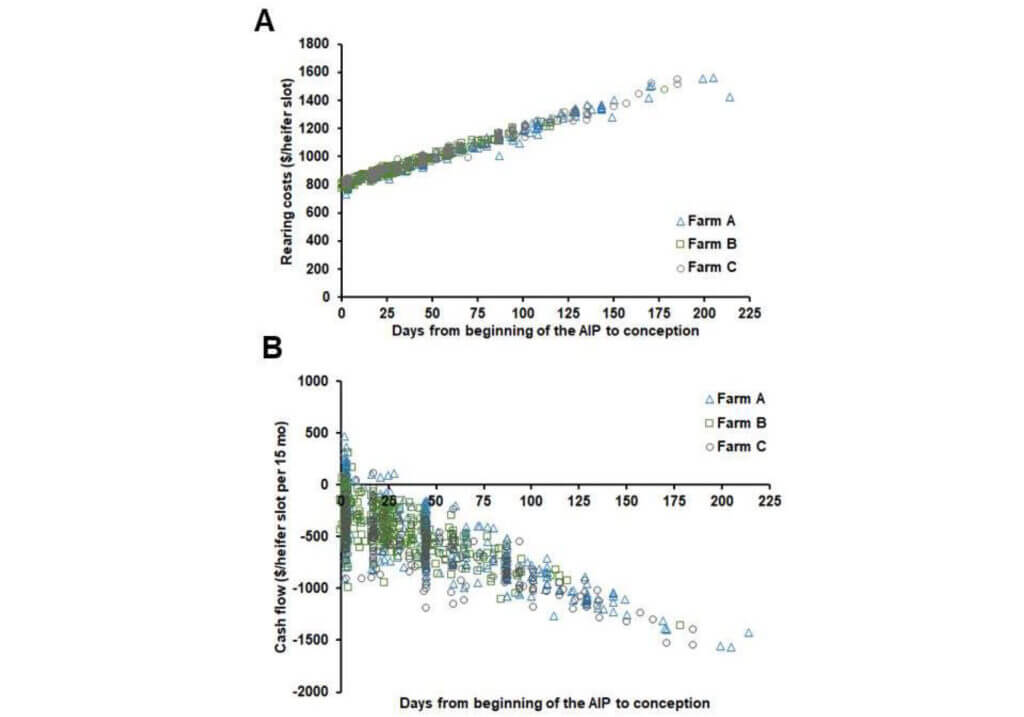
Figure 1. Relationship between days to conception after the beginning of AIP and (A) total rearing costs per heifer slot and (B) total cash flow for the 15-month period starting at the beginning of AIP. Each marker represents a heifer.
Open heifer daily rearing cost: $3.80
Giordano noted that his group estimated an average cost of $3.80 per heifer for each extra day not pregnant after the beginning of AIP at approximately 12 months of age. For three analyzed New York farms that participated in one of his group’s experiments, a delay in pregnancy equivalent to one entire estrous cycle represented as much as an $80 loss just in rearing cost.
Consequently, Giordano recommends implementing systematic and proactive reproductive management strategies that reduce time to pregnancy to reduce rearing cost and opportunity cost of delayed lactation. The Cornell University animal scientist reviewed reproductive management strategies, including submission of heifers to AI after a detected estrus (AIE), TAI and combinations of both.
Limitations
Overall, Giordano believes the most limiting factor to reproductive performance of dairy heifers is reduced estrous detection efficiency, due to a lack of protocol compliance. Research shows variation – from 45 to 75 percent – for P/AI when inseminated primarily at detected estrus with conventional or sexed semen but, in general, fertility of AI services is high. Therefore, optimizing heifer reproductive performance submitted to AI exclusively, or almost exclusively based on estrous detection, may depend mostly on implementing a systematic and consistent estrous detection protocol – with or without estrous detection aids, rather than on strategies aimed at optimizing fertility.
Many heifer ovulation synchronization protocols have been developed and evaluated. “A review of the literature suggests that 5-day Cosynch protocols result in the greatest fertility after TAI,” said Giordano. Among many available variants, the one described in Figure 2A may be the most effective (Lima et al., 2013). The average P/AI from three studies treated with this protocol was about 60 percent for conventional semen and about 53 percent for sexed semen.
“The greatest detriment of this type of protocol is the multiple and inconvenient time intervals (i.e., 5 days from gonadotropin releasing hormone [GnRH] and controlled internal drug release [CIDR] insertion to CIDR removal and PGF [prostaglandin F PGF2α] treatment) for certain interventions and the need for two PGF treatments,” said Giordano. “This inconvenience may limit adoption.” A simpler version of the 5-day Cosynch protocol, not including GnRH at CIDR insertion and single PGF treatment (Figure 2B), may be used. With this protocol, P/AI was about 6 to 8 percentage points less than for the more complex protocol (Lima et al., 2013).
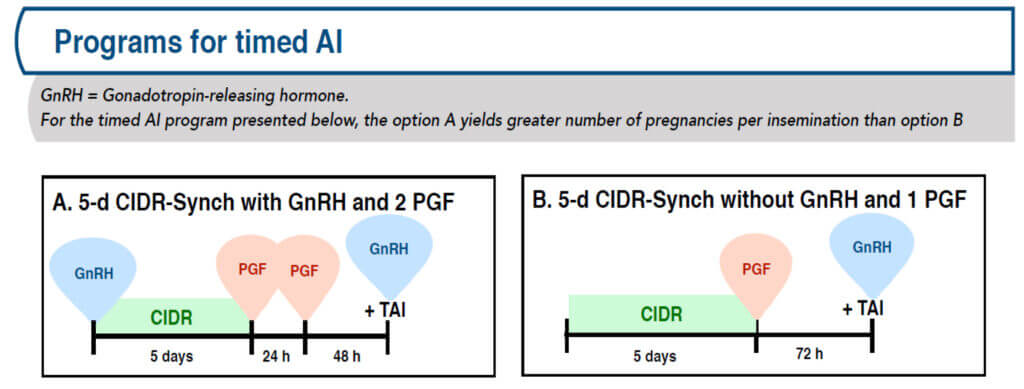
Figure 2. Variations of the 5-day Cosynch protocol for synchronization of ovulation in dairy heifers. Figures from the DCRC Dairy Heifer Protocol sheet (updated 2018).
Consider expected P/AI
Giordano said selecting a heifer reproductive management program requires careful consideration of the expected pattern of insemination for first service and P/AI. He shared some research that evaluated the timing of pregnancy in commercial dairy farms.
The Cornell research team evaluated reproductive performance and economics of replacement dairy heifers managed for first service with programs that relied primarily on AIE, TAI or a combination (Masello et al., 2019). They followed heifers (368 ± 10 days of age) from three New York farms that were randomly allocated to one of three management strategies (see Figure 3) for first AI service.
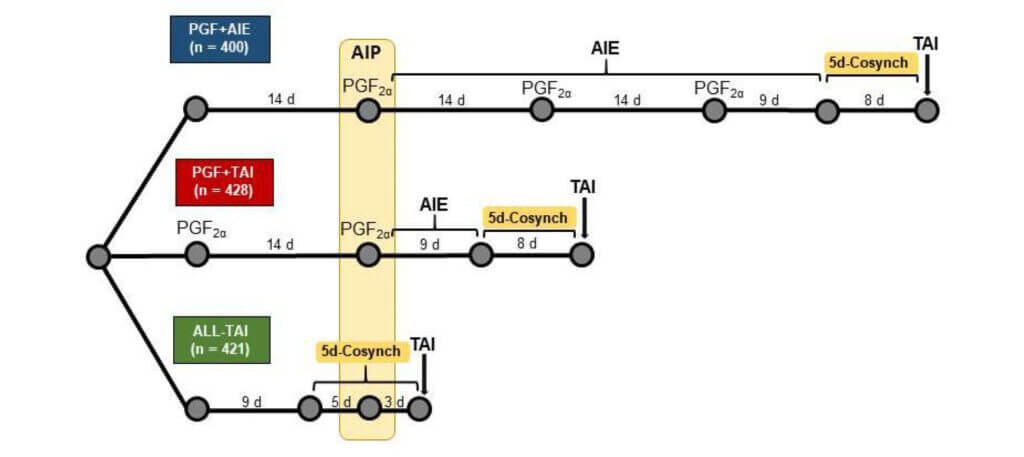
Figure 3. Graphical depiction of experimental procedures.
Researchers discovered an extreme disparity between farms A and B, and farm C. Farms A and B used proactive programs to detect estrus, resulting in greater estrous detection efficiency. Conversely, farm C used a less rigorous estrous detection program, resulting in reduced estrous detection efficiency. Researchers combined farm A and B results, and separated farm C results to demonstrate the effect of different estrous detection efficiencies.
“As expected, heifers in the ALL-TAI treatment received first service at a faster rate than heifers in the other two treatments,” said Giordano. However, researchers saw some dramatic differences. “The first service insemination risk for ALL-TAI heifers in farms A and B was 1.7 times greater than PGF + AIE heifers, whereas for ALL-TAI heifers in farm C, the insemination risk was nearly 19 times greater than for PGF + AIE heifers.”
Earlier first service helps repro efficiency
 Overall, differences in time to pregnancy among treatments were much less for farms A and B, than for farm C. In all cases, differences in time to pregnancy mostly resulted from earlier first service. The ALL-TAI program was more effective at getting heifers pregnant than the other two programs only in farm C. For farms A and B, the ALL-TAI program was superior to the PGF + AIE treatment, but was not superior to the combined PGF + TAI program.
Based on this study, it appears that ALL-TAI programs for first AI service may be the best strategy to increase heifer pregnancy risk in farms with poor estrous detection efficiency. For farms with good estrous detection efficiency, programs that combined AIE and immediate use of TAI (i.e., PGF+TAI program) might be the most effective. Nevertheless, programs that rely almost completely on AIE after multiple PGF treatments (i.e., up to three as in PGF+AIE) may be a reasonable strategy.
As expected for farms A and B, total average reproductive costs were greater for ALL-TAI because more heifers received TAI (i.e., average TAI cost $37.40 vs. $19.20 for AIE). In contrast, farm C’s reproductive costs were similar for all treatments. “Having high estrous detection efficiency is not only important for reducing days to pregnancy but is also important for reducing reproductive costs,” said Giordano. “Heifers not detected in estrus will not only receive multiple PGF treatments but will also be synchronized with the 5-day Cosynch protocol – adding up to $56 per heifer for first service when compared with $48 for the ALL-TAI program.”
“Although reproductive program implementation costs are important, ultimately farms should focus on increasing profits or reducing profits losses,” said Giordano. Thus, in their study they estimated cash flow rather than just cost of running the different programs. As expected, in farms A and B cash flow per unit of time (i.e., 15 months in the study) favored the ALL-TAI and PGF + TAI treatments by $43 and $52 per slot, indicating that both would be more profitable than the PGF + AIE management strategy. For farm C, results were strikingly different, as the overall poor estrous detection efficiency negatively affected the programs’ reproductive performance that relied more on AIE. For this farm, the ALL-TAI program was more profitable by larger margins (i.e., >$115 per heifer slot). These results may indicate that for farms with poor estrous detection efficiency, programs that reduce time to first service are likely to be more profitable (i.e., using TAI) than programs that prioritize AIE.
To view Giordano’s proceedings paper, log into the DCRC Members Only site and click on the “Proceedings” icon.
Featured Member
(Editor’s Note: For each issue, DCRC interviews a member to learn more about his/her career, involvement with DCRC and thoughts about dairy cattle and reproduction. We encourage you to recommend someone for this feature by contacting JoDee Sattler at: JoDee@dcrcouncil.org)
 Eduardo de Souza Ribeiro
University of Guelph
Guelph, Ontario, Canada
DCRC member since 2015
Eduardo de Souza Ribeiro grew up on a family farm in southern Brazil, working cattle with horses, milking cows by hand, and making artisan cheese. He described these experiences as “long and happy days of hard work and priceless learning experiences.” His childhood environment nurtured his passion for livestock production and his connection to farmers. “This definitely had a strong influence in my character and personal values,” he said.
In 2004, Ribeiro started his studies in the School of Veterinary Medicine at Santa Catarina State University. During the veterinary program, he actively participated in bovine embryology research projects and developed a passion for reproductive biology and science. He was also involved in extension activities related to reproductive management of local dairy farms, which combined his interests in reproductive biology and livestock production.
“These experiences led me to pursue graduate school after veterinary school graduation,” said Ribeiro. In 2009, he embarked on his graduate program in the University of Florida’s department of animal sciences. “I was fortunate to be part of an excellent dairy research group.” After completing his master’s degree in 2011, he started a doctorate degree program in animal molecular and cellular biology at the University of Florida, which he completed in 2015. “My entire graduate program was dedicated to reproductive physiology and management of dairy cattle.”
Currently, Ribeiro works as an assistant professor in the department of animal biosciences. His responsibilities are divided into teaching, research, and outreach. As an instructor, he teaches animal reproduction, animal disorders, and research methods to undergraduate students, and metabolic regulation of reproduction to graduate students. Also, he supervises teaching assistants and a lab coordinator, and mentors undergraduate and graduate students in research projects.
Ribeiro’s multidisciplinary research program examines the problem of subfertility in dairy cattle at all levels of organization – from herd management to cell biology of tissues – and aims to develop solutions that ultimately improve reproductive efficiency in dairies. “Special emphasis is given to the interplay between reproduction, health, and nutrition,” he explained. “The knowledge developed by our group is passed on to the public through outreach activities involving farmers, veterinarians, nutritionists, extension agents, allied industry, and the general public.”
As a DCRC member, Ribeiro finds value in the group’s up-to-date information in the field of applied dairy cattle reproduction. “In addition to the annual meeting, which brings together some of the greatest dairy cattle management authorities, DCRC offers webinars, newsletters, a network platform, and a large archive of proceedings and presentations,” he said. “It is one of my favorite go-to websites to keep up to date in dairy cattle management.”
Speaking of the DCRC Annual Meeting, Ribeiro said his favorite part is the Herd Repro Awards program. Outstanding dairy producers share their experiences, methods, and strategies that led them to great results. “I always learn a lot from them,” he commented. Through their presentations, Ribeiro has come to two important conclusions. First, excellence in reproductive management and outstanding results in both reproductive efficiency and milk production are possible. “In other words, our modern dairy cow is not broken as many uninformed people say.” And second, there is no single recipe for success in reproductive management.
Ribeiro responded to the question, “What are the biggest reproductive challenges facing the dairy industry today?” He noted that although reproductive efficiency has improved substantially in recent years, reproduction continues to be one of most important pillars in dairy management. Among the main reproductive challenges faced by the industry today, he listed: 1) understanding and minimizing pregnancy losses; 2) understanding the genetic contribution to fertility and developing tools to select animals for better fertility or to adjust management according to genetic characteristics; 3) incorporation of new and quickly evolving technologies and concepts into management strategies; and 4) expanding knowledge outreach and improving consistency of reproductive performance across herds.
Looking forward, Ribeiro believes DCRC will continue to be an important information source for professionals working with dairy cattle management – not only in North America but also in other parts of the world facing similar challenges. “The organization is constantly developing and evolving to match the needs of a dairy industry that also evolves rapidly,” he said. “The knowhow developed in the last 15 years – plus the hard work of a diverse and enthusiastic group of people currently leading the organization – will support the continuous success and relevance of DCRC for many years to come.”
DCRC Webinar Series
2020 DCRC Webinar Series Features Top 2019 DCRC Annual Meeting Topics
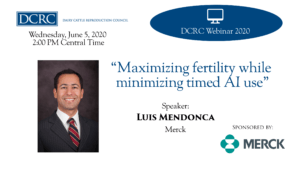 Mark your calendars for the Dairy Cattle Reproduction Council’s (DCRC) 2020 webinar series. These highly regarded sessions offer access to high-quality information and interaction with industry experts to attendees from across the United States and around the world, all from the comfort of their farm or office. The webinars feature top-rated topics from the 2019 DCRC Annual Meeting.
Save these dates and times:
- Luis Mendonca, Merck, presents “Maximizing fertility while minimizing timed AI use.”
June 5, at 2 p.m. Central time
- Mark Kirkpatrick, Zoetis, presents “Data organization yields positive returns.”
Aug. 7, at 2 p.m. Central time
The American Association of Veterinary State Boards granted one Registry of Approved Continuing Education (RACE) credit for the June 5 DCRC webinar. This provides veterinarians with a convenient continuing education opportunity.
For more information about the DCRC webinars, e-mail Paula Basso, DCRC Education Committee chair, at: paula.basso@zoetis.com or e-mail DCRC at: dcrc@dcrcouncil.org.
To register for a webinar, please visit www.dcrcouncil.org/webinars and follow all prompts. As the webinar approaches, you will receive an e-mail with information on how to log in for attendance. If you are a DCRC member and cannot attend the ”live” webinar, you may access it (and all past webinars) at www.dcrcouncil.org/webinars.
The Dairy Cattle Reproduction Council is focused on bringing together all sectors of the dairy industry – producers, consultants, academia and allied industry professionals – for improved reproductive performance. DCRC provides an unprecedented opportunity for all groups to work together to take dairy cattle reproduction to the next level.
Industry Calendar
- DCRC Webinar, Maximizing Fertility While Minimizing Timed AI Use, June 5, at 2 p.m. Central time
- Four-State Dairy Nutrition and Management Conference, June 10
- American Dairy Science Association, June 21-24
- American Society of Animal Science-Canadian Society of Animal Society Annual Meeting and Trade Show, July 19-23
- DCRC Webinar, Data Organization Yields Positive Returns, August 7, at 2 p.m. Central time
- Council on Dairy Cattle Breeding Triannual Evaluation, August 11
- National Association of Animal Breeders Technical Conference on Artificial Insemination and Reproduction, September 16-18, Fontana, Wisconsin
- American Association of Bovine Practitioners Conference, September 24-26, Louisville, Kentucky
- Word Dairy Expo, September 29-October 3, Madison, Wisconsin
- Dairy Calf and Heifer Association Regional Meeting, October 28-29, Visalia, California
- Dairy Cattle Reproduction Council 2020 Annual Meeting, November 11-12, Madison, Wisconsin
- Council on Dairy Cattle Breeding Triannual Evaluation, December 1
