
Newsletter – 2021 – June
President's message
 From the DCRC President’s Desk
By Michael Overton
2021 is shaping up to be an interesting year, influenced in part by the anticipated vaccine-powered recovery in the second half of the year. In the United States, people are starting to venture out a bit more and mask mandates are easing or have been removed in most areas of the country. Globally, there are still large pockets of COVID, especially in India. Fortunately, the global economic outlook is positive with global growth projected at 5 to 6 percent in 2021.
The U.S. Department of Agriculture’s forecast released May 12 suggested that milk production will continue to climb due to higher cow numbers. However, the milk price outlook is slightly higher than for 2020. Interestingly, total replacement heifer inventory is at its lowest – relative to cow numbers – since 2009. With producers running a bit leaner on replacement heifer inventory, reproductive performance in both heifers and cows remains a key area of focus for dairy herds.
DCRC Excellence in Reproduction Awards program
DCRC received 99 nominations from six countries for this year’s Excellence in Dairy Reproduction Awards program. Nominated dairies represent Canada, Czech Republic, Germany, Italy, China and the United States. It is wonderful to get so many nominees from around the world and I know that the competition will once again make the judges work hard to identify the “cream of the crop.” I want to thank all the nominators for their efforts in identifying outstanding dairy operations and submitting the necessary documentation. I look forward to hearing more about how these top herds achieve their high level of performance at our upcoming annual meeting.
DCRC Scholars program
The DCRC Scholars program annually recognizes an outstanding graduate student studying dairy, animal or veterinary science, microbiology or a related program, with an area of interest that includes dairy cattle reproduction and fertility. Applicants submitted an interest statement that detailed their interest in dairy cattle reproduction, career goals and research project(s), and their academic adviser provided a letter of recommendation.
From the nominees submitted this year, DCRC selected Ali Husnain, a doctorate degree student at the University of Florida, Gainesville, Fla., as the 2021 DCRC Scholar. Husnain, a Fulbright fellowship recipient and veterinarian, is conducting research under the mentorship of Jose Santos, a University of Florida dairy cattle nutrition and reproduction professor. Husnain’s research focuses on understanding the mechanistic role by which uterine inflammation alters endometrial functions and cross talk between maternal immune cells and conceptus during peri-implantation in dairy cows. As the award recipient, Husnain earned an expense-paid trip to attend the 2021 DCRC Annual Meeting and will be presenting some of his work during the poster session.
DCRC membership benefits
One of the major goals of DCRC is to improve the knowledge of its members around all things related to dairy cattle reproduction. On the DCRC website, you will find webinar recordings, how-to videos and many other features, including news about our upcoming webinars.
Most of our webinars are presented in English, but our next planned webinar will be presented in Portuguese. During this educational program, Vinicius Machado, Texas Tech University assistant professor of dairy health and management in the department of veterinary sciences, will be discussing new information around metritis management in dairy cows. This webinar starts at 2 p.m. Central time (U.S./Canada) on July 29.
DCRC Annual Meeting
Our DCRC Annual Meeting Program Committee, chaired by Ralph Bruno, is finalizing an interesting program that I am sure you will not want to miss. Please mark your calendars for Nov. 9-11, in Kansas City, Mo., USA, for the 2021 DCRC Annual Meeting. We are planning to have an in-person meeting this year but will offer the option for virtual attendance as well.
I encourage you to reach out to DCRC leaders and staff if you have questions, suggestions or would like to volunteer your time or resources to DCRC. And if you’re interested in becoming a DCRC Corporate Sponsor, please let us know.
Keep up to date on DCRC programs and resources by visiting www.dcrcouncil.org. Help us spread the word about DCRC through social media: follow us on Twitter (@DCRCouncil), Facebook and Linkedin. Your retweets, shares and “likes” help extend the reach of DCRC’s information and programs.
Research Summaries
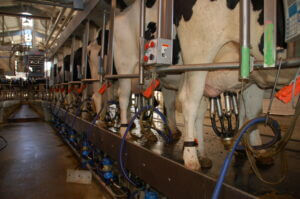 Factors associated with estrous expression and subsequent fertility in lactating dairy cows using automated activity monitoring
C.M. Tippenhauer, J.L. Plenio, A.M.L. Madureira, R.L.A. Cerri, W. Heuwieser, and S. Borchardt
Automated activity monitoring (AAM) systems facilitate the use of real-time data to analyze the estrous activity of cows. In addition to AAM information, other factors (i.e., parity, DHIA test data, and temperature-humidity index) are also associated with dairy cows’ estrous expression. The integration of AAM and other data might improve decision making and contribute to efficient herd management. For these reasons, the authors’ objective was to identify plausible factors associated with estrous expression and subsequent pregnancies per artificial insemination (P/AI) in lactating Holstein cows using an AAM system.
Materials and methods
- This observational, retrospective cohort study included 7,409 AI services from 3,870 lactating Holstein cows (1,374 primiparous and 2,496 multiparous) from 8 commercial dairy farms in Germany from July 2018 until May 2019.
- Cows were fitted with a neck-mounted AAM (Heatime Pro, SCR Engineers Ltd., Netanya, Israel).
- Activity change index was calculated using a proprietary algorithm.
- The intensity of an estrous event (PA) was represented by the peak value of the activity change index during an estrous event.
- Estrous duration (DU) was defined as the interval from onset to end of an estrous event.
- Other factors investigated included parity, DHI (Dairy Herd Improvement) test data (average milk yield, milk fat, milk protein, milk lactose, milk urea nitrogen [MUN], and somatic cell count [SCC]), as well as ambient temperature and relative temperature humidity index (THI).
Results
- Multiparous cows (13.15 ±0.31 hours [h]) showed a longer estrous DU than primiparous cows (12.52 ±0.32 h) (P <0.01), whereas PA was not associated with parity (P = 0.31).
- DU increased by 0.81 h when days in milk (DIM) increased by 100 days (d) (P <0.01) and an estrous event with high PA was more likely later in lactation (P < 0.01).
- When THI was <60, cows had longer DU compared with a THI >60 (P <0.01). A THI >70 decreased DU (P <0.01) compared with all the other THI categories. Similarly, the risk of an estrous event with high PA decreased as THI increased (P < 0.01).
- Increasing SCC (P <0.01) was associated with the decrease of DU. Likewise, an estrous event with high PA was more likely for cows with an SCC <1,000 x103 compared with cows with an SCC >1,000 x103 (P =0.01).
- An increase in test-day milk yield of 10 kg (22 pounds) led to a decrease in DU of 0.2 h, while there was no association between DU and milk fat, milk protein, lactose, or MUN. On the other hand, none of the milk characteristic factors were associated with the percentage of cows reaching high PA.
In conclusion, DU and PA were highly correlated. High PA was associated with greater odds for pregnancy. Increased THI was negatively associated with estrous expression and P/AI in dairy cows. Not all risk factors associated with estrous expression were necessarily associated with the subsequent risk of pregnancy. Combining activity data with other information, such as THI data, can optimize estrous detection and pregnancy outcomes in dairy cows.
Access the paper at: https://doi.org/10.3168/jds.2020-19578
The economic cost of metritis in dairy herds
Pérez-Báez, T.V. Silva, C.A. Risco, R.C. Chebel, F. Cunha, A. De Vries, J.E.P. Santos, F.S. Lima, P. Pinedo, G.M. Schuenemann, R.C. Bicalho, R.O. Gilbert, S. Rodrigez-Zas, C.M. Seabury, G. Rosa, W.W. Thatcher, and K.N. Galvão
Metritis incidence ranges from 8% to more than 50% in some herds. Disease definition is greatly variable across herds, which likely contributes to underestimation of the deleterious effects of metritis in dairy herds. Several studies demonstrated that cows with metritis have reduced milk yield, delayed resumption of ovarian cyclicity, and impaired reproductive performance compared with cows that did not have metritis. In addition, there is evidence that cows that present metritis are more likely to be culled than their healthy counterparts. The authors’ objective of this study was to estimate the cost of metritis in dairy herds using data from multiple U.S. regions.
Materials and methods
- Data were collected from 11,733 dairy cows that calved between November 2012 and October 2014.
- Herds were located in 4 U.S. regions:
- Northeast – 4
- Midwest – 6
- Southeast – 1
- Southwest – 5
- Diagnosis of metritis was performed using a Metricheck device at 7 +3 days in milk (DIM) to evaluate vaginal discharge.
- Metritis was defined as fetid, watery, red-brownish vaginal discharge that occurs <21 DIM.
- Variables considered for economic analyses included:
- Treatment cost
- Milk production
- Feed cost
- Costs with reproductive management
- Cow culling
- Metritis cost was estimated by subtracting the gross profit of cows with metritis from the gross profit of cows without metritis.
Results
- Metritis incidence was 25.1%.
- Compared with cows that did not have metritis, cows that were diagnosed with metritis had:
- Reduced milk yield in 305 DIM (9,463.0 +7 vs. 10,277.0 +313.8 kg/cow) (20,862 +702.6 vs. 22,656.9 +691.8 pounds/cow)
- Smaller proportion of pregnant cows by 305 DIM (69.2 +2 vs. 79.2 +1.1%)
- Greater risk of being culled before 305 DIM (35.9 +3 vs. 26.5 +1.1%)
- Milk sales, feeding costs, residual cow value, and gross profit were less for cows with metritis than for cows that did not present metritis.
- Cow sales and replacement costs were greater for cows with metritis compared with cows without metritis.
- Mean cost for a case of metritis was $513.
- 95% of the scenarios ranged from $240 to $884/case of metritis
- Milk price, treatment cost, replacement cost, and feed cost explained 59%, 19%, 12%, and 7%, respectively, of the total variation in cash flow differences.
The authors concluded that metritis caused large economic losses to dairy herds. Moreover, most of the economic losses observed in this study were a result of the deleterious effects of metritis on milk production, reproductive performance, and survival in the herd.
Access the paper at: https://doi.org/10.3168/jds.2020-19125
Short communication: Effect of timing of induction of ovulation relative to timed artificial insemination using sexed semen on pregnancy outcomes in primiparous Holstein cows
M.R. Lauber, B. McMullen, J.J. Parrish, and P.M. Fricke
The technology used for sorting semen has compensated for some of the cell damage that happens during the process, but the lower fertility of sexed semen persists. Because the use of sexed semen has increased, the development of optimized protocols to improve results when using sexed semen is important. For these reasons, the authors’ objective was to determine the effect of altering timing of induction of ovulation relative to timed artificial insemination (TAI) with sexed semen after a Double-Ovsynch protocol in primiparous Holstein cows.
Materials and methods
- This experiment was conducted on 3 U.S. commercial farms.
- Primiparous Holstein cows (n = 730) were submitted to a modified Double-Ovsynch protocol for first TAI (two PGF2α doses prior to the last GnRH dose in the breeding Ovsynch).
- Cows were randomly allocated to two groups in order to vary the interval between the last GnRH treatment (G2) and TAI: cows were assigned 16 hours (h) (G2–16; n = 373) or 24 h (G2–24; n = 357) before TAI, which was fixed at 48 h after the second PGF2α treatment of the Breeding-Ovsynch.
- G2–16 cows received G2 in the evening the day before TAI, whereas G2–24 cows received G2 in the morning the day before TAI.
- Herd veterinarians diagnosed pregnancies at 34 ± 3 days (d) and reconfirmed pregnancy at 80 ± 17 d after TAI using transrectal ultrasonography.
Results
- G2–24 cows had fewer P/AI than G2–16 cows 34 ± 3 d after TAI: 44 vs. 50% (P = 0.05).
- G2–24 cows had fewer P/AI than G2–16 cows 80 ± 17 d after TAI: 41 vs. 48% (P = 0.03).
- No statistical difference was observed when comparing pregnancy loss between the two groups: 6% for G2-24 vs. 5% for G2-16 (P = 0.70).
In conclusion, induction of ovulation earlier relative to TAI after a Double-Ovsynch protocol decreased P/AI in primiparous Holstein cows, whereas pregnancy loss did not differ between treatments. Based on the data, inseminating cows with sexed semen 16 h after G2 yielded more P/AI than when cows were inseminated 24 h after G2. Delaying insemination based on estrous detection may increase P/AI because of the longer interval from the onset of estrus to ovulation and shorter duration of estrus in high-producing lactating dairy cows, but not in cows submitted to TAI after synchronization of ovulation in which timing of AI relative to ovulation is precisely controlled.
Access the paper at:https://www.sciencedirect.com/science/article/abs/pii/S0022030220307256
Featured Column
 Optimize in vitro embryo production, embryo transfer
For more than a half century, embryo production has proven to be a powerful tool to advance dairy cattle genetics. “This technology is primarily used to propagate the genes of females with superior genetic values and lineage,” reported Daniela Demetrio, RuAnn Genetics, Riverdale, Calif., who spoke during the 2020 Dairy Cattle Reproduction Council Annual Meeting.
As the RuAnn Genetics bovine embryo transfer program director, Demetrio is responsible for the production and transfer of 8,000 to 10,000 Holstein and Jersey embryos annually (in vivo and in vitro), for in-house use, local farmers and worldwide exports. She also serves on the American Embryo Transfer Association (AETA) board of directors.
Embryo production and transfer at RuAnn and Maddox Dairies started in 1985. Thirteen years ago, an in-house laboratory was established, which allows for ovum pickup (OPU), in vitro maturation, in vitro fertilization, in vitro culture, embryo transfer (ET) and freezing for direct transfer.
Capitalize on elite genetics
To set the stage during her presentation, Demetrio explained that dairy cattle breeding and selection have been revolutionized by the use of genomic selection. This helped increase the demand for embryos with high genetic merit from heifers less than 10 months old. She noted that lactating donor cows can experience decreased oocyte quality, poorer fertilization rates and impaired early embryonic development due to their lactational metabolic challenges (Leroy et al., 2011) and greater incidence of postpartum metabolic and infectious diseases (Ribeiro et al., 2016). “The combination of low oocyte recovery, young age of donors and milk production status can make in vitro embryo production (IVP) incredibly challenging,” she stated.
A live calf, resulting from an IVP embryo, requires significant aligning factors, including a good-quality oocyte that matures and becomes fertilized. Next, the embryo develops for 7 days in vitro and is then loaded and transferred by a qualified technician. “During the past decade, success of commercial IVP has improved significantly, with greater blastocyst rates, better cryotolerance, greater pregnancy rates, less pregnancy loss and decreased incidence of large offspring syndrome,” said Demetrio.
During her presentation, Demetrio described what occurs in the RuAnn Genetics Laboratory to improve IVP success, focusing on oocyte quality, donor selection, embryo quality and recipient selection.
Oocyte quality
At the start of the IVP process, oocyte quality is the key factor that determines the proportion of oocytes developing to the blastocyst stage. According to data collected by the AETA Statistical Committee in 2017 and 2018, more oocytes per OPU were recovered from beef breeds than dairy breeds, and both produced more viable embryos per OPU when follicle-stimulating hormone (FSH) was used to stimulate the donor cows.
In 2017, RuAnn began synchronizing and stimulating 100 percent of their donors with FSH. This practice yielded nearly two more embryos per donor per OPU.
Demetrio described FSH as being “almost cost prohibitive.” Thus, the RuAnn team adopted protocols to use smaller doses.
Donor selection
Based on RuAnn donors only, an on-farm study concluded that the number of embryos produced depends on the donor and sires. “Dry donors produce more embryos than heifers and lactating cows, probably because they have fewer metabolic challenges,” Demetrio explained. “Besides embryos, lactating cows produce milk and heifers spend energy growing.”
At RuAnn, OPU in the genetically superior, genomic-tested heifers starts at 8 months old. Some will be aspirated every two to four weeks – until 100 days of pregnancy.
Despite the greater number of oocytes produced by younger heifers, the embryo production rate is less than older heifers (21 vs. 30 percent). “We do not select our donor cows by the number of oocytes,” Demetrio noted. “If we did, we would increase the average number of embryos per cow and reduce the cost of embryo production.” To do so, they would forgo producing offspring from cows with the greatest genetic merit.
Embryo quality
From the RuAnn perspective, grade 1 embryos possess the ability to create a pregnancy more often than grade 2 embryos. “In vitro-produced embryos that reach the compact morula stage on day 5 of in vitro culture, blastocyst stage on day 6 and expanded blastocyst or greater stage on day 7, have a much greater chance of making a pregnancy than the ones that do not,” said Demetrio. She noted that they transfer embryos all year long and have not observed a significant seasonal effect on pregnancy rates.
Embryos transferred 7 and 8 days after estrus yielded greater pregnancy rates. Lactating cows had higher pregnancy rates than heifer recipients. Why? “It’s probably because we are extra careful when selecting embryos for lactating cows,” Demetrio responded. “Only perfect blastocysts, with a defined inner cell mass (round) and very clear trophoblast cells, were selected.”
Recipient selection
According to Demetrio, lactating cows can be used as recipients all year long. “Expect good pregnancy rates,” she commented. “The best results occur when a day 7 (or older) expanded blastocyst is transferred at 7 or 8 days after estrus.”
Similarly, heifers can be used as recipients throughout the year. For greater pregnancy rates in lactating cows and heifers, transfer a grade 1, day 6 early blastocyst (or older) or day 7 expanded blastocyst (or older) at 7 or 8 days after estrus.
An experienced ET technician should make the transfers. “Experienced ET technicians have a significant positive impact on the results,” Demetrio stated.
Focus on details
As with most biological processes, there’s no silver bullet to producing a live calf from an embryo. “Attention to detail in every step of the process is crucial for success,” Demetrio concluded. “Oocyte quality at the start of IVP is a key factor in determining the rest of the process.”
Due to the small number of oocytes recovered from dairy donors, Demetrio said dairy producers should synchronize follicular wave emergence and stimulate with FSH to improve oocyte quality and consequently embryo production. “Good-quality embryos, selected at the right time and stage of development, and transferred by an experienced ET technician to well-managed recipients 7 or 8 days after estrus will result in the best pregnancy rates.”
To read the paper Demetrio wrote for the 2020 DCRC Annual Meeting proceedings and view research study statistics, log into the DCRC “Member Center” and click on the “Proceedings” icon.
Featured Member
(Editor’s Note: For each issue, DCRC interviews a member to learn more about his/her career, involvement with DCRC and thoughts about dairy cattle and reproduction. We encourage you to recommend someone for this feature by contacting JoDee Sattler at: JoDee@dcrcouncil.org)
 Fernanda Ferreira
University of California-Davis Veterinary Medicine Teaching & Research Center
Davis, California, USA
DCRC member since 2019
Meet Fernanda Ferreira – the Dairy Cattle Reproduction Council (DCRC) Membership Committee chair. Her work at the University of California-Davis focuses on applied research for dairy cattle management and health, with an emphasis on economics. In her extension role, Ferreira is responsible for sharing research findings and applied dairy management practices with dairy farmers.
What does she like most about her work? “The opportunity to answer questions dairy farmers have about applying scientific methods and data analysis,” she responded. “And, I enjoy going back with our research findings to the field and discussing results with dairy farmers.”
Ferreira is proud to be employed by UC-Davis. Founded in 1908, UC-Davis is a land grant university that serves the state of California. For several years, the UC-Davis School of Veterinary Medicine has been ranked as one of the best in the world. “It is very rewarding to work in an environment where research, teaching and community outreach are part of the core values of what we do,” said Ferreira.
Brazil native
Born and raised in Brazil, Ferreira earned her Doctor of Veterinary Medicine degree and master’s degree in animal sciences in Brazil. At the University of Florida, she obtained a doctorate degree in animal sciences. Currently, she is close to finishing her master’s degree in preventive veterinary medicine at UC-Davis.
Ferreira’s interest in dairy cattle reproduction stems from the important role it plays in dairy farm profitability. More specifically, she is intrigued in the repro decision-making process – from the best reproductive programs to management strategies to voluntary waiting period length to culling decisions to semen choice to embryo transfer use. “Most importantly, I want to better understand the economics – the bottom line – in all of these decisions,” she said.
As a DCRC member, Ferreira supports the organization’s mission to raise awareness of issues critical to reproductive performance. “DCRC brings together different stakeholders of the dairy industry, including academics, industry, producers, veterinarians and consultants, and through information and communication, DCRC delivers research results to the dairy industry,” she commented. “That is the beauty of DCRC – building a bridge between what is being researched and learned, and what is being applied in the field. This has definitely contributed to the amazing improvements we have seen in dairy reproduction.”
Webinars provide valuable info
Ferreira finds DCRC’s webinars extremely helpful. “Through DCRC webinars, I have been able to connect with dairy reproduction physiologists and learn about new technologies applied in the field,” she commented. “This has expanded my research and extension programs, as well. I am able to look at the economic aspects of the technologies discussed during the DCRC webinars.”
Noting the significant strides made in improving dairy cattle reproduction over the last 15 years, Ferreira feels the dairy industry still has a long way to go. “What excites me most are the aspects related to precision medicine and management,” she remarked. “For instance, can we predict which cows are at greater risk for uterine diseases, using cow-level data and sensor data? Can we use this risk information to refine management? Can we use this to define individual cow voluntary waiting periods, treatments, semen choice and culling?”
Ferreira added, “This is an exciting research and development avenue that will help farmers maximize profitability by using data they are already generating on their farms.”
Foresees international growth
Looking forward, Ferreira believes DCRC will continue to grow, especially outside of the United States. “Dairy production, including improved milk yield, management and welfare, continues to evolve everywhere. Reproduction is an important aspect that links all these areas together.”
Ferreira concluded, “With its different audiences – producers, veterinarians, consultants and allied industry reps – I believe DCRC, and its unique mission of extending knowledge, has a major role in transforming dairy production worldwide.”
Industry Calendar
- Four-State Dairy Nutrition and Management Conference, June 9-10, Virtual
- National Holstein Convention, June 20-24, Lancaster, Pennsylvania
- American Jersey Cattle Association and National All-Jersey Inc. Annual Meeting, June 26-27, Bettendorf, Iowa
- National Mastitis Council Webinar, June 24, 2:00 p.m. Central time (Canada/U.S.)
- American Dairy Science Association Annual Meeting, July 11-14, Virtual
- American Society of Animal Science-Canadian Society of Animal Society Annual Meeting and Trade Show, July 14-18, Louisville, Kentucky
- Dairy Cattle Reproduction Council Metritis Management in Dairy Cows webinar (in Portuguese) with Vinicius Machado, Texas Tech University, July 29, 2:00 p.m. Central time (U.S./Canada)
- Council on Dairy Cattle Breeding Triannual Evaluation, August 10
- National Cattlemen’s Beef Association, August 10-12, Nashville, Tennessee
- World Dairy Expo, September 28-October 2, Madison, Wisconsin
- American Association of Bovine Practitioners Conference, October 7-9, Salt Lake City, Utah
- National Association of Animal Breeders, October 27-29, Lake Geneva, Wisconsin
- Dairy Cattle Reproduction Council Annual Meeting, November 9-11, Kansas City, Missouri
- Council on Dairy Cattle Breeding Triannual Evaluation, December 7
