
Newsletter – 2021 – October
President's message
 From the DCRC President’s Desk
By Michael Overton
Our annual Dairy Cattle Reproduction Council meeting is just around the corner. This year marks a return to an in-person meeting at the Loews Hotel in Kansas City, Mo., USA, Nov. 9-11. However, for those unable to physically attend, we will also be hosting a virtual option – similar to the 2020 meeting. Recorded content will be available later for those who paid for in-person or virtual access. Registration is now open and we have secured a block of rooms at the Loews Hotel for attendees. To register for the meeting, please use the following link: https://www.dcrcouncil.org/2021-annual-meeting.
For anyone involved in dairy cattle reproductive management, this is your meeting. DCRC Annual Meeting Program Chair Ralph Bruno and Co-chair Pablo Pinedo have assembled a great set of speakers and topics, highlighted by plenary sessions with Jack Britt (A vision for dairy farms and cows in 2067), Robin White (How reproductive efficiency can impact sustainability of dairy operations) and Scott Brown (Dairying in the post COVID-19 world: Lessons learned and planning for the future).
Our program runs all day Wednesday and Thursday through noon, but the pre-conference session will be held on Tuesday afternoon, followed by our opening reception and poster session. Approximately 20 posters – covering a wide range of reproduction-related topics – will be presented. There will also be pre-recorded sessions with each of the poster presenters.
Presentation titles and presenters for this year’s breakout sessions include:
- The future of selection decisions and breeding programs: What are we breeding
for and who decides?
John Cole, URUS
- How to optimize efficiency in farms using robotic milking systems
Marcia Endres, University of Minnesota
- Heifer fertility programs and record analysis
Joe Dalton, University of Idaho
- Practical employee management strategies
Robert Hagevoort, New Mexico State University
- Economics of reproduction: Best programs, best semen strategies
Fernanda Ferreira, University of California-Davis
- Nutritional recommendations for fertility, according to 2021 NRC
Jeffrey Firkins, Ohio State University
- Updates on the transition cow period: Nutritional and management recommendations
Tom Overton, Cornell University
- Implementation of a genomic program for heifers and lactating cows
Natalia Martinez-Patino, Zoetis
- Evaluating reproductive performance in dairy herds: A practical approach
Luis Mendonça, Merck Animal Health
Additionally, we will be holding two panel discussions. A dairy producer panel will address “Heifer reproductive management: Strategies to optimize fertility.” An artificial insemination (AI) company panel of researchers will discuss sire fertility and advances in the AI industry. Finally, we will be holding an interactive discussion with our 2021 Platinum Award winners in our Excellence in Dairy Reproduction Awards program.
I hope to see you in Kansas City for the 2021 DCRC Annual Meeting!
A more global DCRC
As mentioned in the previous President’s Message, a subgroup within DCRC has been meeting and making plans for our first steps in holding an international program. We are partnering with the Dairy Tech meeting in Stoneleigh Park, England, which is scheduled for Feb. 2, 2022, and our plans are for three presentations: “The interconnectedness of dairy performance, reproduction and sustainability,” by Frank Mitloehner, University of California-Davis; “Key economic concepts and how reproductive performance affects profitability,” by Michael Overton, DCRC president/Zoetis; and “Identifying key opportunities and important metrics for continual improvement in reproductive performance,” by Matt Utt, DCRC vice president/Select Sires Inc.
Our hope is that this international effort will help create positive exposure to the benefits and value of DCRC membership, and help grow our organization outside the United States. Stay tuned for more info on this exciting new venture and if you have suggestions or ideas on where we should try to go next, please contact one of us.
I encourage you to reach out to DCRC leaders (https://www.dcrcouncil.org/about-dairy-cattle-reproduction-council/leadership) and staff (https://www.dcrcouncil.org/about-dairy-cattle-reproduction-council/dcrc_staff) if you have questions, suggestions or would like to volunteer your time or resources to DCRC. And if you’re interested in being a corporate sponsor of DCRC, please let us know.
Keep up to date on DCRC programs and resources by visiting www.dcrcouncil.org. Help us spread the word about DCRC through social media: follow us on Twitter (@DCRCouncil) and Facebook. Your retweets and “likes” help extend the reach of DCRC’s information and programs.
Research Summaries
Do biological and management reasons for a short or long dry period induce the same effects on dairy cattle productivity?
K.E. Olagaray, M.W. Overton, and B.J. Bradford
The dry period is an important part of the lactation cycle because it allows for the recovery and repair of mammary tissue. The dry period length (DPL) has been long debated with extremely short or extremely long dry periods being negatively associated with milk production in the subsequent lactation. Management (e.g., early dry-off, incorrect recording, calving season, etc.) and biological (e.g., gestation length, parity, genetics, etc.) reasons are the culprit for deviations from the targeted 60-day (d) dry period. Thus, the authors’ objective was to “determine whether biological and management reasons for a short or long dry period are associated with different effects on subsequent lactation productivity.”
Materials and methods
- Data from 32,182 lactations on 16 farms were collected in a retrospective observational study.
- DPL and gestation length (GL) were each categorized as short (~45 d DPL, 269 d GL), average (between 45 and 73 d DPL, between 269 and 284 d GL), or long (~means 73 d DPL, 284 d GL).
- Outcomes of interest were: milk and component yields at first test and over the whole lactation, days to first service, first service conception risk, days open and herd retention through 60 and 365 d postpartum.
Results
- First-test and whole-lactation milk and component yields were lowest for short DPL and short GL.
- Rates of receiving first service were 13 and 20% less for short DPL and short GL, respectively, and average DPL and short GL, compared with average DPL and average GL cows that experienced difficulty calving.
- Overall, median number of days to first service was 67 – with no difference between groups.
- Conception risk at first service was not associated with study group.
- The hazard of pregnancy was less for average DPL and long GL compared with average DPL and average GL, but days open did not differ for any other study group compared with average DPL and average GL.
- The hazard of leaving the herd by 60 days in milk (DIM) was 34% greater for average DPL and short GL than average DPL and average GL.
- Cows with a long DPL due to early dry-off (long DPL and average GL) had a greater hazard of leaving the herd by 60 DIM (30%) and 365 DIM (24%) when compared with average DPL and average GL cows.
In conclusion, a short dry period appeared to compound the effects of short GL, as lactation performance and herd retention rate were least for short DPL and short GL cows compared with any other study group. Long GL, independent of DPL, had little effect on subsequent lactation performance. Although short DPL might be a successful strategy for some herds or cows, cows with high milk yield at dry-off should not be subjected to a short dry period. Deviations in DPL caused by biology have greater influence relating to short DPL, whereas management reasons for DPL deviation have the greatest effect in causing long dry periods.
Access the paper at: https://doi.org/10.3168/jds.2020-18462
Risk factors for purulent vaginal discharge and its association with reproductive performance of lactating Jersey cows
J.G.N. Moraes, P.R.B. Silva, L.G.D. Mendonça, C.T.C. Okada, and R.C. Chebel
Postpartum uterine diseases, such as metritis and endometritis, negatively affect reproductive performance in dairy herds, causing important economic losses to dairy farms. Purulent vaginal discharge (PVD) is commonly observed in dairy cows a few weeks after parturition and is associated with impaired reproductive performance. Risk factors for PVD are well studied in Holstein cows but limited data exist on Jersey cows. The authors’ objectives included determining the prevalence and risk factors for PVD, and its effects on reproductive performance of Jersey cows.
Materials and methods
- This was a retrospective observational study.
- Data were collected from 3,822 Jersey cows (1,681 primiparous and 2,141 multiparous) from 2 commercial herds.
- Cows were housed in cross-ventilated barns.
- During the prepartum period, pregnant heifers and cows were housed separately.
- After parturition, primiparous cows were housed separately from multiparous cows.
- Cows were examined for PVD at 28 to 38 days in milk (DIM), using a Metricheck device, and were classified as:
- Negative for PVD – no mucus, clear mucus or <50% of mucus was pus
- Positive for PVD – >50% of pus in the exudate retrieved
- Cows considered positive for PVD were further classified for PVD severity as follows:
- 50 to 60% pus in exudate
- 60 to 90% pus in exudate
- 90 to 100% pus in exudate
- 90 to 100% pus in exudate + uterine fluid
- Health and production records were analyzed to evaluate their association with PVD.
- Body condition score (BCS) and locomotion scores were recorded from a subgroup of 740 cows at -24 + 3, 1 + 1, and 31 + 3 relative to calving.
- Blood samples were collected at -11 + 3, -4 + 3, 3 + 3, and 10 + 3 days relative to calving to determine concentrations of non-esterified fatty acids (NEFA) and β-hydroxybutyrate (BHB).
Results
- 6% of cows were classified as negative for PVD.
- Out of the cows classified as positive for PVD:
- 3% had 50 to 60% pus
- 4% had 60 to 90% pus
- 5% had 90 to 100% pus
- 8% had 90 to 100% pus + uterine fluid
- Other incidences were as follows:
- Twins – 2.4%
- Stillbirth – 3.3%
- Dystocia – 4.4%
- Retained placenta – 3.9%
- Metritis – 8.9%
- Risk factors for PVD (P < 0.05):
- Year of study
- Previous gestation length
- Occurrence of calving problems
- Retained placenta
- Metritis
- NEFA 2 weeks before parturition
- BHB at first and second week after parturition
- BCS at fourth week after parturition
- BCS at parturition tended to be associated with odds of PVD (P = 0.06)
- Conception after first and second artificial insemination was lower (P < 0.01) for cows considered positive for PVD compared with cows classified as negative for PVD.
- Pregnancy loss was greater (P < 0.03) for cows considered positive for PVD compared with cows classified as negative for PVD.
- Median days from parturition to conception was greater (P < 0.01) for cows with PVD compared with cows without PVD (84 vs. 127 days, respectively).
- Severity of PVD was associated with reduced odds of pregnancy (P < 0.01).
- Hazard of pregnancy by 305 DIM was greater (P < 0.01) for cows without PVD than cows with PVD, regardless of PVD severity.
In conclusion, risk factors for PVD identified in this study were occurrence of metritis, retained placenta, calving problems, and days in the close-up diet. These risk factors are similar to those previously reported in the literature for Holstein cows. Moreover, important deleterious effects of PVD on reproductive performance were observed in Jersey cows.
Access the paper at https://doi.org/10.3168/jds.2021-20502
Days in the prepartum group are associated with subsequent performance in Holstein cows
A. Vieira-Neto, G.A. Duarte, R. Zimpel , W.W. Thatcher, and J.E.P Santos
The dry period is an important part of the lactation cycle because it allows for the recovery and repair of mammary tissue. The dry period is also important because many different nutritional management strategies can be implemented during the prepartum period (i.e., second half of the dry period) to improve health and performance postpartum. Although the use of such nutritional and management strategies are used by a large proportion of dairy farms, the number of days cows spend in the prepartum group varies greatly from farm to farm. Thus, the authors’ objective was to determine the association between days in the prepartum group and postpartum performance and survival.
Materials and methods
- Data from 18,657 Holstein cow lactations were collected.
- Days in the prepartum group (DPG) was classified as short (7 days [d]), moderate (28 d), and extended (42 d).
- Acidogenic diets were fed only to parous cows in the prepartum group.
- Outcomes of interest were:
- Total milk production for the first 300 days in milk (DIM)
- Incidence of disease during the first 90 DIM
- Reproductive performance and survival up to 300 DIM
Results
- Milk production during the first 300 DIM was 9,331, 9,665, and 9,261 kg (20,571, 21,308, and 20,417 pounds) for 7, 28, or 42 DPG, respectively, in nulliparous cows, and 9,886, 10,939, and 10,117 kg (21,795, 24,116, and 22,304 pounds) for 7, 28, or 42 DPG, respectively, in parous cows.
- The disease incidence during the first 90 DIM was 49.5, 52.9, and 59.5% of nulliparous, and 49.7, 26.5, and 47.4% of parous cows that spent 7, 28, or 42 DPG, respectively.
- The proportion of pregnant cows pregnant at first artificial insemination was 37.0, 32.6, and 29.8% for 7, 28, and 42 DPG, respectively. And the proportion of cows pregnant at 300 d postpartum for 7, 28, and 42 DPG were, respectively, 71.7, 73.5, and 58.8%.
- The proportion of cows removed from the herd by 300 d postpartum was 25.2, 22.9, and 34.4% for 7, 28, or 42 DPG, respectively.
Although the authors were not able to separate the parity and prepartum diet effects on the outcomes of interest, associations between DPG with production, health, reproduction, and survival were detected. Moderate DPG (3 to 4 weeks) was associated with improved productive performance in the subsequent lactation. Furthermore, quadratic responses were observed for cow health, reproductive performance, and survival. These results corroborate current recommendations of a two-group management program for dry cows – a far-off group for the early dry period and a prepartum group for the last 3 to 4 weeks of gestation.
Access the paper at: https://doi.org/10.3168/jds.2020-18889
Featured Column
 Help calves get off to a strong start
Early life nutritional management of dairy calves can have both short- and long-term effects, from influencing incidence of illness and death to future reproductive efficiency and milk yield.
“The dairy industry has greatly improved nutritional management of young calves during the past decade; yet, the incidence of morbidity and mortality has only decreased by 2.8 and 4.5 percent, respectively, since 2007,” explained Michael Steele, University of Guelph, Guelph, Ont., Canada, during the 2020 Dairy Cattle Reproduction Council Annual Meeting. Steele focused his remarks on how gastrointestinal function and development are influenced by differential nutritional management during the neonatal, preweaning and weaning phases.
Digestive disorders (i.e., diarrhea) remain the most common cause of calf illness and death, but can often be mitigated by using well-developed, early-life nutritional management programs. Neonatal calves depend on colostrum rich in immunoglobulin G (IgG) to acquire transfer of passive immunity (TPI). Within the first few hours of life, calves should consume approximately 3 to 4 liters of colostrum containing >50 grams of IgG per liter and a total bacterial count of <100,000 cfu/milliliter (colony-forming units per milliliter) to ensure successful TPI.
Feed colostrum within 6 hours
Why should calves drink colostrum so soon after birth? Steele said that neonatal calves’ enterocytes lose the ability to absorb intact macromolecules as time after birth increases. He described a study where researchers standardized the mass of pooled colostrum (62 grams of IgG/liter) fed to calves (7.5 percent birthweight) and fed calves either during the first hour of life, or at 6 or 12 hours of life. The results demonstrated that when mass of IgG and volume of colostrum is standardized, calves fed during the first hour of life had a 28 percent increase in the maximum serum IgG concentration compared with calves fed at 6 and 12 hours. The results also revealed that calves fed at 6 and 12 hours did not differ in their IgG concentrations. “It appears there may be a critical time point between 1 and 6 hours of life in which the degree of intestinal permeability to IgG decreases to a certain degree,” he remarked. Thus, the researchers recommended feeding colostrum by 6 hours after birth to ensure TPI.
One study found that feeding colostrum via an esophageal tube (rather than a nipple bottle) reduced the risk of failure of TPI, but it must be done by trained individuals to avoid inserting the tube into the trachea. Yet, other studies saw no differences in serum IgG concentrations of calves fed >3 liters of colostrum or colostrum replacer (esophageal tube vs. nipple bottle). On the other hand, calves fed only 1.5 liters of colostrum replacer via esophageal tube had reduced serum IgG concentrations compared with calves fed 1.5 liters via a nipple bottle. “Thus, it is possible that many U.S. dairy producers are not feeding the recommended 3 to 4 liters of colostrum via nipple bottle, resulting in increased failure of TPI rates among these calves,” Steele reported.
Feed multiple colostrum meals
Gaining momentum is the practice of feeding multiple meals of colostrum after the initial colostrum meal. Doing this can positively influence serum IgG concentrations. Research has shown that calves fed colostrum for three days after birth achieved greater serum IgG concentrations compared with calves fed whole milk after the first colostrum meal. Also, calves fed multiple meals of colostrum had improved gut development compared with their whole milk-fed counterparts.
Establishment and maintenance of a healthy gut microbial community is associated with calf health and disease outcomes, and certain bacterial species are positively correlated with growth and negatively correlated with the incidence of diarrhea. Colostrum feeding is critical to the development of intestinal microbiota and delaying colostrum feeding up to 12 hours after birth tends to reduce the prevalence of beneficial bacteria in the colon at 2 days of life.
One of the major colostrum compounds that promotes gut microbial colonization is small polymers of simple sugars, known as oligosaccharides (OS). Concentrations of OS are up to 72 times greater in colostrum compared with whole milk. Feeding colostrum containing greater OS concentrations is associated with the prevalence of Bifidobacterium (beneficial bacterium) in the small intestine. Bovine OS have been shown to inhibit common pathogens implicated in calf diarrhea, namely enterotoxigenic Escherichia coli. Also, bovine OS may help with the uptake of IgG by enterocytes.
Additionally, colostrum contains macronutrients that stimulate the secretion of beneficial gut hormones, namely glucagon-like peptide (GLP)-1 and GLP-2. GLP-1 stimulates insulin release and thus increases glucose uptake for energy use, whereas GLP-2 promotes gut development. In calves, colostrum feeding promotes the release of both hormones. Delaying colostrum feeding until 12 hours after birth reduces serum concentrations of GLP-1 and GLP-2. Large amounts of colostral fat play a key role in newborn calves’ thermoregulation and fueling their metabolism. Colostrum also contains large amounts of growth factors, microRNAs, cytokines, hormones and antimicrobial compounds that assist calves in their ability to fight infection and promote gastrointestinal development and maturation.
Steele spoke highly of feeding an elevated plane (20 percent birthweight, >8 liters of milk or 1.2 kg [2.6 pounds] of milk replacer powder per day) of nutrition. This feeding strategy typically leads to increased preweaning average daily gain and thus improves mammary development, younger age at first calving and greater milk production.
Transitioning to solid feed
Based on a variety of trials, Steele recommends weaning calves at approximately 8 weeks of age to facilitate a smooth transition from liquid to solid feed. Calves fed elevated levels of milk preweaning often struggle at weaning, because their energy demands are being met primarily by milk consumption, leaving starter intake low. Therefore, in addition to delaying weaning age, it may be necessary to implement a “step-down” weaning method, in which milk intake is typically reduced at approximately 1 month of life to increase preweaning solid feed intake and weight gain to smooth the weaning transition. Automated feeding technologies will help the dairy industry optimize future weaning strategies. Instead of implementing abrupt, large decreases in milk intake, automated feeding allows for linear decreases in milk, as well as designing individualized programs based on starter intake.
Regarding starter feed, Steele noted that feeding processed corn can increase ruminal acidosis risk, while feeding whole corn can shift the site of fermentation to the lower gut, which results in decreased fecal pH for up to 2 weeks postweaning. Currently, the dairy industry feeds a wide range of starch content and forms of starch in starter feed during the preweaning and weaning stages. The industry lacks research related to optimal starter composition to facilitate optimal weaning. Consequently, more research is needed to better understand the interaction between feeding elevated levels of milk and various starter compositions.
To read Steele’s DCRC Annual Meeting proceedings paper and view references, log in to the DCRC Member Center and click on the “Proceedings” icon.
Featured Member
(Editor’s Note: For each issue, DCRC interviews a member to learn more about his/her career, involvement with DCRC and thoughts about dairy cattle and reproduction. We encourage you to recommend someone for this feature by contacting JoDee Sattler at: JoDee@dcrcouncil.org)
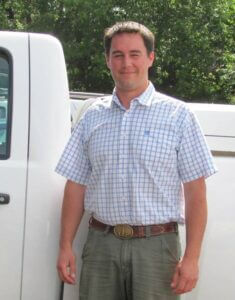 Scott Earnest
Lodi Veterinary Care
Lodi, Wisconsin, USA
DCRC member since 2019
Dairy Cattle Reproduction Council’s (DCRC) Excellence in Dairy Reproduction Awards program remains a pillar to recognizing outstanding dairy producers for their efforts in increasing dairy cattle fertility and building a sustainable future for the dairy industry worldwide. For this awards program to be sustainable, DCRC needs nominators – like Scott Earnest – who annually nominate outstanding dairy operations for these awards.
Why does Earnest invest time in nominating dairies for DCRC’s Excellence in Dairy Reproduction Awards? “I’ve always believed that having great competition is the best way to push yourself to improve,” he stated. “The DCRC awards are a great way to honor the efforts of successful herds. Perhaps, more importantly, this awards program piques the interest of the rest of the industry.”
Helping clients reach the next goal
Reflecting on a client’s success, Scott noted, “I’ll never forget the moment when one of my clients first achieved a 50 percent conception to first breeding annual average. After taking a moment to celebrate, I told them not to rest on their laurels because two herds in the next county were pushing 60 percent. They didn’t believe me at first, but 18 months later they reached the same mark.”
Earnest started working with cattle by helping his cousin with his beef herd in the West. That experience spawned an interest in veterinary medicine. In 2014, he graduated from the University of Wisconsin-Madison School of Veterinary Medicine. “Dairy cattle presented a whole new range of challenges I hadn’t seen in beef cattle,” said Earnest. “Of course, the curriculum at the University of Wisconsin heavily favors dairy.”
On weekends, Earnest worked at Lodi Veterinary Care (LVC) while in vet school. After graduation, he began full-time employment at LVC, a full-service vet clinic serving south-central Wisconsin. This business includes three teams, with Earnest being part of the livestock division. The livestock team provides a wide range of preventative and emergency services to farms within about an hour radius of the clinic’s hospital in Lodi, Wis.
Understanding key trends and challenges
As one of the 11 livestock veterinarians at LVC, Earnest’s day usually starts with dairy herd health appointments, which include fertility exams, fresh pen exams and a weekly update on how things are going around the farm. “My clients expect me to be up to speed on key trends and challenges for their business,” he remarked. “I always try to keep the big picture in mind as we deal with each cow’s situation.”
The rest of Earnest’s day involves a mixture of records analysis and farm visits for sick cows, surgeries and obstetrics. “Often, a simple problem can spur a conversation that leads to deeper investigation and a plan for improving workflow, cow environment or protocols,” he noted. “That’s where I see the true value of the livestock veterinarian – integrating all of the little details into a broader picture of how we can improve cows’ lives to help make farms more profitable.”
Earnest added, “The exceptional group of farms I get to work with every day has shaped my career and fostered my interests. Their success is a huge motivator to me and the rest of the team at LVC.”
What spurred Earnest’s interest in dairy cattle reproduction? “A successful reproduction program is paramount to running a profitable dairy,” he responded. When cows breed back promptly, dairies have lower average days in milk throughout the year, which typically means higher milk production. We also see fewer foot health and body condition challenges due to shorter lactations, increased cow longevity and, in general, more flexibility to respond to other health challenges in the herd. One of the biggest conversations the past few years has been around reducing culling rates and getting a longer amortization on each animal. There seems to be a snowball effect once fertility improves and it makes the whole business a lot of fun.”
DCRC is his go-to resource
Earnest described DCRC as his “go-to resource” for educating his clients. “As I came to fully appreciate the impact fertility has on dairy businesses, I realized I needed to join DCRC so I could be at the cutting edge for my clients.”
Regarding DCRC educational resources, Earnest said, “DCRC provides the best forum for education and debate around dairy cattle fertility. It’s essential to have a reputable space for veterinarians, dairymen and industry professionals to find the information they need, to learn from their peers and to share their enthusiasm.”
Earnest said the two factors he appreciates most about DCRC resources are the importance of communication and training in optimizing fertility, and the wide variety of tools and philosophies that can result in successful outcomes. “With regard to communication and training, I see huge opportunities on most farms for teamwork and team accountability to improve results. The outcomes are only as good as the weakest link and that weak link is almost never the cow.”
Learning about different approaches
In terms of varying dairy cattle fertility management philosophies, Earnest enjoys reading the profiles of dairy operations that use protocols very differently than what he sees. “The favorite part of my veterinary training was visiting veterinary practices in different parts of the country and seeing different approaches to the same challenges,” said Earnest. “Now that I’m more rooted in my career and don’t get out to shadow other veterinarians, DCRC publications and events are some of the best options I have to stay current – outside of my own client base. I have to keep learning to share the best information with my clients.”
Realizing that many dairies have achieved major improvements in dairy cattle fertility, challenges remain. Earnest said “data overload” challenges many dairy managers. “We now have the technology to know almost everything about a cow’s daily routine,” Earnest explained. “Parsing through the data to make the best decisions can be overwhelming and the answers aren’t the same in every facility or for every herd’s goals. As the use of computer records and digital monitors continues to grow, we have to continue to use our ‘powers of observation’ and ‘people smarts’ to frame the questions correctly, set goals and work toward them.”
Webinar

Darren T. Juniper
Webinar focuses on nutrition strategies to enhance cow health and reproduction
Join the Dairy Cattle Reproduction Council (DCRC) for its next webinar – “Importance of Dietary Methionine and Selenomethionine on Health and Reproduction” – on Oct. 14, starting at 2 p.m. Central time (USA/Canada). Phil Cardoso, University of Illinois, and Darren T. Juniper (retired), University of Reading, England, will lead the free, one-hour webinar.
The presenters will discuss how both methionine (Met) and selenium (Se) are essential to dairy cow performance. Methionine, an essential nutrient, is heavily involved in the metabolic pathways of dairy cows. Methionine, however, cannot be synthesized in the required quantity. Research that extends to the 1970s shows that regularly meeting dairy cows’ methionine needs supports not only production – milk, milk protein and milkfat – but also animal health and reproduction. This includes metabolic diseases, timely breed backs and full-term pregnancies. For these reasons, methionine supplementation is becoming as common as daily vitamin and mineral supplementation.

Phil Cardoso
Selenium is an essential trace element with key functions in antioxidant defense and immunity and inflammatory response modulation of the body. Cardoso and Juniper will explain that feeding selenium in the form of SeMet, over inorganic sources or other organic selenium, is preferred because SeMet is metabolized as a constituent of the methionine pool. This leads to a storage depot of selenium being created in body tissues. Increased muscle and tissue reserves of selenium can enhance the resistance of livestock to stress and diseases, and represent a key strategy to help fight stress.
To register for this webinar, go to: https://bit.ly/DietaryMethionine and follow the prompts. If you are a DCRC member and cannot attend the live program, you may access the webinar at: www.dcrcouncil.org after Oct. 28.
DCRC received approval for one Registry of Approved Continuing Education (RACE) credit for this webinar. This provides a convenient way for bovine veterinarians to earn CE credits. This webinar is also approved by the University of the State of New York State Education Department for one CE for New York-licensed veterinarians. Additionally, DCRC received approval for one American Registry of Professional Animal Scientists (ARPAS) CE.
Cardoso conducts research and provides outreach programs in dairy nutrition and reproduction. His experience with Brazilian and U.S. dairy farms brings a different perspective and set of management skills that help him with classroom discussions. His broad technical and analytical background is improved every day by the exchange of experiences with students, staff and world-renown professors at the University of Illinois. He obtained a doctorate degree in ruminant nutrition from the University of Illinois and master’s and Doctor of Veterinary Medicine degrees from the College of Veterinary Medicine at Universidade Federal do Rio Grande do Sul in Porto Alegre, Brazil.
Juniper worked within the University of Reading’s Animal Science Research Division. He gained his doctorate degree from Reading in 2003 – titled “Diet and Endocrine Responses in Beef Cattle.” He has been involved in animal production research for more than 30 years. During this time, he worked with most classes of domestic livestock (ruminant and monogastric) – covering a diverse range of research topics. Over the last 15 years, Juniper has researched trace element nutrition, primarily selenium and iodine in animal diets. His selenium-based research has focused on the effects of selenium source on aspects of animal and human health, as well as the deposition of selenium in the products and post-mortem tissues of both ruminant and monogastric livestock.
This webinar is sponsored by Adisseo. The Dairy Cattle Reproduction Council does not support one product or company over another, and any mention is not an endorsement by DCRC.
For more information about DCRC’s webinars, e-mail Luciano Caixeta, DCRC Education Committee chair, at: lcaixeta@umn.edu or e-mail DCRC at: jodee@dcrcouncil.org.
Industry Calendar
- American Association of Bovine Practitioners Conference, October 7-9, Salt Lake City, Utah
- Dairy Cattle Reproduction Council webinar, “Importance of Dietary Methionine and Selenomethionine on Health and Reproduction,” October 14, at 2 p.m. Central time
- International Milk Haulers Association, October 17-19, Tampa, Florida
- Western Dairy Management Conference, November 1-4, Reno, Nevada
- National Mastitis Council webinar, “Improving Milkability Without Testing Equipment,” November 2, at 2 p.m. Central time
- Central Plains Dairy Women’s Conference, November 2-3, Sioux Falls, South Dakota
- Dairy Practices Council, November 2-5, Pittsburgh, Pennsylvania,
- Dairy Cattle Reproduction Council Annual Meeting, November 9-11, Kansas City, Missouri
- Council on Dairy Cattle Breeding Triannual Evaluation, December 7
- Dairy Cattle Reproduction Council webinar (presented in Spanish), December 9, at 2 p.m. Central time
- National Mastitis Council Annual Meeting, February 1-3, San Diego, California
- Dairy-Tech, Stoneleigh Park, Coventry, United Kingdom, February 2
- National DHIA Annual Meeting, February 21-24, San Antonio, Texas
- High Plains Dairy Conference, March 1-2, Amarillo, Texas
- Professional Dairy Producers of Wisconsin Business Conference, March 16-17, Wisconsin Dells, Wisconsin
- Central Plains Dairy Expo, March 29-31, Sioux Falls, South Dakota
- Council on Dairy Cattle Breeding Triannual Evaluation, April 5
- National Conference on Interstate Milk Shipments, April 7-12, Indianapolis, Indiana
- Dairy Calf and Heifer Association Annual Conference, April 12-14, Bloomington, Minnesota
- ICAR/Interbull, May 30-June 3, Montreal, Quebec, Canada
- American Dairy Science Association Annual Meeting, June 19-22, Kansas City, Missouri
- Council on Dairy Cattle Breeding Triannual Evaluation, August 9
- Dairy Cattle Reproduction Council Annual Meeting, November 15-17, Middleton, Wisconsin
- Council on Dairy Cattle Breeding Triannual Evaluation, December 6
