
Newsletter – 2022 – February
President's message
 From the DCRC President’s Desk
By Matt Utt
It is hard to believe that we are beginning the third year of the COVID pandemic. Much has changed in our lives since February 2020. Although I can think of negative impacts on my life and especially on the lives of others, there are some positive things that have come out of it. Having some hard stops for travel and activities freed up time for creativity, contemplation and new interests. I have also increased connectivity with family, friends and colleagues, despite less in-person contact. We have learned innovative methods for digital communication, but nothing can replace being together in person. Although we certainly had an incredible program at last year’s annual meeting, spending time with the DCRC membership, in other words my friends and colleagues, was the highlight for me.
The annual meeting program committee is hard at work reviewing comments from last year’s meeting and crafting the 2022 program. I hope to see you Nov. 15-17 in Middleton, Wis. (just west of Madison)! Corporate sponsorship is the major source of funding for the annual meeting. Please help us promote corporate sponsorship. Contact a DCRC board or staff member with sponsorship suggestions.
The Dairy Cattle Reproduction Council strives to create value for you as a member – not only through the annual meeting – but also providing content in several forms. Please visit the website (www.dcrcouncil.org) and member login area. On the DCRC website, you can access annual meeting proceedings from 2006-2021. These proceedings papers are packed full of information pertaining to the presentation topic, as well as references. The member area also has links to recorded webinars, “Ask the Experts” sessions, in addition to newsletters and other communications. The value of DCRC is not just in providing materials in various formats and annual meeting presentations. There is tremendous value in networking and sharing knowledge among members.
Have you been to the DCRC Facebook page? Here’s a challenge and a prize! Check the DCRC Facebook page and you will see a question posted by me. The first 25 people to comment will be entered into a drawing for an item of clothing (up to $50 in value) from the DCRC store.
Creating an international presence for DCRC is part our strategic plan. We planned to travel to the United Kingdom in February for the Dairy Tech event to promote DCRC via three presentations and a booth. Unfortunately, COVID travel concerns/restrictions made us postpone. It was a disappointment, but we look forward to making our UK debut in 2023.
Please note these upcoming events and deadlines:
- DCRC webinar – Chris Szydel, Pagel’s Ponderosa Dairy LLC dairy herd manager, will present the next webinar on Feb. 25, starting at 2 p.m. Central time (U.S./Canada). Click here for more details.
- DCRC Scholars Program – DCRC will provide free registration and travel funds for a full-time graduate student and member of DCRC to attend the annual meeting. Please see our website for application information. Deadline: April 30
- DCRC Excellence in Dairy Reproduction Awards – Consider nominating a dairy! Nominations will open March 1 and close on April 30. Please see our website for application information.
Research Summaries
Impact of gonadotropin-releasing hormone administration at the time of artificial insemination on conception risk and its association with estrous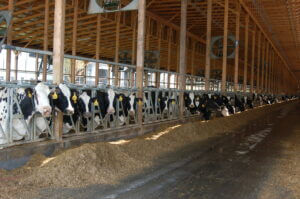 expression
T.A. Burnett, A.M.L. Madureira, J.W. Bauer, and R.L.A. Cerri
Efficient reproductive performance is a primary goal on commercial dairy herds. The occurrence of estrus has been shown to improve conception and reduce pregnancy loss in timed artificial insemination (AI) programs. Therefore, cows with reduced estrous expression have compromised fertility. With the adoption of automated activity monitors (AAM), expression of estrus can be monitored without the need for visual evaluation of cows. It has been demonstrated that gonadotropin releasing hormone (GnRH) can indirectly cause ovulation. However, no studies have been done to determine the effects of different intensities of estrous expression with and without GnRH administration on fertility of dairy cows. The objective of this study was to determine whether the fertility of spontaneous estrous events with lesser estrous expression increases when cows are stimulated to ovulate with GnRH at the time of insemination.
Materials and methods
- Cows were enrolled at the time of estrus from 3 herds.
- Cows (n = 2,607) were assigned to receive GnRH or not (control).
- Intensity of estrous expression was determined using leg-mounted AAM and categorized as:
- greater intensity
- lesser intensity
- At farm A, ovaries were examined with an ultrasound at the time of estrus and at 24 hours (h), 48 h, and 7 days post estrus.
- Pregnancy per AI was evaluated at 35 + 7 days post estrus for cows that were inseminated.
Results
- Control cows with greater estrous expression had greater pregnancy per AI than cows with lesser expression.
- GnRH administration increased pregnancy per AI in cows with lesser estrous expression (37.8 +2 vs 31.0 + 2.2%).
- A greater proportion of cows with greater estrous expression that received GnRH at AI ovulated at 48 h and 7 days post estrus.
- Ovulation of cows with lesser estrous expression was not affected by treatment with GnRH.
Conclusions
This study suggests that treatment with GnRH at the time of estrus can increase pregnancy per AI, particularly in cows with lesser estrous expression. In addition, the authors indicated that increased ovulation after treatment with GnRH in cows with lesser estrous expression did not seem to be cause for the increase in pregnancy per AI observed in this study.
Access the paper at: https://doi.org/10.3168/jds.2021-20156
Assessing the consequences and economic impact of retained placenta in Holstein dairy cattle
A. Mahnani, A. Sadeghi-Sefidmazgi, S. Ansari-Mahyari, and G. Ghorbani
Retained placenta (RP) is a health disorder characterized by the absence of fetal membranes delivery 24 hours or longer after calving. Incidence of RP is variable, ranging from 4% to 18%. Retained placenta is a disorder of economic importance in the dairy industry, given its deleterious effects on milk production and reproductive performance, in addition to treatment costs. Several studies quantified the effects of RP on milk production and reproductive performance, but more precise calculations, using more modern statistical models, are still lacking. The objective of this study was to gauge the consequences of RP on milk production and reproductive performance, using appropriate statistical models and to assess the economic losses resulting from RP in Iranian dairy farms.
Materials and methods
- Data were collected from 9 commercial herds.
- Data from Holstein cows that calved between March 2011 and December 2018 were used.
- In total, 139,508 records of 58,086 cows were used.
- Average 305-day milk yield was 12,460 kg (27,470 pounds) (range = 11,320 to 12,860 kg / range = 24,956 to 28,351 pounds).
- Incidence of RP averaged 12.3% (range = 9.0 to 15.4%).
- Average days in milk at first service, days open, and calving interval were 74.5 +1, 142.1 + 67.3, and 452.0 + 73.4, respectively.
- Statistical models were built to account for differences in performance and economics of primiparous and multiparous cows, separately.
Results
- Estimated production losses in the first 305 days in milk due to RP were 282.1 +0 and 295.7 + 40.8 kg/cow (622 + 95 and 652 + 90 pounds) for primiparous and multiparous, respectively.
- Adverse effects of RP on milk production were more pronounced during early lactation (e.g., within 100 days in milk) than in mid or late lactation.
- Average days open increased by 8.3 +3 and 19.8 + 7.1 days in primiparous and multiparous, respectively.
- Economic losses due to RP were $311.90 and $481.20 per case for primiparous and multiparous cows, respectively.
- The main drivers of negative economic impact of RP were reduction in milk production and reduced reproductive performance.
Conclusions
Results from this study suggest that the economic impact of RP in a dairy herd averages $350.40/cow/lactation. Furthermore, the authors demonstrated that the negative economic impact associated with RP is greater in multiparous compared with primiparous cows. The authors also highlighted the importance of improved calving management to reduce RP incidence and its negative economic impacts.
Access the paper at: https://doi.org/10.1016/j.theriogenology.2021.08.036
Randomized clinical trial to evaluate the effects of a prepartum cholecalciferol injection on postpartum serum calcium dynamics and health and performance in early-lactation multiparous dairy cows
P.L. Venjakob, L. Bauerfeind, R. Staufenbiel, M.R. Wilkens, C. Weber, W. Heuwieser, and S. Borchardt
Hypocalcemia, characterized by low blood calcium concentration during early parturition, is associated with greater early lactation disease incidence, impaired reproductive performance, and greater culling risk. Feeding a negative dietary cation anion difference (DCAD) diet in the close-up period is a widely used strategy to reduce hypocalcemia incidence. Hormonal regulation of calcium homeostasis after parturition is partially done by calcitriol, the active form of vitamin D, which increases dietary calcium absorption in the gastrointestinal tract. Cholecalciferol, also known as vitamin D3, is a precursor of calcitriol. Intramuscular injection of cholecalciferol prior to calving was shown to increase dietary uptake of calcium and elevate the blood calcium concentration after calving. However, its effect on postpartum health and performance was not known. Therefore, the authors’ objectives were to evaluate the effect of cholecalciferol injection combined with negative DCAD feeding on postpartum calcium concentration, risk of postpartum diseases, and performance.
Treatments and variables evaluated
The study was conducted in a single commercial dairy farm located in Germany. Cows were dried off at approximately 223 days of gestation and were moved to the close-up group 30 days later, where they were fed a negative DCAD diet (~31 mEq/kg). At 275 days of gestation, multiparous cows were randomly allocated to receive an intramuscular injection of 12 × 106 IU of cholecalciferol (with a subsequent injection a week later if the cow did not calve within a week after first injection) or were not treated.
- The study was originally designed to enroll 1,200 cows (600 per treatment group).
- Blood was collected at 1, 2, 3, 5, 7, and 10 days postpartum for measurement of serum concentrations of calcium (Ca), phosphorus (P), Magnesium (Mg), non-esterified fatty acid (NEFA), beta-hydroxybutyrate (BHB), haptoglobin, and vitamin D.
- Cows were monitored for retained placenta and metritis.
- Data on milk production, reproductive performance, and culling were extracted from the farm’s database software.
Results
- The study had to be stopped due to the detrimental impacts of treatment on health and production.
- From the originally planned sample size (1,200 cows), only 377 cows were enrolled in the study: 188 and 189 control and treated cows, respectively.
- Among the treated animals, 54 cows received a subsequent injection of cholecalciferol because they did not calve within a week after receiving the first injection.
- Cows injected with cholecalciferol had increased serum concentration of Ca, P, vitamin D, and haptoglobin, and decreased concentration of Mg. Serum BHB and NEFA were unaffected by treatment.
- Cholecalciferol injection increased the risk of retained placenta and metritis.
- Cows that were injected once with cholecalciferol lost, on average, 3.76 and 2.75 kg (8.29 and 6.06 pounds) of energy-corrected milk in the first and second test days, respectively. Cows that also received a second injection lost 3.8 kg (8.38 pounds) of energy-corrected milk in the first test day.
- Cholecalciferol injection increased the calving-to-conception interval, but it did not impact culling risk.
Conclusions
Although prepartum cholecalciferol injection is effective to increase serum calcium concentration after parturition, detrimental impacts on postpartum health, milk yield, and reproductive performance were observed to the point that the study had to be prematurely terminated. It was not possible to determine if the detrimental impacts were due to cholecalciferol toxicity or to other factors related to the injection procedure.
Access the paper at: https://www.journalofdairyscience.org/article/S0022-0302(21)01031-6/fulltext
Featured Column
The 2021 Dairy Cattle Reproduction Council (DCRC) Annual Meeting featured recognition of DCRC’s Excellence in Dairy Reproduction Award winners. DCRC honored 24 outstanding dairy operations as Bronze, Gold, Silver or Platinum winners. DCRC extends a big congratulations to the Platinum winners.
Emerald Spring Dairy (Darrin Young), Plainview, Minn. 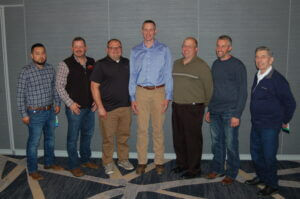
Nominated by Brandon Thesing, Minnesota Select Sires
Kliebenstien Farms (Nate and Morgan Kliebenstien), Darlington, Wis.
Nominated by Tim Heiring, Heiring’s Heat Detection and A.I.
Latham Dairy (John Latham, owner, and Mark Winters, manager), Boscobel, Wis.
Nominated by Jim Galstad, CentralStar Cooperative Select Sires
Red Top Jerseys (Chris Terra), Chowchilla, Calif.
Nominated by Amber LaSalle, All West Select Sires (now with World Wide Sires)
Scholze Dairy (Theo Scholze), Humbird, Wis.
Nominated by Adam Koppes, Genex
Wessel Farms LLC (David Wessel), Mineral Point, Wis.
Nominated by Tim Heiring, Heiring’s Heat Detection and A.I.
Following is an excerpt from the Hoard’s Dairyman round table discussion that highlights the Platinum winners’ repro management strategies. Learn about enhancing dairy cattle reproduction from these outstanding dairy producers.
Hoard’s Dairyman: Do you use a presynchronization or synchronization protocol?
Emerald Spring: We use a Double Ovsynch protocol. All cows receive their first service on the second Ovsynch. We do not resynchronize cows prior to pregnancy check, but we will give gonadotropin releasing hormone (GnRH) to cows checked open and enroll them in Ovsynch. If there’s no corpus luteum (CL), they will also get a controlled internal drug release (CIDR) containing progesterone.
Kliebenstein: The majority of our first service cows are bred off of their Presynch prostaglandin at 65 to 70 days. If they aren’t bred within that week, they are then enrolled in Ovsynch. During herd health, if a cow checks open and has a CL, we will administer prostaglandin. Ovsynch will be implemented if the cow is checked open and cystic. No prebreeding or synch programs are currently implemented on heifers. All are bred off of natural heats. If a heifer is not showing heats, we will administer prostaglandin.
Latham: All cows receive prostaglandin between 46 to 52 days in milk (DIM) and again at 60 to 66 DIM. Cows are enrolled into Ovsynch-56 at 74 to 80 DIM. Pregnancy examinations are conducted every two weeks. Cows who have been inseminated 28 to 34 days will be resynched the week prior to pregnancy check.
Red Top: Cows are enrolled into Double Ovsynch to be bred at 68 to 74 DIM. Weekly pregnancy exams are conducted with ultrasound beginning at 32 days. Open cows are enrolled into one of two protocols. Cows with a CL are administered prostaglandin and observed for heat. Cows without a CL are enrolled into a 10-day Ovsynch.
Scholze: We use a Double Ovsynch program with no Presynch. All animals who don’t show a heat are enrolled in a resynchronization protocol prior to the vet check. The open cows continue with that and pregnant animals are withdrawn.
Wessel: If a cow hasn’t shown a heat by 50 DIM, we will give prostaglandin. Most cows are on Ovsynch with two treatments of prostaglandin. I’ll start them at 70 DIM so they’re ready to breed at 80 DIM. If a cow is open after first breeding and has a CL, we will give prostaglandin. If no CL is palpated, we will start Ovsynch. In hot weather, we will give GnRH one week before the pregnancy check.
Hoard’s Dairyman: How do you handle problem cows?
Emerald Spring: We don’t have a hard-and-fast rule regarding “do not breed” (DNB) cows. Most cows that are not pregnant by 200 DIM will be considered DNBs. Also, cows bred five or more times would be candidates. Other factors are considered as well, such as low production, high somatic cell count, and poor feet and legs. Currently, 4% of our herd is DNB.
Kliebenstein: Any animal that does not settle in the first five services is flagged as a DNB. Cows that don’t show heats, are cystic, or have silent heats are given prostaglandin and/or set up for Ovsynch.
Latham: When cows are determined to be cystic, a progesterone CIDR will be incorporated into the synchronization program. I typically will only give a cow or a heifer four chances to conceive. After that point, open animals are moved to the DNB list. I do not reward poor fertility by giving unlimited chances to become pregnant. High production animals may be given some leniency. Once a cow has fallen below 100 pounds, I typically will discontinue inseminating it.
Red Top: One of the inadvertent results to elite reproduction is that you have very few problem cows. With a herd average of 93 days open, there aren’t many cows that become problems. I do not have baseline DNB criteria. It is based on the individual, but there aren’t many that will be serviced after 200 DIM.
Scholze: We will cull after three unsuccessful breedings. Poor feet and legs, udder, or personality will also get a cow on the DNB list.
Wessel: Each cow’s situation is evaluated individually. In general, a cow in the bottom half of the herd is marked DNB if it reaches 150 DIM and is open. For cows in the higher end of the herd, that’s extended to 200 DIM. Still, there are always exceptions to this.
Featured Member
Editor’s Note: For each issue, DCRC interviews a member to learn more about his/her career, involvement with DCRC and thoughts about dairy cattle and reproduction. We encourage you to recommend someone for this feature by contacting JoDee Sattler at: JoDee@dcrcouncil.org)

Ralph Bruno
Zoetis
Clovis, California, USA
DCRC member since 2012
The 2021 Dairy Cattle Reproduction Council (DCRC) Annual Meeting program chair, Ralph Bruno serves as a dairy technical service veterinarian for Zoetis – primarily in California. “I work directly with dairy producers and their veterinarians and consultants – assisting them to make the best decisions that make their herds more efficient,” said Bruno. “My area of expertise includes post-partum care, reproduction, immunology and genetics. With the exponential increased use of genomic testing over the last few years, I have dedicated a significant portion of my time helping producers design and implement strategies to incorporate genomic test results into their management for breeding and culling decisions.”
Bruno’s agricultural roots trace back to helping his grandfather take care of a small family farm in Brazil. Later, he became heavily involved in the equine industry – training and competing in show jumping. This experience triggered Bruno to pursue an equine veterinarian career. Prior to attending veterinary school, he worked with a veterinarian for the Brazilian Equestrian Olympic Team and also with veterinarians at the Jockey Club of Sao Paulo.
At the Federal University of Lavras Veterinary School (Brazil), Bruno worked with a talented professor – Marcos Neves Pereira. “He really impressed me with his knowledge in dairy cattle and influenced me to change my career to dairy cattle,” Bruno commented.
U.S. opportunity
After graduating from veterinary school, Bruno worked for a cooperative in Brazil – providing nutritional and veterinary services to dairy producers. In 2002, he accepted an externship opportunity at the University of Florida. As part of that externship, Bruno worked at North Florida Holsteins with Don Bennink. “He taught me so many things about large dairy herd management.”
After the externship, Bruno joined a University of California-Davis research group, led by Jose Santos. At UC-Davis, Bruno completed the Veterinary Medicine Teaching and Research Center Dairy Production Medicine Residency Program and joined the faculty team as a dairy clinician teaching dairy production medicine to senior veterinarian students.
In 2009, Bruno began working with the Texas Agrilife Extension team at Texas A&M University to help develop the Texas Panhandle dairy industry. During that time, he completed his PhD at West Texas A&M University. For the last decade, Bruno has been with Zoetis.
Implementing TAI in Brazil
Bruno’s interest in dairy cattle reproduction became evident while still in Brazil. “The big challenge in Brazil was to get cows pregnant,” he remarked. “At the time, timed artificial insemination (TAI) protocols were something very new and no one around had much experience with these protocols. It took us a while, but we were able to implement some early Ovsynch protocols in a few herds with successful results.”
Bruno continued, “After learning that we could get cows pregnant without heat detection, it triggered my interest to explore reproductive physiology research. Managing the reproductive program at North Florida Holsteins was a fantastic experience and it helped me better understand TAI programs. Furthermore, I followed some research (Bill Thatcher research group) that looked at reproductive tract ultrasound images. This helped me better understand dairy cow reproductive physiology.”
Over the last decade, Bruno has been heavily involved with genomics – an area of interest that he’d like to study more. “Currently, my main focus is to understand the integration of genomic strategies with reproductive physiology, animal health and dairy cattle nutrition that aims to improve dairy herd efficiency,” he stated.
DCRC involvement
In 2006, Santos introduced Bruno to DCRC. At that time, Santos was the DCRC president. Bruno helped him organize presentations and gather documents for continuing education approval. “It was a lot of work,” Bruno commented.
What has Bruno learned by being a DCRC member? “Timed AI is one of the major lessons learned via DCRC,” Bruno replied. “This organization has extensively discussed all available TAI synchronization protocols for lactating cows and virgin heifers since its beginning. Universities, producers and allied industry have successfully worked together to overcome the challenge of declining fertility in dairy cattle. Another important lesson learned is how to better manage transition cows.” Additionally, DCRC discussed the impact of post-partum diseases on fertility.
“I have seen not only in the United States – but also at global level – that these lessons discussed and learned via DCRC have significantly improved dairy cattle fertility,” Bruno stated. “Also, DCRC lessons have helped make dairy producers more sustainable with their dairy operations.”
Still room to improve
Looking forward, Bruno feels that the biggest reproductive challenge facing the dairy industry today is improving herd fertility even more. “Today’s dairy industry faces several challenges as consolidation continues,” he remarked. “Consumer preferences and environmental concerns associated with tighter margins make a dairy operation a complex business to run. This scenario demands that dairies become more efficient. Important factors to help achieve increased efficiency and sustainability starts with improved animal health and outstanding herd fertility.”
To improve fertility, Bruno feels producers need to invest in new technologies and continue outstanding management. “A relatively new technology is genomic testing, which is a fascinating tool,” Bruno commented. “If incorporated correctly, it can yield phenomenal results that help improve animal health and fertility. Regardless of a herd’s milk production level, fertility can be improved through a genomic strategy.
Regarding DCRC’s future, Bruno believes the organization is committed to discussing all aspects of dairy cattle reproduction with all sectors of the industry. “It is and will remain the main source of information for those involved in dairy cattle reproduction,” he noted. “Being part of the 2020 and 2021 DCRC Program Committees allowed me to work closely with a talented board of directors and outstanding staff – making me even more proud to be a DCRC member. I have no doubt DCRC will remain the main organization in the area of dairy cattle reproduction – not only in the United States but also overseas.”
Over the last two years, DCRC leaders and staff expanded international opportunities during the annual meeting – primarily through virtual attendance. “This received very positive feedback from members,” Bruno noted. “It also allowed DCRC to be more visible internationally.”
Webinar
DCRC webinar will share dairy producer’s experience using a dairy cattle health monitoring system 
“Animal monitoring provides data-driven management for breeding, herd health and labor efficiencies,” set for February 25, starting at 2:00 p.m. Central time (Chicago time). Chris Szydel, Pagel’s Ponderosa Dairy LLC dairy herd manager, will lead the one-hour webinar, which is sponsored by Allflex Livestock Intelligence.
Best of all, the webinar is free! So, invite anyone who may be interested in this topic.
During this webinar, Szydel will share his experiences using a dairy cattle health monitoring system and how it has positively changed management practices on the dairy farm during the past 2.5 years. Improvements have occurred via animal health, reproduction, milk production, labor efficiency, environmental sustainability and transition cow health.
To register for this webinar, go to: https://bit.ly/DCRCwebinarFeb25 and follow the prompts. If you are a DCRC member and cannot attend the live program, you may access the webinar at: www.dcrcouncil.org after March 14.
One Registry of Approved Continuing Education (RACE) credit for this DCRC webinar was granted by the American Association of Veterinary State Boards.
For more information about DCRC’s webinars, e-mail Alex Scanavez, DCRC Education Committee chair, at: alex.scanavez@altagenetics.com or e-mail DCRC at: jodee@dcrcouncil.org.
Industry Calendar
- World Ag Expo, February 8-10, Tulare California
- National DHIA Annual Meeting, February 21-24, San Antonio, Texas
- High Plains Dairy Conference, March 1-2, Amarillo, Texas
- Professional Dairy Producers of Wisconsin Business Conference, March 16-17, Wisconsin Dells, Wisconsin
- Central Plains Dairy Expo, March 29-31, Sioux Falls, South Dakota
- Council on Dairy Cattle Breeding Triannual Evaluation, April 5
- National Conference on Interstate Milk Shipments, April 7-12, Indianapolis, Indiana
- Dairy Calf and Heifer Association Annual Conference, April 12-14, Bloomington, Minnesota
- Animal Agriculture Alliance Stakeholders Summit, May 11-12, Kansas City, Missouri
- ICAR/Interbull, May 30-June 3, Montreal, Quebec, Canada
- American Dairy Science Association Annual Meeting, June 19-22, Kansas City, Missouri
- National Mastitis Council Regional Meeting, July 12-14, East Lansing, Michigan
- Lameness in Ruminants Conference, August 1-5, Bloomington, Minnesota
- Council on Dairy Cattle Breeding Triannual Evaluation, August 9
- American Association of Bovine Practitioners Annual Conference, September 22-24, Long Beach, California
- World Dairy Expo, October 2-7, Madison, Wisconsin
- Dairy Cattle Reproduction Council Annual Meeting, November 15-17, Middleton, Wisconsin
- Council on Dairy Cattle Breeding Triannual Evaluation, December 6
