
Newsletter – 2023 – December
President's Message
By Tracy Burnett, University of Guelph, Ridgetown Campus

DCRC President, Tracy Burnett
And just like that we have completed another year of DCRC! We have had another full year of exciting progress within the dairy industry. This year’s annual meeting in Salt Lake City was just a snapshot of all the sensational happenings within the dairy industry. Speakers discussed updates on the relationships between livestock and greenhouse gas imitations, impacts of stress on uterine health, advances in the understanding of the uterine microbiome associated with metritis, and the impacts of calf health on fertility of performance of calves, in addition to industry and producer panel discussion – just to name a few! We had almost 200 attendees, who came from far and wide, representing 13 different countries. This year we even had producer attendance all the way from Italy!
I want to start by thanking DCRC’s Program Chair Ralph Bruno and Program Vice Chair Ben Voelz for their efforts on creating an exciting program and poster session. All invited speakers and posters created exciting discussion among attendees, making an exceptional environment full of producers, academia and industry members, sharing and learning information from each other. It is also important to thank all our sponsors. Without them, we would not be able to provide such educational opportunities during the annual meeting and throughout the year with our online webinars and outreach. With that, I would also like to thank Matt Utt for his efforts as the Sponsorship Committee chair, who worked hard throughout the past year to build relationships and connections with partners willing to provide support for our community.
The vision of DCRC is to aid graduate students pursuing studies in dairy or veterinary science, and related fields, who have a focus on reproduction and fertility of dairy cattle. I would like to recognize our DCRC Scholar award winner this year, Isabella Sellmar Ramos, from the University of Missouri. Isabella has been involved in research focusing on uterine disease, specifically the impacts of disease on postpartum uterine involution. For such an early career scientist, Isabella sure has made excellent achievements. Read about her DCRC Annual Meeting experiences in the Featured Member section of this month’s DCRC newsletter.
Congratulations to the dairy operations that were recognized this year for excellence within their reproductive management! Each year, the Awards Committee is blown away by the calibre of dairies that are nominated. Thank you to all the nominators who brought forward these amazing dairies and to Katelyn Allen from Hoard’s Dairyman and team for working through 100 nominations. We encourage industry partners to nominate dairies they see accomplishing excellence within their reproductive programs for the upcoming DCRC event in 2024!
Our Platinum recognition was awarded to the following dairy farms this year: Crosswind Jerseys (Stefan Temperli), Elkton, S.D.; Hendriks Ltd. (Tyler Hendriks), Brucefield, Ont., Canada; High Noon Dairy LLC (Peter Bouma), Hereford, Texas; LDT Keller (Luke and Dan Keller), Fort Recovery, Ohio; Trailside Holsteins (Mike Johnson), Fountain, Minn.; and Verhoef Dairy Farm Inc. (Reinoud & Klaartje Verhoef), Belmont, Ont., Canada.
I am also excited to announce the membership of our board of directors for the upcoming year – President Tracy Burnett, University of Guelph, Vice President Ralph Bruno, Zoetis, Secretary-Treasurer Luciano Caixeta, University of Minnesota, Past President BJ Joes, Center Hill Veterinary Clinic, and director members Brian Schilling, Schilling Farms, Kim Egan, Genex, and Augusto Madureira, University of Guelph. Committee chairs include Awards Chair Katelyn Allen, Hoard’s Dairyman, Program Chair Ben Voelz, STgenetics, Education Chair Raphael Saraiva, STgenetics, Membership Chair Jennifer Spencer, Texas A&M University, and Nomination Chair BJ Jones. DCRC wants to extend a special thank you to outgoing board members Matt Utt and Eduardo Ribeiro, University of Guelph, for their devoted service to DCRC. Your expertise will be missed!
Finally, I want to say thank you to the new Past President BJ Jones for all his leadership efforts throughout this past year. BJ has been imperative to the growth of this organization over the past years; his support and dedication has been outstanding.
We encourage everyone to share any feedback or suggestions, from any of the events this year, on how we can grow as an organization. Please let us know if you have any ideas to improve content, events or our ability to connect with a wider audience.
Our next DCRC Annual Meeting is already scheduled for November 12-14, in Arlington, Texas. Help us spread the word about DCRC through social media: follow us on Twitter (@DCRCouncil), Facebook, LinkedIn and through our website.
I wish everyone a happy holiday season and thank you for being part of the DCRC membership!
Research Summaries
Effect of targeted clinical examination based on alerts from automated health monitoring systems on herd health and performance of lactating dairy cows.
M.M. Perez, E.M. Cabrera, and J.O. Giordano
Health disorders (HD) are associated with detrimental impacts on cow performance, welfare, and farm profitability. Because a substantial number of cows develop at least one HD during lactation, a significant amount of time and resources are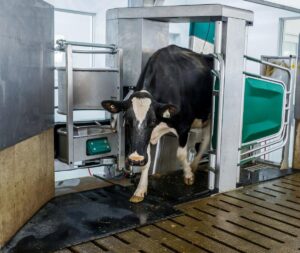 invested to identify and treat cows affected by HD. In many dairy farms, daily evaluation of cow health is typically performed, likely resulting in unnecessary clinical examination of a high proportion of cows not affected by HD. This process is time consuming, labor intensive, and disrupts natural cow behavior. Automated health monitoring (AHM) systems typically measure cow behavior, physiological or performance parameters, and may be an alternative to replace traditional health monitoring programs. This study compared the proportion of lactating dairy cows diagnosed with HD and herd performance when using a health monitoring program that relied on alerts from AHM systems or a traditional health monitoring program based on systematic clinical examinations and milk yield monitoring.
A single commercial herd in New York was used in this experiment:
- Nulliparous and parous Holstein cows were randomly assigned to the high intensity clinical monitoring (HIC-M; n = 625) or automated monitoring (AUT-M; n = 624) treatment.
- Clinical examination in HIC-M cows was conducted daily until 10 days in milk (DIM) and then in response to milk yield reduction alerts or visual observation of clinical signs of HD during 21 DIM.
- Cows from the AUT-M group were fitted with a neck-attached rumination and physical activity monitoring tag. Individual daily milk yield data were collected from parlor milk meters. Clinical examination within 21 DIM was performed based on health index score and reduced milk yield alerts.
- Multiple cow health and performance indicators, including the proportion of cows diagnosed with HD, herd exit, milk production, and pregnancy at first artificial insemination (AI), were assessed.
Results
- The proportion of cows diagnosed with at least one HD tended to be greater for HIC-M compared with AUT-M (17.0 % vs. 13.6%, respectively).
- There was no difference between treatments for cows that exited the herd from 60 to 150 DIM (HIC-M = 1.5% vs. AUT-M = 2.1%). However, a greater proportion of HIC-M cows tended to exit the herd from 61 to 150 DIM than AUT-M cows (6.7% vs. 4.7%, respectively).
- Similar daily milk production from 3 to 21 DIM was observed between treatment groups (HIC-M = 35.7 kg [78.7 pounds] vs. AUT-M = 35.4 kg [78 pounds]), and similar total milk production per cow until 150 DIM was observed between treatment groups (HIC-M = 6,042 kg [13,320.3 pounds] vs. AUT-M = 6,011 kg [13,252 pounds]).
- Similar pregnancy at first AI was observed between treatment groups (HIC-M = 41.9% vs. AUT-M = 39.2%).
In conclusion, the implementation of a health monitoring program for early lactation cows that relied on the use of AHM system alerts in combination with visual observation of cows might be a feasible strategy to implement on dairy farms. Despite a reduction in the risk of HD diagnosis, there was no evidence that the monitoring program that relied on AHM system alerts reduced herd performance when compared with a more intensive program that included mandatory clinical examination of all cows during the first 10 DIM, milk weight deviations, and visual observation.
Access the paper at:https://www.sciencedirect.com/science/article/pii/S0022030223006033
Impact of timing of oral calcium administration on milk production in high producing early lactation Holstein cows
C.R. Seely, C.N. Wilbur, K.M. Fang, and J.A.A. McArt
Early post-partum requires lots of calcium due to pre-partum colostrum production and parturition physiological needs. Despite the effort to achieve normocalcemia through calcium homeostasis, around 5% of cows may experience clinical hypocalcemia. Many cows experience subclinical hypocalcemia (drop in blood calcium [Ca] unaccompanied by physical signs of disease). Recent studies show that low blood Ca at 3 and 4 days in milk (DIM) have more negative effects than at 0 and 1 DIM. This study aimed to evaluate oral Ca bolus supplementation at 2 and 3 DIM, and its effects on Ca dynamics, milk production, and health performance throughout lactation.
Herds characteristics, study design, data extraction, and sample collection:
- Data were collected from multiparous cows (n=998) from four dairy farms in the Northeast and Central New York, milking more than 1,000 Holstein cows, 3x/day, recording daily milk weights, and using DairyComp as their management software.
- Treatments consisted of no Ca supplementation (CON=343), Ca Bolus at 0 and 1 DIM (BOL-C =330), and Ca supplementation at 2 and 3 DIM (BOL-D=325).
- Blood samples were collected at 1 and 4 DIM from coccygeal vessels with evacuated tubes with no anticoagulant.
- Disease, herd removal events, and milk production were extracted from farm management software.
Results
- There was no difference in milk production between treatment groups.
- There was a treatment by parity interaction (P < 0.01) for milk yield on parities 3 on weeks 5 to 10 of lactation. Cows on treatment BOL-D produced more milk than BOL-C and CON.
- There was no difference in the incidence of health events between treatment groups.
- Serum tCa was lower at 1 DIM than 4 DIM, and there was no difference in tCa between treatment groups.
Overall, there was no difference between treatment groups on milk production, health events, or blood Ca concentration. Animals in the third lactation that have received Ca bolus treatment on 2 and 3 DIM produced more milk than 0 and 1 DIM or no Ca treatment. Considering Ca blood concentrations for parity 3, it is suggested that Ca provided by bolus was used by the mammary gland to support milk production, rather than restoring blood Ca concentrations. The timing of postpartum oral Ca supplementation impacts group cohorts differently and may be beneficial to cohorts as a target prophylactic supplement to support milk production.
Access the paper at:https://www.journalofdairyscience.org/article/S0022-0302(23)00712-9/fulltext
Analysis of Jersey versus Holstein breed profitability on north central U.S. dairies
L.A. Olthof, J.J. Domecq, and B.J. Bradford
The United States has more than 9 million dairy cows. Holstein cows constitute 79.9% of those animals and Jerseys 7.9%. Jersey cow population has more than doubled from 2000 to 2020. Dairy producers continue to aim to improve profitability in their business. Therefore, this study aimed to evaluate the profitability of Holstein and Jersey cows managed similarly on the same farms.
Herds included a comparative partial budget. Data for this study were collected from three herds (n=5,398) in the North Central region of the United States:
- Herd distribution was 79% Holstein (37 ± 1.98 kg/day [85.47 ± 4.37 pounds] milk, 3.85% ± 0.21 fat, 3.17% ± 0.17 protein), and 21% Jersey (27 ± 0.67 kg/day [59.52 ± 1.48 pounds] milk, 4.92% ± 0.24 fat, 3.72% ± 0.03 protein).
- Data from 2020 were gathered from farm management software programs, on-farm evaluations, and producer interviews.
- Analysis considered the prices of the 2021 dairy market due to the impact of COVID-19 in 2020.
- Revenues included protein, fat, and SNFP (solids non-fat and protein) sales, cull cow sales, the value of calves born, and milk bonuses.
- Expenses included milk transport, milk discounts, feed, manure handling, heifer raising, cow health, calf health, and reproduction costs.
- Costs or benefits that were not different between the two breeds were not included in the comparative budget.
- The study did not consider crossbred profitability or new infrastructure investments.
Results
- Holstein cows were more profitable than Jersey cows in all the herds.
- Holstein cows produce an estimated $940 to $1,424 more revenue than Jersey cows.
- Holstein cows produce an average of 367 more pounds of milk solids than Jersey cows.
- Jersey cows had annual expenses of $517 to $740 less than Holstein cows.
- All expense categories show an advantage for the Jersey breed.
- Heifer raising costs for Jersey ($1,275 to $1,379) cows were lower than Holstein ($1,521 to $1,681) cows.
- The net change in profitability per cow annually for switching from Holstein cows to Jersey cows ranged from -$345 to -$601.
In conclusion, although Jersey cows had better component concentrations and lower expenses than Holstein cows, Holstein cows were more profitable than Jersey cows. Most profitability is based on greater milk yield and producing more fluid milk and components. A few changes could make Jersey cows more profitable than Holstein cows. Potential changes include Jerseys increasing daily milk production by 31 kg (68.34 pounds) or decreasing dry matter intake (DMI) from 20 to 15 g/day (0.71 to 0.53 ounces). Or, increase ration prices by $0.15 per kilogram of DMI. Also, the economics of building new facilities would be able to change this scenario.
Access the paper at: https://www.jdscommun.org/article/S2666-9102(23)00064-9/fulltext
Featured Column
The 2023 Dairy Cattle Reproduction Council (DCRC) Annual Meeting featured recognition of DCRC’s Excellence in Dairy Reproduction Award winners. DCRC honored 24 outstanding dairy operations as Bronze, Gold, Silver or Platinum winners. DCRC extends a big congratulations to the Platinum winners!
Crosswind Jerseys, Stefan Temperli, Elkton, S.D.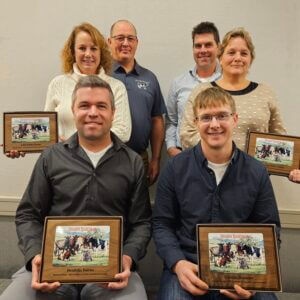
Nominated by Brandon Thesing, Select Sires
Hendriks Dairies, Tyler Hendriks, Brucefield, Ont., Canada
Nominated by Niki Alsop, Heartland Veterinary Services
High Noon Dairy, Jody Cole, manager, Hereford, Texas
Nominated by Fabio Teixeira, Progressive Dairy Health Services, and Kim Egan, Genex
LDT Keller Farms, Luke and Dan Keller, Fort Recovery, Ohio
Nominated by Bekah Meller, COBA/Select Sires
Trailside Holsteins, Michael and Jon Johnson, Fountain, Minn.
Nominated by Kim DeFrang, Minnesota Select Sires
Verhoef Dairy Farm, Reinoud and Klaartje Verhoef, Belmont, Ont., Canada
Nominated by Matt Stoop, Alta Genetics
Following is an excerpt from the November 2023 Hoard’s Dairyman round table discussion that highlights the Platinum winners’ repro management strategies. Learn about enhancing dairy cattle reproduction from these outstanding dairy producers.
Hoard’s Dairyman: What change has been most beneficial for your herd’s reproduction?
Crosswind: The best decisions we made that affected reproduction have been tunnel ventilating the majority of our facilities and most of all using the CowManager system. This system has simplified our breeding protocols significantly and reduced our use of reproductive hormones almost entirely.
Hendriks: The most beneficial change made to our farm to date was to construct a new dairy site in 2017 and give the business a good foundation to build off of for the future. The building is a sand-bedded, tunnel-ventilated barn that houses the entire milking herd and dry cow groups. The new site improved feed storage and manure management, and provides a better work environment for employees, too.
High Noon: I believe the biggest investment we have made that has benefited us has been in our labor. It is not just a matter of finding the right person but training that person and maintaining those skills year after year. The beginning was not easy, but we knew where we wanted to go. We provided education, equipment, a good work environment, rewards, constructive criticism, and appropriate compensation so that now we can harvest our investment with a happy, satisfied team of collaborators.
Keller: We have a heavy focus on nutrition as well as improved cow comfort with facility changes. In 2010, we built an 800-cow drive-through freestall barn. From a nutrition aspect, we strive for high-quality forage. Using fungicide on all corn acres has played an important role that helps keep toxins at a lower level.
Trailside: As they say, it’s a thousand small things that add up to big changes. If we had to pick only a couple, we’d have to say implementing the Double Ovsynch protocol in conjunction with the CowManager monitoring system have been the biggest beneficial changes we have made.
Verhoef: The Double Ovsynch protocols, a new facility, Nedap neck tags, and automatic sorting have all made a big difference. On the nutrition side, we have benefited from compact feeding with a self-propelled Silo King TMR to allow for precision feeding as well as intake tracking.
Read the complete Hoard’s Dairyman round table discussion here.
Featured Member
Editor’s Note: For each issue, DCRC interviews a member to learn more about his/her career, involvement with DCRC and thoughts about dairy cattle and reproduction.
Isabella Sellmer Ramos
University of Missouri
2023 DCRC Scholar
 The 2023 DCRC Annual Meeting in Salt Lake City held special significance for me this year, where I received the DCRC Scholar award. From a firsthand perspective, I can affirm that the event’s exceptional speaker lineup, discussion topics and great attendance of members of the dairy industry contributed to a successful event.
My professional journey began with a veterinary medicine degree in 2020 from Curitiba, Brazil, where my focus was primarily on developing skills related to bovine reproduction. An important moment in my career occurred in 2019 when I pursued an internship at Kansas State University under the supervision of Luis Mendonça. This experience not only introduced me to the particularities of the U.S. dairy system but also provided a close-up look at how large dairy operations function in the Midwest. Mendonça’s mentorship shed light on both the successes and challenges that are faced here in milk production and reproductive management.
What sets the DCRC Annual Meetings apart, based on my observations, is the unique emphasis on recognizing producers excelling in both milk production and reproduction. The meetings offer a platform to dive into the experiences of these producers as they adopt innovative techniques and incorporate new scientific findings into their management practices.
After completing my internship and veterinary school, I joined the apprenticeship program in ruminant reproduction at the University of Sao Paulo (ESALQ-USP, BR) in 2020. Subsequently, in 2021, I started on a master’s degree program at the University of Missouri under the guidance of Matthew Lucy. It was during this period that my interest sparked toward studying the underlying mechanisms of infertility in dairy cows, with a primary focus on postpartum uterine disease (metritis).
Postpartum uterine disease, responsible for 10 to 25% of reproductive losses in lactating dairy cows in the United States, can lead up to a cost of approximately $513 per case. Lucy’s mentorship sparked my curiosity into questions concerning how metritis directly impacts the uterus and how such impacts affect fertility during the breeding period. Our experiments revealed distinct differences in the uterus of cows that developed metritis in early lactation compared to those that remained healthy after parturition.
Another highlight of the DCRC Annual Meeting is the opportunity it provides researchers, veterinarians and producers to showcase their latest findings. This year marked my second time presenting my research during the poster session, which provided students a great space for knowledge exchange that provided me with new insights to my project.
The meeting’s diverse speaker lineup covered a range of topics, including the optimization of reproductive programs, the use of activity monitors, uterine disease, calf health, cow comfort, beef on dairy and sustainability. A panel discussion with the Excellence in Dairy Cattle Reproduction Award recipients offered insights from producers on key points regarding management practices that help enhance reproductive outcomes.
The diverse range of attendees, such as industry members, faculty, producers, veterinarians and students, contribute to the uniqueness of DCRC, providing an excellent space for exchange of knowledge and experiences. Attending this meeting, as always, was an enriching experience for me. Facilitating the participation of young scholars in such settings is essential for the promising future of the dairy industry, promoting our enthusiasm and leadership to address the challenges faced in our field.
Industry Calendar
- Council on Dairy Cattle Breeding Triannual Evaluation, December 5
- National Mastitis Council webinar, December 6
- Nebraska Ag Expo, December 5-7, Lincoln, Nebraska
- PDPW Managers Academy for Dairy Professionals, January 9-11, Baton Rouge, Louisiana
- Dairy Strong Conference, January 16-18, Green Bay, Wisconsin
- National Mastitis Council Annual Meeting, January 29-February 1, Dallas, Texas
- Iowa Ag Expo, January 30-February 1, Des Moines, Iowa
- World Ag Expo, February 13-15, Tulare, California
- Professional Dairy Producers of Wisconsin Business Conference, March 13-14, Wisconsin Dells, Wisconsin
- Central Plains Dairy Expo, March 19-21, Sioux Falls, South Dakota
- Council on Dairy Cattle Breeding Triannual Evaluation, April 2
- Dairy Calf & Heifer Association Annual Conference and Trade Show, April 9-11, Westminster, Colorado
- Council on Dairy Cattle Breeding Triannual Evaluation, August 13
- National Mastitis Council Regional Meeting, August 12-14, Ghent, Belgium
- World Dairy Expo, October 1-4, Madison, Wisconsin
- Dairy Cattle Reproduction Council Annual Meeting, November 12-14, Arlington, Texas
- Council on Dairy Cattle Breeding Triannual Evaluation, December 3
