
Newsletter – 2023 – October
President's Message
 From the DCRC President’s Desk
By William “BJ” Jones, DVM
Greetings from Wisconsin! Fall is beginning here in our southwest corner of the state and the leaves on the trees are just beginning to turn colors. Corn silage is done for most dairies and the combines are getting close to heading to the fields. We have been pleasantly surprised with how good the harvest has been despite our drought conditions this summer.
I hope to see everyone in Salt Lake City – Nov. 14-16 – for the DCRC Annual Meeting! For me, this meeting is a highlight of my year and I always look forward to going. While there are so many ways to learn today, going to a meeting helps me escape from the daily rigors of practice and focus on really digging into one of my passions – dairy reproduction. Every year, I pick up at least one idea to take back to my practice and our dairies to help improve their efficiency and profitability.
When I look through the agenda, I am amazed at the depth and breadth of topics. To start off, on Tuesday, Nov. 14, we have a couple of great preconference seminars, sponsored by Dairy Record Management Systems and STgenetics, that you won’t want to miss.
On Wednesday, we have a special treat with Frank Mitloehner, University of California-Davis. Frank is a world-renowned expert on climate and cattle. If you have never heard him talk, he is worth your time. I am also looking forward to hearing Albert Nunes talk about the accountant perspective of modern dairy operations.
Another highlight on Wednesday is the introduction of the Excellence in Dairy Cattle Reproduction Award winners, along with the panel discussion sponsored by Hoard’s Dairyman magazine. Learn how some of the best dairies in the world maximize their reproductive efficiency. Many of the top dairies will be in attendance and I always enjoy meeting with them during breaks and meals to compare notes on breeding philosophies.
Throughout Wednesday and Thursday, our awesome breakout sessions with some top industry experts will address leading-edge topics concerning dairy reproduction, beef on dairy, ways to improve herd fertility, reducing early embryonic losses, use of genomics to improve herd fertility, early calf health and effects on lifetime health and performance, use of activity meters and fertility. These are just a few of the great topics that caught my eye.
While Thursday is the last day of the conference, we finish strong with some great general sessions. Make sure and catch Siebren Jacobi, from Rocking S Dairy, who will talk about genotype vs. phenotype: A herd manager’s perspective. Also, there is a fantastic roundtable discussing the latest on robotics to enhance animal health and reproduction.
A sincere “Thank You” to our program committee headed by chair, Ralph Bruno of Zoetis, and co-chair, Ben Voelz of STgenetics, for all the hours spent making this a “can’t miss” event! My hat is off to both of you!
If you are a dairy producer or a private practice veterinarian, make sure and check out the $200 travel stipend we offer. There are only 10 stipends available and they are awarded on a first-come, first-served basis. If you are interested, contact JoDee Sattler (jodee@dcrcouncil.org).
Well, I hope you all are as pumped as me to attend! Register today as early bird registration and hotel discounts end Oct. 23, so make sure and get your registration in ASAP. Don’t procrastinate as it is easy and can be done online. For more information and online registration, check our webpage at: https://www.dcrcouncil.org/2023-annual-meeting. I hope to see you in Salt Lake City!
Research Summaries
Postpartum health is associated with detection of estrus by activity monitors and reproductive performance in dairy cows
T.C. Bruinjé, E.I. Morrison, E.S. Ribeiro, D.L. Renaud, R. Couto Serrenho, and S.J. LeBlanc
Fertility is a critical factor influencing the productivity and culling of dairy cows. Poor reproduction performance may delay pregnancy, extend the period of lower milk production, and reduce overall efficiency. Estrous detection (ED) is often used for artificial insemination (AI) timing in Canada, where most freestall herds primarily depend on ED for more than half of their AI procedures. Identifying and validating robust predictors of reproductive performance to enhance reproductive management programs that prioritize AI at ED is crucial. Health status postpartum affects fertility and estrous expression. Animals with health issues postpartum and low body condition scores were less likely to be detected in estrus using automated activity monitors (AAM) at first AI.
Therefore, this study aimed to investigate the connections between postpartum health, the likelihood of ED using AAM, and subsequent reproductive performance in dairy cows. They hypothesized that cows affected by health disorders would have reduced chances of being detected in estrus, achieving pregnancy during the first AI, and achieving overall insemination and pregnancy success rates.
Study design, animals included, and treatment allocation
This prospective observational study was conducted in 2 Canadian herds, enrolling a total of 1,743 cows:
- Cows were enrolled 3 weeks before expected parturition and examined for health until 9 weeks postpartum.
- Body condition score (BCS) and lameness were measured at 3 weeks prepartum; serum concentrations of total Ca, haptoglobin (Hp), and non-esterified fatty acids were measured at 2 and 6 ± 2 DIM; blood β-hydroxybutyrate (BHB) and metritis were assessed at 4, 8, 11, and 15 ± 2 days in milk (DIM).
- Cows were examined for purulent vaginal discharge (PVD) and endometritis (ENDO) by endometrial cytology at week 5, for lameness at week 3 and 7, for BCS at week 9 postpartum, and for time to onset of cyclicity by biweekly serum progesterone (P4) measurements.
- Additional disease data were obtained from farm records. Reproductive management for the first AI was primarily based on ED by activity monitors until at least 75 DIM and cows not detected in estrus were synchronized.
- Estrus was detected in 77% of primiparous and 66% of multiparous cows between 50 and 55 DIM and 75 DIM.
Results
- In 1,246 cows, the model was able to predict probability of lower ED (percentage point difference) in cows that had retained placenta (−14%), endometritis (ENDO; −7%), purulent vaginal discharge (PVD; −8%), delayed cyclicity (no P4 >1 ng/mL by week 9; −12%), or ≥0.5-point BCS loss (−14%) compared with cows without each of these risk factors. It was negatively associated with blood BHB at 15 DIM.
- The probability of ED was lower (56 vs. 81%) in cows with >1 risk factor compared with cows without risk factors.
- The predicted probability of pregnancy at first AI (percentage point difference) was lower in cows that had ENDO (−7%) or PVD (−7%), and negatively associated with serum Hp at 6 ±2 DIM.
- For cows detected in estrus by 75 DIM (n = 888), risk factors for reduced pregnancy rate by 250 DIM (adjusted hazard ratio [AHR]; 95% confidence intervals) included difficult calving (AHR: 0.67; 0.45 to 1.00), metritis (AHR: 0.79; 0.61 to 1.01), PVD (AHR: 0.79; 0.65 to 0.97), or lameness (AHR: 0.79; 0.62 to 1.01), and it was negatively associated with serum Hp at 6 ±2 DIM.
In conclusion, monitoring postpartum health may be used to identify cows that are more or less likely to be detected in estrus by activity monitors and to become pregnant in a timely manner. This would support a selective reproductive management program with targeted interventions.
Access the paper at: https://www.journalofdairyscience.org/article/S0022-0302(23)00587-8/fulltext
Effect of using 200 μg of gonadorelin at the first GnRH of the breeding-Ovsynch on ovulatory response and pregnancies per AI in first service lactating Holstein cows
T.J. Valdés-Arciniega, I.M.R. Leão, E. Anta-Galván, T.O. Cunha, M.S. El Azzi, N.B. Cook, and J.P.N. Martins
Ovulation after the first GnRH (gonadotropin releasing hormone) (G1) of the breeding portion of the Double-Ovsynch (DO) program is positively associated with improved pregnancy risk. The goal of this study was to compare the reproductive performance of cows receiving a high GnRH (gonadorelin hydrochloride) dose at G1 (200 μg) in comparison to cows receiving the standard dose (100 μg).
Animals, treatments, and variables assessed
A total of 1,910 cows (n = 719, primiparous; n = 1,191, multiparous) submitted to DO program for their first timed artificial insemination (TAI) were randomly enrolled in two treatment groups:
- Control: 100 μg of GnRH at G1
- Treatment: 200 μg of GnRH at G1
Conventional (n = 1,084, Holstein; n = 314, Angus) and sexed (n = 276 Holstein) semen was used to inseminate cows.
Data was collected on:
- Ovulation: evaluated through ultrasonography 2 days after G1 and 2 days after the last GnRH of the DO (G2)
- Progesterone concentration: assessed in blood samples collected at G1 and first PGF2α of the breeding portion of DO
- Pregnancy: evaluated at 32, 46, 88, and 200 days after TAI
Results
- The proportion of cows ovulating to G1 was greater in treatment in comparison to control cows (81.3% vs 65.1%). Similarly, cows enrolled in the treatment group were also more likely to ovulate in response to G2 than control counterparts (93.8% vs 89.8%).
- No treatment differences were observed in blood progesterone concentration.
- Overall, treatment improved pregnancy per AI (P/AI) at 32 days and tended to be improve P/AI at 46, 88, and 200 days among cows inseminated with conventional semen, but no treatment effect was observed among cows inseminated with sexed semen.
In conclusion, while increasing the GnRH dose from 100 μg to 200 μg at G1 increased the ovulatory response to GnRH at G1 and G2, no improvements in progesterone concentration was observed. Pregnancy outcomes revealed that treatment only improved P/AI among cows receiving conventional semen, while no treatment effects were observed among cows receiving sexed semen.
Access the paper at: https://www.sciencedirect.com/science/article/pii/S0022030223005222?via%3Dihub
A randomized study on the effect of an extended voluntary waiting period in primiparous dairy cows on fertility, health and culling during first and second lactation
Edvardsson Rasmussen, R. Båge, K. Holtenius, E. Strandberg, C. von Brömssen, M. Åkerlind, and C. Kronqvist
Extending the voluntary waiting period (VWP) is a strategy implemented to allow high-producing cows to be inseminated after recovering their energy balance status, which can improve fertility outcomes. This study was designed to evaluate the effect of extending the VWP, from 25-95 to 145-215 days in milk (DIM), on fertility, health, and culling outcomes.
Animals, VWP groups, and outcomes
A total of 531 primiparous cows from 16 commercial herds in Sweden were enrolled in the study:
- Cows were of the Holstein and Red Dairy cattle breeds
- Cows were inseminated based on estrous detection
- They were put into 1 of 2 VWP groups, based on odd or even number of the last digit of their ear tag:
- Conventional (CON): VWP of 25-95 DIM (n = 251)
- Extended (EXT): VWP of 145-215 DIM (n = 280)
Cows were followed through 2 consecutive lactations and data related to health, fertility, and culling were collected for both lactations. During the second lactation, the VWP was determined by the farmer’s discretion, rather than their initial VWP group.
Results
- Compliance with the established VWP was lower for EXT compared with CON.
- In the first lactation, cows enrolled in EXT displayed more intense estrous signs than cows in CON group, leading to greater pregnancies per artificial insemination (P/AI) at first service and lower number of inseminations per conception.
- However, no differences in health outcomes or culling during the first lactation were observed between VWP groups.
- Moreover, extending the VWP led to increased calving to first service interval during the second lactation.
In conclusion, although some improvements in fertility outcomes were observed in the first lactation, that did not lead to improved culling outcomes or better fertility in the subsequent lactation. These results should be interpreted in the context of lower compliance with the planned VWP among EXT cows and that cows were bred solely based on estrous detection.
Access the paper at: https://www.sciencedirect.com/science/article/pii/S0022030223005635?via%3Dihub
Featured Column
Advanced technologies support enhanced cow comfort, increased milk production
Not so long ago, dairy managers and veterinarians welcomed the advent and implementation of self-locking headlocks. On dairy farms, these headlocks yielded convenience and enhanced safety and efficiency when administering cattle treatments (e.g., estrous synchronization injections) and conducting physical examinations (e.g., rectal palpations).
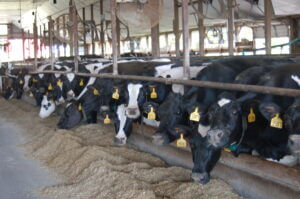 Like many “technologies,” self-locking headlocks provided significant help in improving efficiency and performance (including reproduction). But as newer technologies evolve, self-locking headlocks may take a “backseat” as activity monitoring systems, for example, take on a more prominent role.
During the 2022 Dairy Cattle Reproduction Council Annual Meeting, Don Niles, a veterinarian and partner in Pagel’s Family Businesses (Dairy Dreams LLC and Pagel’s Ponderosa LLC), Casco, Wis., discussed automated activity monitoring and needle-free injection systems, and how these sophisticated technologies helped these dairy operations nearly eliminate the use of self-locking headlocks. Along with reducing standing time and improving employee efficiency, cow productivity increased – to a somewhat surprising level.
Adopt activity monitors, needle-free injections
Niles explained that originally, they installed cow activity meters to detect estrus more efficiently in lactating cows and identify sick cows. Also, they wanted to reduce their reliance on timed artificial insemination (TAI) in their breeding programs. They implemented the needle-free injection system to enhance biosecurity efforts with a goal of eradicating bovine leukosis virus (BLV).
After one year of working with activity monitoring, these Wisconsin dairies adopted a breeding program that includes all first breedings follow Double Ovsynch. All cows detected in estrus by an activity system after first breeding are bred at estrus. Cows found open at the 39-day pregnancy check are re-enrolled in Ovsynch at the time of pregnancy check. “Due to the systems’ high level of sensitivity, we have discontinued the use of tail chalking,” Niles noted.
Concurrently, these Wisconsin dairies enhanced their biosecurity programs by eliminating shared hypodermic needles and shared rectal examination sleeves, and improved biting fly control. Previously, they changed hypodermic needles between each injection. That process was slow and created a hazard of accidental needle sticks to employees. The needle-free injection system uses compressed gas to force the injected product through the skin without any mechanical skin penetration. This eliminates the risk of blood-borne transfer of agents among cows and seems to be less irritating to cows than a needle injection.
‘Injections’ given in parlor
“It became very apparent to us, that the cows’ reaction to the needle-free injection is much milder than their reaction to a hypodermic needle,” said Niles. Because of cows’ mild reaction to the injection-free system, Niles and his colleagues decided to see how the system would work in the parlor during milking.
In the double-42 parallel parlor, they use the system for neck injections, while milking, with no significant reaction from the cows. They adapted the system to use the parlor’s compressed air supply and this is how they administer all vaccines and TAI injections.
For their 82-stall rotary parlor, they use herd management software and a large monitor to show technicians which cows are coming to them on the rotary platform and what scheduled treatments are needed. The technicians stand on a scaffold set up immediately past the point where milking units are detached. “Technicians easily handle all scheduled treatments without interfering with the cow’s own routine,” Niles remarked.
Cows that need AI breeding or physical exam are sorted via an automatic gate after milking. Once a week, cows that need a pregnancy check are diverted to the sort pen. The remaining cows return to their “home pen” and are free to eat, drink, socialize or rest. From those that are examined, open cows immediately start the next synchronization cycle. Niles noted that only 3 to 4% of their cows are locked up for pregnancy checks each week.
What did they find?
By adopting these new approaches, they expected to reduce management time needed to handle cows and increase cow lying time. However, they didn’t anticipate a profound milk production increase.
Niles explained that the Wisconsin milk market favors cheese production. Consequently, they measure milk production in terms of Money Corrected Milk (MCM). Their herds include Holstein-Jersey crosses. MCM calculates a cow’s productivity based on the actual value of her milk less costs. Historically, their dairies had periods where they came close to reaching 100 pounds of MCM per cow. Yet, they never reached that threshold.
Since discontinuing self-locking headlocks and installing activity monitoring systems, it’s rare that they don’t exceed the 100-pound benchmark. “Something has clearly changed in the lives of our cows,” Niles stated. “There appears to be significant value in increased lying time and reduced time spent standing on concrete.”
In conclusion, Niles said, “The dairy science community has done many remarkable things to improve both dairy cow performance and dairy cattle welfare in my 40 years of involvement. I look forward to what is to come!”
To read the complete proceedings paper that Don Niles wrote, log into the DCRC Member Center and click on the “Proceedings” icon.
Featured Member
Editor’s Note: For each issue, DCRC interviews a member to learn more about his/her career, involvement with DCRC and thoughts about dairy cattle and reproduction. We encourage you to recommend someone for this feature by contacting JoDee Sattler at: JoDee@dcrcouncil.org
Fábio Teixeira
Progressive Dairy Health Services LLC
Clovis, New Mexico
DCRC member since 2018
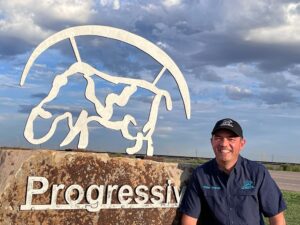 A nominator of successful dairies in Dairy Cattle Reproduction Council’s Excellence in Dairy Reproduction Awards program, Fábio Teixeira works as an associate veterinarian for Progressive Dairy Health Services (PDHS), based in Clovis, N.M. His main duties include reproduction, herd health (vaccination and treatment protocols, colostrum management), emergencies (surgeries, calving, necropsies), employee training, consulting (calf ranches, dairies), data analysis and milk quality. “Bottom line: I assist in any way that will help our clients succeed,” he stated. “The team of veterinarians at PDHS offers unique perspectives and on-farm solutions.”
Teixeira grew up in a large Brazilian city, Porto Alegre, but spent considerable time with livestock via his grandparents. Even though his parents migrated from the country to the city, they never lost their hometown connections.
“Like they say in the United States, ‘You can take the person out of the country, but you can’t take the country out of the person’,” Teixeira remarked. Teixeira spent some weekends, holidays and school breaks visiting his maternal grandparents who raised swine and a few milking cows, or working on the small beef ranch that his father inherited.
Parents, professor spark veterinary medicine interest
“I gained a passion for agriculture by working alongside my parents,” Teixeira explained. “Through my parents’ influence, I attended UFRGS-FAVET, a Brazilian veterinary school and graduated in 2005. While in veterinary school, I met a professor, Jorge J. Bangel, who helped me see the great opportunity as a dairy veterinarian. This profession has exceeded my expectations and I enjoy working in this industry!”
Teixeira works at High Noon Dairy LLC, Hereford, Texas, at least weekly. His responsibilities include overseeing the reproduction program, which involves conducting herd checks, analyzing repro results, motivating and critiquing employees (based on results and the dairy’s standards). Also, Teixeira monitors other management areas and works closely with the dairy’s manager – Jody Cole – to help the business succeed.
Repro success at High Noon Dairy
What’s the key to High Noon Dairy’s repro success? “It’s a pretty long list,” Teixeira commented. “I say that because anything you do, how you do it, when you do it and so on will affect reproduction results.” Cole makes sure that everyone involved knows what to do and how to do it. Additionally, Cole continually looks for ways to improve cow comfort, nutrition, management, health, milk quality and employee engagement. “Paying attention to the small important things adds up to big results for reproduction,” Teixeira added.
The dairy’s synchronization protocol is Double Ovsynch with the breeding Ovsynch being 4ml of GnRh (double dose) + 7 days PGF +1 day PGF + 1.5 day GnRh (afternoon) + 0.5 day FTAI.
“High Noon Dairy pushes its breeders to achieve the highest heat detection they possibly can,” Teixeira noted. Why? “If a cow doesn’t get bred, she has no chance to be pregnant,” Teixeira retorted.
“Jody and I check a few points weekly to keep reproduction running smoothly,” Teixeira continued. “We look at heat detection rate (HD), conception rate (CR), conception rate for first artificial insemination (AI) (Double Ovsynch Conception Rate – DOvCR) and pregnancy rate (PR). These points let us know how well people performed. HD tells us how well the breeders are finding cows in heat; CR tells us if breeders are breeding cows in heat; DOvCR tells us about shot compliance for the synchronization program; and PR tells us if HD and CR are running as expected.”
Every week, repro results are shared with those involved via a group text message. Compliments and/or critiques are included in the messages. “We believe that motivated employees keep trying harder – almost competing with one another – and sustain good results,” said Teixeira. It’s important to review and fix critical control points in case of lower results right away, such as water bath temperature, equipment cleanliness and sires’ conception rate.
DCRC offers learning opportunities
As a veterinarian focused on dairy cattle reproduction, Teixeira understands how much reproduction can affect clients’ profitability. Thus, he realizes the importance of staying up to date and familiar with the latest advances in dairy cattle reproduction. “DCRC provides great value to its members,” said Teixeira. DCRC’s educational offerings and networking opportunities help him answer clients’ questions and address areas of improvement. “It is a great source of knowledge!”
Looking forward, Teixeira is concerned about the disconnection and misinformation between consumers and producers. “This is definitely a challenge,” he commented. “Soon, this will affect our industry even harder. We need to be proactive by informing people and telling our history in a simple and clear way. We cannot leave any chance for misunderstanding. Further, we need to promote our industry for new generations and make it appealing for them, so we can continue to have farmers, dairy producers, ranchers and large animal veterinarians for generations to come.”
Industry Calendar
- World Dairy Expo, October 1-6, Madison, Wisconsin
- Council on Dairy Cattle Breeding Industry Meeting, October 4, Madison, Wisconsin
- Dairy Calf & Heifer Association webinar, October 12
- ADSA Discover Conference: Dairy Cattle Lifespan: New Perspectives, October 23-26, Itasca, Illinois
- Dairy Cattle Reproduction Council webinar, October 26
- Dairy Cattle Reproduction Council Annual Meeting, November 14-16, Salt Lake City, Utah
- Council on Dairy Cattle Breeding Triannual Evaluation, December 5
- Nebraska Ag Expo, December 5-7, Lincoln, Nebraska
- National Mastitis Council Annual Meeting, January 29-February 1, Dallas, Texas
- World Ag Expo, February 13-15, Tulare, California
- Professional Dairy Producers of Wisconsin Business Conference, March 13-14, Wisconsin Dells, Wisconsin
- Central Plains Dairy Expo, March 19-21, Sioux Falls, South Dakota
- Dairy Calf & Heifer Association Annual Conference and Trade Show, April 9-11, Westminster, Colorado
- National Mastitis Council Regional Meeting, August 12-14, Ghent, Belgium
- Dairy Cattle Reproduction Council Annual Meeting, November 12-14, Arlington, Texas
