
Newsletter – 2024 – February
President's Message
By Tracy Burnett, University of Guelph, Ridgetown Campus

DCRC President, Tracy Burnett
I hope everyone has had a great start to 2024 and that you were all able to take some much-deserved rest during the holiday season!
As we get back into the swing of things, our DCRC Program Committee is starting to gather ideas and thoughts from our survey responses from our last meeting in Salt Lake City. Make sure you schedule our next annual meeting in your calendar for Nov. 12-14, in Arlington, Texas! It feels like we just finished up the last conference, but I am already looking forward to the next!
In this month’s newsletter, I want to share some information with you about a collaboration DCRC has with the High Plains Dairy Conference. The High Plains Dairy Conference has a committee, much like DCRC, which includes producers, industry, and academic members. This conference is producer focused and applied, with more than 40 dairies being represented at past conferences – and growing every year.
This year, the High Plains Dairy Conference is holding two pre-conference workshops – one of which is in partnership with DCRC and will focus on reproductive efficiency. There will be three parts to this workshop. The first being a talk by Gustavo Schuenemann from The Ohio State University – titled “Transition Cow Management: Solutions for Dry Matter Intake to Enhance Health, Cyclicity, and Reproduction.” Following, Luís Mendonça from Merck Animal Health will be presenting “Looking Beyond the Basics of Monitoring Technology to Improve Reproductive Efficiency.” And finally, the workshop will wrap up with a producer panel, including Cody Kirby from Caprock Dairy and Clint Anderson from Ag Oasis. They will discuss the use of data to make management decisions for improving reproductive efficiency.
The High Plains Dairy Conference will be held in Amarillo, Texas, March 5-6. The DCRC pre-conference workshop will occur the morning of March 5 and is included in the general registration. We would like to thank Merck Animal Health for their sponsorship contributions for this reproduction-focused pre-conference workshop!
If you would like more information on the High Plains Dairy Conference, please visit their website at: https://hpdc.regfox.com/2024-high-plains-dairy-conference.
I would also like to remind everyone that we will start accepting nominations for the 2024 Excellence in Dairy Reproduction Awards on March 1, which will remain open until April 30. If you work with a dairy that has outstanding reproductive efficiency, please nominate them!
In addition, DCRC will start accepting Scholar applications on March 1. This program provides travel funding (up to $1,500) for a full-time graduate student to attend the DCRC Annual Meeting. DCRC Scholar applications must be submitted by April 30.
I hope everyone continues to have a lovely winter. We have had some frigid temperatures across Canada and the United States, so please be stay safe and keep warm!
Research Summaries
Impact of negative energy balance and postpartum diseases during the transition period on oocyte quality and embryonic development in dairy cows
I. Serbetci, L.A. González-Grajales, C. Herrera, I. Ibanescu, M. Tekin, M. Melean, F. Magata, E. Malama, H. Bollwein, and D. Scarlet
The transition period is important for dairy cattle, considering that most clinical and subclinical diseases happen in the first weeks after parturition. Furthermore, cows move to a negative energy balance (NEB) as they move on to lactation due to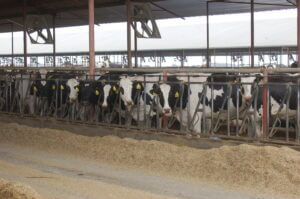 increased nutritional needs for milk production and maintenance. NEB is associated with depressed immunity and it can affect oocyte quality and embryonic development. This study aimed to evaluate the effects of NEB on in vitro embryo production (IVP) in dairy cows.
Study design and variables assessed
- Study conducted from July 2019 to June 2021 in Switzerland
- 30 cows, housed in a freestall barn with a gummy-bedded pen, were divided into 4 different groups: healthy (HEAL, n = 6), metabolic disease (META, n = 8), inflammatory disease (INFL, n = 8), or combined metabolic and inflammatory disease (COMB, n = 8)
- Cows were evaluated 60, 30, and 7 days before the expected calving date, within 24 hours postpartum, and once a week after that for 60 days, evaluating health status and any sign of disease
- Ovum pickup (OPU) was performed twice weekly on all cows over a 4-week period (n = 8 OPU sessions/cow), starting on the fifth week postpartum and the collected oocytes were subjected to routine IVP
Results
- β-hydroxybutyrate (BHBA) was higher at week 5 postpartum in META and COMB, compared with HEAL and INFL cows
- Cow health did not affect the number of oocytes/OPU or the recovery rate
- The number of quality 1 oocytes collected from INFL and COMB cows was lower, compared with HEAL cows
- The percentage of quality 1 embryos was reduced in META and COMB, compared with HEAL cows
- Cleavage, blastocyst, and hatching rates were similar among groups
- The presence of disease did not affect the time required by zygotes to reach specific developmental stages, as recorded by means of time-lapse monitoring
- There was a higher probability of direct cleavage after IVF in oocytes of COMB cows, compared with those of HEAL cows
- A higher incidence of abnormal cleavage was observed in embryos from diseased cows, but these could still reach the blastocyst stage
In conclusion, presence of subclinical metabolic and/or inflammatory disease during transition reduces oocyte and embryo quality without affecting development potential and morphokinetics when compared with healthy cows. These results reinforce the consequences of subclinical disease on embryonic development in dairy cows, which might be important for embryo transfer programs.
Access the paper at: https://www.frontiersin.org/articles/10.3389/fvets.2023.1328700/full
Economics of using beef semen on dairy herds
V.E. Cabrera
Improved reproduction performance, increased use of female sex-sorted semen, and production of more than enough dairy replacements – together with attractive market value of crossbred beef calves – have created favorable conditions to produce high-value crossbred beef calves using a select group of dairy animals. Although the general economic proposition of using beef semen in dairy is appealing, beneficial, and growing in popularity among dairy farmers, no systematic economic study has quantified the economic value of using beef semen in dairy cows, nor has any study analyzed the interactions of farm reproductive efficiency and its opportunities for using beef semen. The economic value of using beef semen in dairy herds depends on the market value of calves (crossbred beef and dairy), market price of semen (beef, conventional, and sexed), herd reproductive performance, and semen combination strategies, all of which can be captured in the income from calves over semen costs (ICOSC). Due to the highly integrated nature of these factors and their ever-changing conditions, analyses warrant projection models, scenario evaluations, and sensitivity analyses. The main goal of this paper was to report a systematic analysis to determine the best (beef, sexed, and conventional) semen breeding strategies according to a herd’s reproductive performance and market conditions – using the aforementioned model and decision support system.
Herd characteristics and model specifications
- A virtual herd of 1,000 Holstein cows was simulated – considering 35% overall culling risk and 7% stillbirth rate. Animals became eligible to be bred at 15 months of age (heifers) or 3 months after calving (cows).
- Breeding-eligible animals were used to evaluate dairy calf replacements produced and ICOSC by alternative semen utilization protocols under 3 different reproductive performance levels (low, medium, and high), assuming service rates of 75% for heifers and 60% for adult cows.
- The approximate 21-day pregnancy rates of cows were 30% for high, 20% for medium, and 15% for low reproductive performance.
- Baseline semen and calf prices were set at $15/semen dose of conventional or beef semen, $35/semen dose of Holstein sexed dairy semen, $45/Holstein female calf, $57.50/Holstein male calf, and $225/crossbred beef calf.
- Five beef semen use strategies were combined with 6 sexed-semen use strategies: beef semen use was restricted to eligible adult cows not being inseminated with sexed semen at percentages between 0 and 100% in 25% intervals: (1) 0%, (2) 25%, (3) 50%, (4) 75%, and (5) 100%. The sexed semen strategies included (1) no use of sexed semen (NS); (2) first service in heifers (1H); (3) first and second services in heifers (2H); (4) first and second services in heifers, and 20% cows with top genetics at each service (TOP); (5) first and second services in heifers, and first service in primiparous cows (1C); and (6) first and second services in heifers, and first service in primiparous and second-parity cows (2C). Conventional semen was used on eligible animals that were not bred to either sexed or beef semen.
Results
- Optimal breeding semen protocols were largely determined by the herd’s reproductive performance.
- Optimal breeding semen protocols that concurrently maximized ICOSC and produced enough replacements were:
- 100% beef semen use after 2C sexed semen protocol (ICOSC = $2,001) for medium reproductive performance (20% 21-day pregnancy rate)
- 100% beef semen after 1H sexed semen protocol (ICOSC = $6,215) for high reproductive performance (30% 21-day pregnancy rate).
- Optimal ICOSC was negative or marginally low for low-performance herds (15% 21-day pregnancy rate), for which the opportunity to use beef semen is minimal or nonexistent.
In conclusion, implementing breeding protocols that include the use of beef semen in dairy herds is valuable when reproductive performance is better than average. In addition, in those situations, the value of beef semen is greater when used in combination with sexed dairy semen. The value of beef semen is greater when opportunity and willingness to buy and sell calves exists (data not shown herein, please see original article).
Access the paper at: https://www.sciencedirect.com/science/article/pii/S2666910221001733#ceab10
Impact of heat stress on feed intake, milk yield, milk composition, and feed efficiency in dairy cows: a meta-analysis
L. Chen, V.M. Thorup, A.B. Kudahl, and S. Ostergaard
Heat Stress (HS) affects dairy production in different ways. Excessive exposure to high temperatures limits a cow’s ability to thermoregulate. Temperature and humidity are evaluated by a compound index named temperature-humidity index (THI). When cows are in an environment that exceeds a certain THI threshold (THI=72), cows experience HS, negatively affecting their milk production, reproduction, health, and overall welfare. Therefore, the objectives of this study were to evaluate the effects of HS on dry matter intake (DMI), energy-corrected milk (ECM), milk composition, and feed efficiency. Also, evaluate effects by severity and the effects in different parities and lactation stages.
Studies included, methods, and outcomes
- Data from 31 studies (34 trials) that reported means plus error measurements of means, utilizing mainly Holstein dairy cows, from 7 different countries
- Defined HS as THI exceeding 72
- Lactation stage was defined as early (0-100 days in milk [DIM]), mid (101-200 DIM), or late (>200 DIM)
- 30 of the 31 studies only used multiparous cows, so parity was not analyzed
- Animals were divided by chamber studies (simulating heat environment) and season
Results
- HS decreased DMI, ECM, and milk protein concentration by 19.3%, 17.9%, and 3.9%, respectively, compared with thermoneutral conditions
- Protein concentration was associated with the duration of HS but not with THI
- Compared with early lactation, mid- and late-lactation cows were more tolerant to heat stress when THI was <77.
- When THI was >77, early-lactation cows were less affected by HS than mid- and late-lactation cows.
- Late-lactation cows decreased DMI and ECM more than mid-lactation cows with THI values >77.
- In mid-lactation cows, for every unit increase in THI, DMI and ECM decreased by 4.13% and 3.25%, respectively.
- Fat concentrations and feed efficiency were not affected by HS.
In conclusion, HS compromises DMI, ECM, and protein concentration in dairy cows. Early lactation cows are more affected by THI <77 and less affected by THI >77, compared with mid- and late-lactation cows. Late-lactation cows are more affected by THI >77 than other stages of lactation. Fat concentrations and feed efficiency were not affected by HS.
Access the paper at: https://doi.org/10.3168/jds.2023-24059
Featured Column
Activity monitoring: Moving beyond estrous detection
 If there was one statement to summarize Stefan Borchardt’s Dairy Cattle Reproduction Council (DCRC) Annual Meeting presentation, it’d be, “Automated activity monitoring systems have more potential than simply detecting cows in estrus.” The researcher from the Freie Universitaet Berlin, Germany, explained that automated activity monitoring (AAM) systems also provide a tool to improve reproductive efficiency, animal health and welfare, productivity, profitability, and sustainability.
Most modern AAM systems incorporate three-dimensional accelerometers that provide continuous surveillance of physical activity changes – in real time. Most dairy producers use these systems to generate estrous alerts after the voluntary waiting period (VWP) ends to facilitate artificial insemination (AI). However, AAM systems can do so much more.
Based on two studies in which Borchardt was involved, estrous expression within the VWP seems to be a proxy for resumption of cyclicity and an important predictor for reproductive performance. “These studies showed that cows with at least one recorded estrous event had greater odds of insemination before 100 days in milk (DIM), received first artificial insemination (AI) earlier, and had a greater hazard of pregnancy up to 200 DIM,” Borchardt shared. “Furthermore, cows with at least one estrous event had a more intense estrus at first postpartum AI, compared with cows with no recorded estrous events in early lactation.”
Borchardt and his research colleagues also evaluated risk factors for anestrus. Cows with transition disorders (e.g., stillbirth, retained fetal membrane, puerperal metritis, or subclinical ketosis) had a greater chance for anestrus compared with healthy cows.
Enroll anestrus cows in timed AI
To evaluate different intervention strategies in cows with no estrous expression during VWP, researchers used activity data. “Enrolling cows with no estrous event (during early lactation) in a timed AI protocol can help overcome delayed pregnancy (compared with relying solely on visual estrous detection). Conversely, inseminate cows that show estrous activity (during early lactation) based on estrous detection after VWP,” Borchardt recommended.
Borchardt described two studies that compared a targeted reproductive management (TRM) approach using activity data from the VWP with a reproductive management approach using 100% timed AI (i.e., Double-Ovsynch and Resynch). In the first study (Rial et al., 2022), the TRM program for first service prioritized AI after estrous detection for cows with an estrous event during the VWP. Cows with no estrous event were enrolled into a modified Ovsynch protocol (i.e., second PGF treatment on day [d] 8 and P4 supplementation from d 0 until d 7). The TRM program resulted in a greater pregnancy rate after calving. However, the same proportion of cows were pregnant at 150 DIM compared with a program designed to maximize first service pregnancy per AI with a modified Double-Ovsynch protocol and an extended VWP.
In the second study (Gonzalez et al., 2023), a similar study design was used. In this study, cows with no estrous event were enrolled into a Double-Ovsynch protocol. There was, however, a treatment by parity interaction regarding pregnancy per AI at first service. Among primiparous cows, those enrolled in the TRM treatment had reduced likelihood of pregnancy to first AI compared with those receiving timed AI after a modified Double-Ovsynch protocol. There was no difference in pregnancy per AI at first service among multiparous cows. In both studies, the use of reproductive hormones was reduced by about 50% (TRM vs. 100% timed AI). “Here’s the Bottom line: TRM provides an opportunity to decrease the use of exogenous hormones on dairy farms,” Borchardt remarked.
Estrous expression’s influence on fertility
Borchardt shared results from three studies (Tippenhauer et al., 2021b, 2021a; Tippenhauer et al., 2023), noting that estrous behavior and its intensity (using different AAM systems) had a substantial effect on dairy cattle fertility. “An intense estrous expression was beneficial for cows receiving AI based on estrous detection using conventional, fresh, or sexed semen. In addition, intense estrous expression led to a marked improvement in pregnancy per AI for cows receiving timed AI.” (Previous studies – using either leg-mounted or neck-mounted AAM systems – also showed a positive association between intense estrous expression and pregnancy per AI.)
“Collectively, it seems obvious that intense estrous expression, expressed as peak of activity, is linked to improved fertility,” Borchardt stated. While the exact biological mechanism is still under investigation, some physiological observations might explain fertility difference outcomes for cows with different levels of estrous expression. An abnormal timing of ovulation has been observed in cows with low peak activity. Compared with intense estrous expression, less estrous expression has been associated with increased ovulation failure at spontaneous estrous events (1.9 vs. 9.5%) and at timed AI (5.1 vs. 11.8%). Cows with a high activity peak have a more optimum hormonal profile (i.e., low P4 and high E2) at AI.
Possibly, the increased concentration of P4 during the preceding diestrus phase is associated with cows expressing estrous events of greater intensity. “Researchers concluded that the P4 profile of consecutive estrous cycles has an important and significant effect on the overall length of the luteal and follicular phases, as well as affecting estrous expression intensity,” Borchardt noted.
Administering GnRH at AI improves pregnancy rate
Similarly, less estrous expression is associated with increased ovulation failure at spontaneous estrous events. Thus, Borchardt suggested a targeted intervention for these cows. Use gonadotropin releasing hormone (GnRH) because it indirectly causes ovulation through the action of luteinizing hormone. Administering GnRH at the time of AI improves pregnancy per AI, especially for cows with less estrous expression.
Borchardt concluded that real potential exists to considerably modify the identification of digital phenotypes captured by automated sensor technologies that predict fertility from different patterns of estrous expression. That said, more research is required to better understand existing and emerging predictors. “We must expand and integrate the TRM program suite. And, we need user-friendly software or other management tools for seamless on-farm implementation of TRM to facilitate widespread adoption by commercial farms.”
To read Borchardt’s complete DCRC Annual Meeting proceedings paper, log into the DCRC Member Center. Click on the “Proceedings” icon. The proceedings paper includes a complete list of references.
Featured Member
Editor’s Note: For each issue, DCRC interviews a member to learn more about his/her career, involvement with DCRC and thoughts about dairy cattle and reproduction.
Jennifer Spencer
Texas A&M AgriLife
DCRC member since 2012
 Meet Jennifer Spencer – the Dairy Cattle Reproduction Council membership chair. As an extension and research dairy specialist at Texas A&M AgriLife (part of Texas A&M University), Spencer spends 75% of her time in extension work and 25% on research. Texas A&M, a land grant university, boasts a robust animal science department with numerous faculty and extension specialists. “The recent establishment of a reproductive biotechnology center positions Texas A&M as a burgeoning leader in cattle reproductive physiology research,” she commented.
Routinely, Spencer engages with producers, communities and youth. “My work encompasses producer education, youth workforce development and consumer education programs,” she explained. Her research includes dairy cattle welfare, manure management and reproductive management. Spencer’s current graduate student, Allison Hajny, is researching dairy heifer reproduction. “My expertise and passion lie in dairy cattle reproduction.”
What was Spencer’s journey to a career in dairy cattle extension work and research? She grew up in the suburbs of Boise, Idaho, and showed sheep as a 4-H project – starting at age 10. Initially, she aspired to become a large animal veterinarian. “My first dairy science class at the University of Idaho pivoted my focus to the dairy industry,” she remarked. “This shift was largely influenced by the enthusiasm of my major professor Amin Ahmadzadeh (a longtime DCRC member) during my master’s degree and PhD studies.”
That enthusiasm also sparked Spencer’s interest in dairy cattle reproduction. “Dairy cattle reproduction is a complex and fascinating field, influenced by many biological and external factors, such as genetics, nutrition, management and environment,” she stated. Her research interests include improving reproductive efficiency, addressing early embryonic loss and enhancing heifer success.
To support her interest in dairy cattle reproduction, Spencer became involved with DCRC in 2012, while embarking on her master’s degree studies. Over the past decade, she has attended nearly every DCRC Annual Meeting, shared research as a graduate student and joined the DCRC Membership Committee in 2021. Last year, Spencer assumed the role of committee chair.
Spencer finds DCRC invaluable. “DCRC has been instrumental in building strong relationships and networking with leaders in dairy cattle reproduction,” she explained. “This organization has provided me with vital resources on synchronization protocols, management strategies and new research – enhancing my ability to advise dairy producers. DCRC events and webinars have also been pivotal in connecting me with industry experts in breeding programs and fetal development.”
While the dairy industry has made significant reproduction progress in the last 10 years, challenges remain. Spencer listed three important concerns that need to be addressed.
- The adoption of precision technologies for reproductive management poses significant challenges, requiring correct use and interpretation.
- Environmental factors, such as heat stress, significantly affect dairy cattle reproduction. While precision technologies offer some mitigation, further research is needed to assess their effectiveness under severe environmental conditions. Additionally, crop growth and quality, influenced by rainfall patterns, indirectly impact reproductive efficiency.
- The practice of crossbreeding, including beef on dairy and backcrossing of F1 generations, presents challenges. While popular for enhancing performance and profitability, effective management and breed selection for crossbred dairy cattle to optimize F2 generation outcomes remain areas of concern.
Industry Calendar
- World Ag Expo, February 13-15, Tulare, California
- Professional Dairy Producers of Wisconsin Business Conference, March 13-14, Wisconsin Dells, Wisconsin
- Central Plains Dairy Expo, March 19-21, Sioux Falls, South Dakota
- Council on Dairy Cattle Breeding Triannual Evaluation, April 2
- International Conference on Precision Dairy Farming and Technology, April 8-9, Rome, Italy
- Dairy Calf & Heifer Association Annual Conference and Trade Show, April 9-11, Westminster, Colorado
- Tri-State Dairy Nutrition Conference, April 15-17, Fort Wayne, Indiana
- International Committee for Animal Recording, May 19-24, Bled, Slovenia
- Council on Dairy Cattle Breeding Triannual Evaluation, August 13
- National Mastitis Council Regional Meeting, August 12-14, Ghent, Belgium
- World Dairy Expo, October 1-4, Madison, Wisconsin
- Dairy Cattle Reproduction Council Annual Meeting, November 12-14, Arlington, Texas
- Council on Dairy Cattle Breeding Triannual Evaluation, December 3
