
Newsletter – 2024 – October
President's Message
By Tracy Burnett, University of Guelph, Ridgetown Campus

DCRC President, Tracy Burnett
Greetings from Canada!
It seems as if summer is trying to hold on in my region of southwest Ontario, although we can start to see the seasons changing!
I’m excited to remind everyone about the DCRC Annual Meeting in Arlington, Texas, happening Nov. 12-14! This is always a great opportunity to meet new people in the industry and get practical new ideas to bring home. Personally, I find the atmosphere so contagious as the event is full of members who are all passionate about dairy and cattle reproduction!
Once again, the agenda is packed full of great topics and speakers this year. I want to start by thanking our board and committee members, with a special thank you to Ben Voeltz from STgenetics for heading the program committee, as well as his co-chair, JP Martins, from the University of Wisconsin.
Looking over this year’s agenda, I’m amazed at the variety of topics we’ll be covering. The meeting kicks off on Tuesday, Nov. 12, with the Pre-conference Session, during the afternoon, followed by the Welcome Reception and Poster Session from 5-7 p.m. This is a great chance to network, catch up with colleagues and read about new research within our field.
Wednesday, Nov. 13 starts bright and early with a breakfast at 6:30-7:45 a.m., and another opportunity to view the posters and interact with researchers. The Plenary Sessions begin at 7:50 a.m., which will be followed by several Breakout Sessions throughout the day. A special highlight of Wednesday is the Excellence in Dairy Cattle Reproduction Awards Ceremony and Panel Discussion, moderated by Katelyn Allen from Hoard’s Dairyman, taking place at 11:20 a.m. These awards celebrate the best in the industry and it’s always inspiring to hear how these top dairies manage for top reproductive efficiency.
We will have some exciting Plenary Sessions, including a session by Christine Baes from the University of Guelph about the Resilient Dairy Genome Project. Baes is a riveting speaker who does groundbreaking research on the dairy cattle genome and its application. We will also have a very important and session on the highly pathogenic avian influenza from Jason Lombard, Colorado State University. I am looking forward to hearing about the current state and updates on this disease. Finally, I am also looking forward to a Plenary Session by Kaitlyn Briggs about milk marketing, sustainability and animal welfare.
Throughout Wednesday and Thursday, we’ll dive into a wide range of important topics during the Breakout Sessions. Some of the highlights include:
- The Future of Fertility Traits with John Cole, Council on Dairy Cattle Breeding
- Management Strategies for Reinsemination with Paul Fricke, University of Wisconsin-Madison
- Uterine Disease Management with Stephen LeBlanc, University of Guelph
- Systemic Inflammation in Early Lactation Dairy Cows with Rafael Neves, Purdue University
- Employee Training and Retention with Robert Hagevoort, New Mexico State University
- Early Pregnancy Diagnosis and Embryonic Loss with Ky Pohler, Texas A&M University
- What Happens in the Calf Hutch Does Not Stay in the Calf Hutch with Adam Geiger, Zinpro
- Exploring Variables Related to Survival and Production in Dairy Replacements with Michael Overton, Zoetis
- Using Technology and Data for Targeted Reproductive Management Strategies with Luis Mendonca, Merck
Registration and hotel discounts end on Oct. 21, so don’t delay. Register today! Head over to our website for more information and online registration: https://www.dcrcouncil.org/2024-annual-meeting. I can’t wait to see you all in Arlington!
Research Summaries
Evaluation of Treatment with Human Chorionic Gonadotropin at Transfer of In Vitro Produced Beef Embryos on Reproductive Outcomes in Lactating Multiparous Jersey Cows After a Synchronized Ovulation
N. Hincapie, M.R. Lauber, T. Valdes-Arciniega, J.P. Martins, P.D. Carvalho, R. Faber, R. Farruggio, and P.M. Fricke
Advancements in reproductive technologies, such as in vitro embryo production and embryo transfer, have been increasingly adopted by the dairy industry to enhance profitability. The transfer of beef embryos into dairy cows is used to improve the value of calves produced. This study aims to assess the effect of human chorionic gonadotropin (hCG) treatment at the time of embryo transfer on pregnancy outcomes in lactating Jersey cows after synchronized ovulation.
Animal inclusion, reproductive programs, hormone dose
The study was conducted on multiparous Jersey cows on a commercial dairy farm in South Central Wisconsin, from June 2022 to June 2023.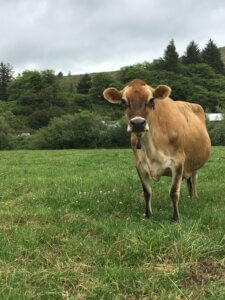
- 400 cows were used in the preliminary experiment and 415 cows were used in the second experiment.
- Cows were synchronized using Double-Ovsynch and estrous detection protocols.
- The cows were treated with 2,500 IU of hCG at embryo transfer and their reproductive outcomes were tracked.
- In vitro produced beef embryos were transferred to cows with corpus luteum sizes ≥13 mm.
Results
- Higher utilization rates: Double-Ovsynch cows had higher recipient utilization rates than estrous-synchronized cows.
- Progesterone levels: Cows treated with hCG showed increased progesterone (P4) levels and total luteal volume 7 days post-embryo transfer.
- Pregnancy outcomes: In the preliminary experiment, Double-Ovsynch cows treated with hCG had higher pregnancies per embryo transfer (P/ET) at days 26, 33, and 61. However, no significant difference in pregnancy outcomes was found in the second experiment.
- Cost analysis: Double-Ovsynch cows had a lower cost ($135.35) per pregnancy compared with estrous-detected cows.
Researchers concluded that hCG increased progesterone levels but did not significantly improve pregnancy outcomes in lactating multiparous Jersey cows receiving IVP beef embryos. The Double-Ovsynch protocol was more efficient and cost effective than the estrous synchronization protocol.
Access the paper at: https://doi.org/10.3168/jds.2024-25002
Assessing Transition Cow Management in Dairy Cows for Improved Health, Milk Production, Pregnancy, and Culling Outcomes
J.G. Cook, P. T. Pepler, L. Viora, and D. L. Hill
Understanding the social environment has potential to benefit dairy cow welfare and production. The aim of this study was to evaluate the associations of stocking density, calving density, days spent in a pre-partum group before calving (days spent in close-up, DCU), and the number of days from a pen filling event (addition of new cows to the pre-partum pen) on early-lactation health, production, pregnancy, and culling outcomes in dairy cows.
Study population and outcomes assessed
- Data were gathered from 2,780 cows in 2 herds in the United Kingdom.
- Herd management and reproductive records were analyzed for cows receiving treatment in the first 30 days of lactation (days in milk, DIM) for clinical mastitis, reproductive tract disease, ketosis, milk fever, and displaced abomasum.
- Principal component analysis was used to account for the relationship between gestation length (GL) and DCU, and their association with early lactation disease, milk production, pregnancy, and culling outcomes.
- The effect of stocking density, the number of days from a pen filling event to calving, and the calving density experienced by a cow in her week of calving were also evaluated.
Results
- The odds of disease in the first 30 DIM increased with stocking density before calving. A quadratic association was found between the first principal component (PC1), representing the combined effect of GL and DCU, and the odds of disease in multiparous cows only.
- Early lactation milk production and 305-day milk production in multiparous cows increased with PC1 score. Quadratic relationships were found between stocking density at days 8 to 2 before calving – with both early lactation and 305-day milk production in multiparous cows, but no associations were found in primiparous cows. Calving density showed a quadratic association with 305-day milk production in primiparous cows.
- The number of days from the last pen filling event to calving was not associated with changes in milk production.
- Disease occurrence was negatively associated with both early lactation and 305-day milk yield in multiparous cows but only with early-lactation milk production in primiparous cows. The occurrence of disease was associated with a delayed time to pregnancy only in primiparous cows, while both disease and being in lactation group ≥3 were negatively associated with time to pregnancy in multiparous cows.
In conclusion, these results suggest that gestation length, time spent in the close-up group, and stocking density are important factors influencing disease incidence in early lactation and subsequent lactation performance but had differing effects on primiparous versus multiparous cows.
Access the paper at: Assessing Transition Cow Management in Dairy Cows for Improved Health, Milk Production, Pregnancy and Culling Outcomes – ScienceDirect
Effects of Beef Semen and Beef Embryo Strategies on Profitability: Economics of Using Beef Semen and Beef In Vitro Produced Embryo Transfer in Jersey Herds
J.M.V. Pereira, F.C. Ferreira, and M.I. Marcondes
Jersey herds have low commercial value for male calves, leading farmers to adopt beef-on-dairy strategies to improve calf market prices. This study analyzes the economic feasibility of using beef semen and beef embryo transfer to increase calf revenue. Additionally, it investigates the profitability of raising Jersey-beef crossbred or pure-beef animals up to 180 kg in Jersey dairy systems.
Study design, scenarios, and variables
The study was based on a model simulating a 10-year projection for Jersey herds in California, reaching a steady state in the final year.
- Model simulation using 1,000 lactating cows, divided into scenarios.
- A Markov-chain model was developed to simulate herd dynamics and reproductive strategies.
- Scenarios varied the use of conventional dairy semen, sexed semen, beef semen, and beef in vitro produced embryo transfer (IVP-ET). Economic factors, such as operational costs, revenue from calf sales (at 1 day old or 180 kg), and profit per cow, were evaluated across 8 scenarios, with varying costs of IVP-ET ($85 or $170) and calf prices ($200 or $300).
Results
- Scenario 1 (SS): Highest profit per cow per year ($203.30), reducing male Jersey calf sales by 83.5%.
- IVP-ET scenarios: Profitability increased with lower ($85) embryo transfer cost and higher ($300) calf market price.
- Raising calves to 180 kg: Increased profit, with the highest return ($232.90/cow/year) when Jersey-beef crossbred animals were raised to 180 kg.
- Cost impact: IVP-ET cost of $170 reduced profitability significantly.
In conclusion, combining sexed semen and beef semen maximized profitability in Jersey herds, with the highest profit when raising Jersey-beef crossbred animals to 180 kg. Beef IVP-ET strategies improved profitability – but only when the embryo transfer cost was low and calf prices were high.
Access the paper at: https://doi.org/10.3168/jds.2023-24530
Featured Column
Reduce stress, manage strain, select superior genetics

Matt Lucy
It’s no surprise. Strain that occurs in response to stress affects uterine health, oocyte quality, ovarian function, and conceptus development, explained Matthew Lucy, University of Missouri, who spoke during the 2023 Dairy Cattle Reproduction Council (DCRC) Annual Meeting. Cattle experience environmental, disease, production, nutritional, and psychological stresses. With these factors playing such a key role in reproductive health, Lucy stressed the importance of implementing management strategies and genetic selection to reduce production stress, manage the remaining strain, and genetically select cattle with minimal strain in response to stress.
Digging a little deeper into this topic, Lucy described stress (stressor) as a force external to a system that acts to displace the system. “A strain is the animal’s response to stress – the magnitude of the displacement,” he added. The strain often represents a cost to the individual animal. Like people, the impact of stress varies from cow to cow.
Stressors stem from a variety of factors (Figure 1). Stress creates strain that can affect animals, including embryonic development and pregnancy outcome. Cows that experience less strain in response to a stress infraction will be more fertile. “Less strain may be explained by lesser biological response to stress or a greater capacity to function (cope) in the presence of stress,” Lucy stated.
Figure 1. Example forms of cattle stress
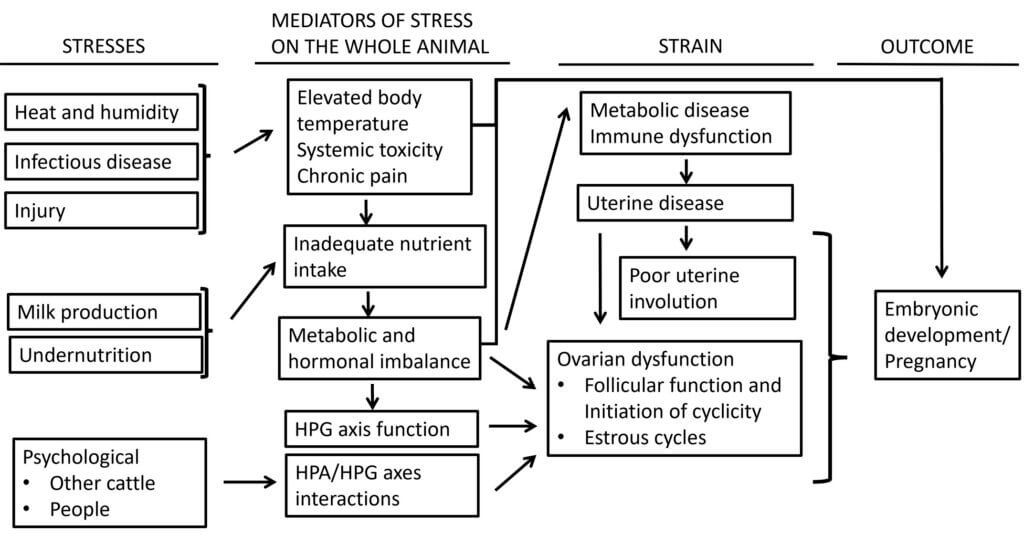
Lucy discussed several stresses, including heat and humidity, disease, and negative energy balance (NEB), that influence dairy cattle pregnancy. He noted that lactating cows respond to heat stress by eating less, which causes their metabolism to shift. Some changes in metabolic response are entirely unique to heat stress.
Prevent diseases, injuries
Common dairy cattle diseases include ketosis, fatty liver, dystocia, retained placenta, metritis, endometritis, and mastitis. Dystocia predisposes cattle to retained placenta and uterine infection (metritis), which are associated with reduced feed intake. Lower feed intake can lead to metabolic and hormonal changes and associated weight loss (strain), which can affect pregnancy outcome. From an environmental standpoint, cattle face potential injury due to poor facility design, which is also a stress. Thus, Lucy encouraged dairy producers to provide cattle with correctly designed barns and stalls to prevent injury, stress, and the associated strain.
The University of Missouri professor reminded DCRC members about providing adequate nutrition for today’s highly productive cows. Without proper nutrition, cows will experience NEB – a stress. “Circulating hormones and metabolites associated with NEB create a strain within the animal,” Lucy stated. The strain affects normal function of the hypothalamic-pituitary-gonadal (HPG) axis (abnormal gonadotropin secretion) that leads to ovarian dysfunction.
Additionally, disease and/or poor facility design may impair a cow’s motivation to eat or the cow’s ability to reach the feedbunk. Physiological stress caused by NEB affects the immune system to create immune dysfunction (a strain) and increase the possibility of disease. Bottom line: NEB triggers a cascade of events that reduces cattle health, production, and fertility.
What influences the amount of strain?
According to Lucy, the amount of strain an animal experiences may be explained by the magnitude of the specific response (e.g., how much non-esterified fatty acids [NEFA] is released postpartum). Or, the strain may be explained by the animal’s sensitivity to the specific response (e.g., some cows experience less strain because they metabolize NEFA better).
It’s well documented that heat stress/elevated body temperature decreases pregnancy rates. One mechanism involves heat stress’s direct effect on the embryo and a second mechanism involves heat stress’s effect on the gut (leaky gut syndrome). This causes loss of intestinal barrier function and the release of endotoxin into circulation, and may affect animal productivity and pregnancy outcome.
Like heat stress, disease typically triggers an increased body temperature. This happens through the release of endotoxins into the systemic circulation. The combined effects of greater body temperature and endotoxins can affect reproduction. Mastitis infection, for example, can cause endotoxin release, immune system activation, cytokine production, and body temperature elevation. The cumulative effects on a cow can damage the developing embryo and/or cause regression of the corpus luteum and early embryonic loss.
What about metabolic and hormonal imbalance?
During early lactation, circulating growth hormone (GH) increases. This stimulates hepatic gluconeogenesis and increases the glucose supply to early-lactation cows. Growth hormone antagonizes insulin action and creates an insulin-resistant state (preventing glucose use by the liver, muscle, or adipose tissue). The increase in GH stimulates lipolysis that mobilizes fatty acids (NEFA) from adipose tissue.
“The strain associated with production stress is explained by changes in circulating hormones and metabolites,” said Lucy. Some cows experience a larger hormonal and metabolic change that can lead to disease. Low blood glucose concentrations postpartum are associated with low blood insulin concentrations and low blood insulin is associated with low circulating IGF1 concentrations. Think of this as the beginning of the “snowball effect.” An inadequate glucose supply contributes to the incomplete oxidation of fatty acids (NEFA), which creates elevated beta-hydroxybutyrate (BHB) postpartum (ketosis). Ultimately, the early-lactation metabolic and endocrine state (high GH, low IGF1, low insulin, low glucose, high NEFA, and high BHB) affects the cow’s ability to become pregnant (due to effects on the ovary, uterus, and immune system).
Lucy noted that the strain of an abnormal metabolic and hormonal environment postpartum creates dysfunction within the innate immune system through its effects on polymorphonuclear neutrophils (PMN). For example, glucose is the primary metabolic fuel that PMNs use to generate the oxidative burst that leads to killing activity. Postpartum, glycogen concentrations in PMN decrease. It appears that the lower glycogen reserve reduced the capacity for oxidative burst in PMN and predisposes cows to uterine disease.
Goal: Mitigate strain
In conclusion, Lucy encouraged DCRC members to mitigate strain from outside sources by reducing the stress itself. For example, under heat stress conditions, improve the physical environment via cooling. Replace or renovate facilities to prevent injuries and foster animal welfare. Reduce disease through vaccination, cleanliness, and antibiotic treatment.
Also, stress can come from within the animal (e.g., abnormal thermal, hormonal, or metabolic profile that creates immunological and ovarian dysfunction, uterine disease, poor oocyte quality, and embryonic loss). Manage strain that comes from the internal stress response through programs such as timed artificial insemination (TAI), which controls ovarian function and time of breeding, or embryo transfer, which circumvents periods of embryo sensitivity.
Furthermore, implement genetic selection for animals that are resistant to stress and have less strain. “The goal for future management and genetic selection programs in farm animals should be to reduce production stress, manage the remaining strain using technologies like TAI and embryo transfer, and genetically selecting cattle with minimal strain in response to stress,” Lucy stated.
To learn more about how strain affects pregnancy, read Lucy’s complete proceedings paper. It can be found in the DCRC Member Center. Find references in the proceedings paper.
Featured Member
Editor’s Note: For each issue, DCRC interviews a member to learn more about his/her career, involvement with DCRC and thoughts about dairy cattle and reproduction.
Bekah Meller
Select Sires Member Cooperative
DCRC member since 2022

Bekah Meller
An avid nominator for DCRC’s Excellence in Dairy Reproduction Awards program, Bekah Meller works for Select Sires Member Cooperative (SSMC) as a genetic and reproductive advisor in Ohio. She described SSMC as a member-owned cooperative that brings personalized service and high-performing genetics to dairy and beef producers.
Meller’s primary work responsibilities include evaluating reproductive and genetic performance for producers within their herds. As a CowManager specialist, she supports producers by helping them utilize technologies to enhance cattle fertility and health monitoring. Furthermore, she provides artificial insemination training – teaching producers and college students how to breed cows and sharing the importance of reproduction as a part of herd success.
“To improve repro performance within dairies, I evaluate farm protocols, train personnel and listen to producers’ goals and objectives,” Meller explained. “These practices help set a plan for repro success and foster benchmarking to evaluate a dairy’s progress.”
Provide recognition for outstanding dairies
Through reproduction evaluations, Meller identifies dairies to nominate for the DCRC Excellence in Dairy Reproduction Awards program. She nominates those that are performing above their peers and are very intentional about their management and reproductive program.
Meller finds that nominating dairies for DCRC’s awards program is a good way to share that what they do – day after day – is well worth their hard work. “The dairies that DCRC recognizes are also doing several other practices right to achieve such high levels of fertility,” she noted. “By identifying dairies that excel from a reproductive perspective, we can share ideas, learn what works well or what had to change, and help set benchmarks from real, on-farm applications. Also, these awards highlight the fact that this level of reproduction can be achieved from a range of herd sizes, management styles and reproduction protocols.”
Meller grew up in Northwest Ohio on a small, cow-calf operation and lived a half mile from the family’s dairy farm. “From a young age, I enjoyed working with cattle,” she stated. “I became more interested in the dairy industry after a summer internship at The Ohio State University (OSU) Waterman Dairy.” This internship turned into a student manager position and an undergraduate research project that led to her master’s degree in dairy cattle nutrition at OSU.
Combines advanced studies and hands-on learning
During graduate school, Meller became the OSU Waterman Dairy herd manager. After graduate school, she continued working at the dairy for eight years – being involved in the day-to-day management, teaching, research and outreach. “I bring my scientific research background along with farm and personnel management experience to work alongside producers in the area of reproduction,” she noted.
Meller’s interest in dairy cattle reproduction stems from reproduction being the first step in creating the next generation in a dairy herd. “The time between conception and actual return on investment of that cow is longer than other livestock species, so there are many things we need to get right,” she remarked. “With reproduction, we are also progressing the animal into her first or next lactation, which, along with many other factors, reproduction is one of the key factors that dictates her success.”
The genetic and reproductive advisor added, “We can influence a cow’s efficiency and productivity through reproduction, nutrition, management and genetics. All these factors are interconnected and it is very fulfilling to set goals, problem solve, establish protocols and work through these challenges.”
DCRC offers centralized resources
Meller shared that DCRC is a great resource for advisors to stay current in areas surrounding dairy cattle reproduction. “By centralizing research and providing materials that can be taken back to the farm and producer, we are able to apply advancements to the farms we work with on an individualized level,” she stated.
As a DCRC member, Meller learned about data supporting the high fertility cycle, along with understanding how fertility programs can be individualized and implemented on dairies.
Meller noted that she works with some great herds that are in the High Fertility Cycle (as described by Middleton, Pursley and Fricke). Yet, she is concerned about how she (and other dairy cattle consultants) can help herds get into the cycle when this is a multifaceted challenge that faces dairy producers. “Use of TAI (timed artificial insemination) is key in some of these high fertility cycle herds,” she commented. “How do we keep this going if we become limited in protocol use (e.g., giving hormones) in the future?”
The Ohio native also shared that limited heifer inventories are challenging some dairy operations today. “Some farms ‘ride a thin line’ between enough heifers and not enough heifers,” she said. “When heifer inventories are tight, the tolerance of poor reproduction – even for just one month – is very low.” Thus, strive for adequate heifer inventories and work to achieve reproduction success.
Webinar
DCRC offers not 1 – but 2 – webinars in October
Mark your calendar to attend the next Dairy Cattle Reproduction Council (DCRC) webinar, scheduled for Oct. 22, starting at 11 a.m. Central time (USA/Canada). High Plains Ponderosa Dairy CEO and Managing Partner Greg Bethard, Plains, Kan., will address “Cows and People Make a Dairy Go.” This one-hour webinar is free.
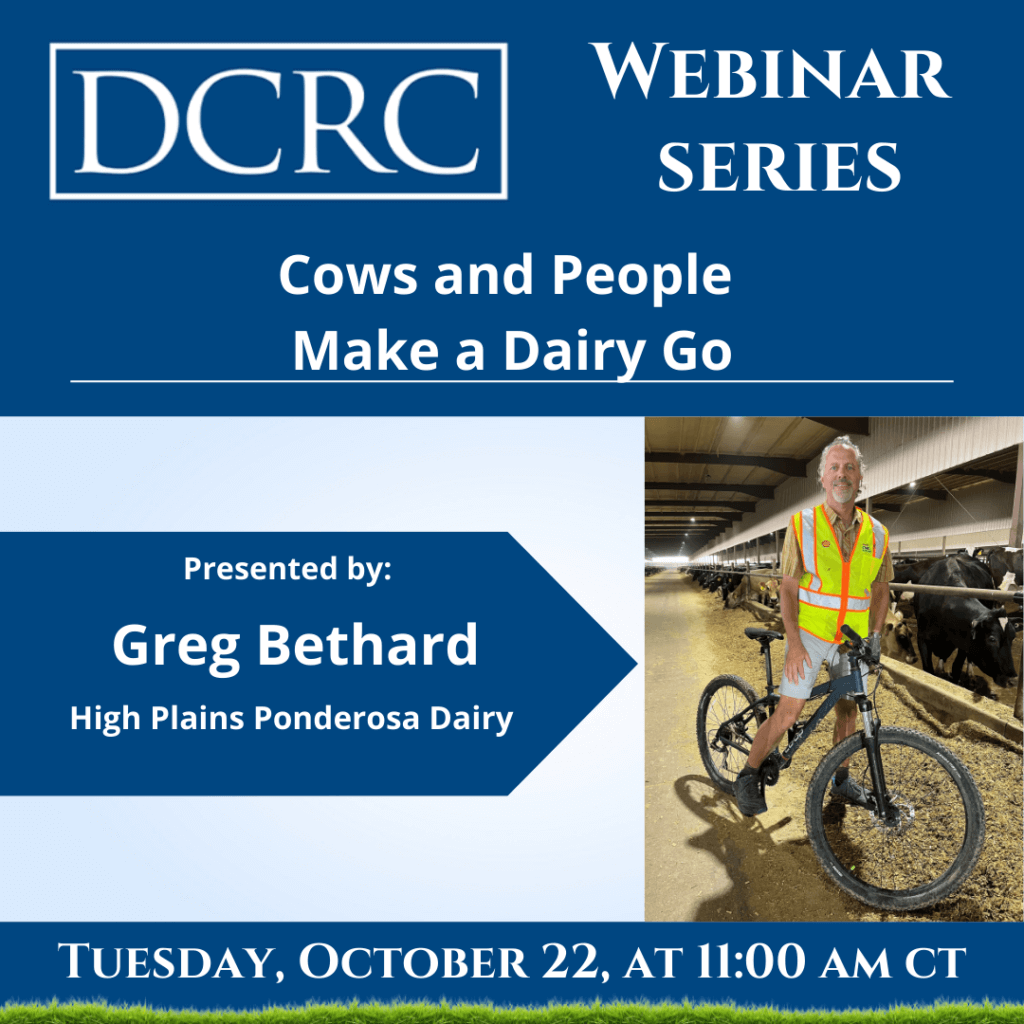 To register for this DCRC webinar, go to: https://bit.ly/DCRCWebOct22Berthard. If you are a DCRC member and cannot attend the live program, access the webinar recording at www.dcrcouncil.org after Nov. 5.
Veterinarians may earn one Registry of Approved Continuing Education (RACE) credit for attending this DCRC webinar. To learn more about this opportunity, contact JoDee Sattler at: jodee@dcrcouncil.org.
The Oct. 22 webinar will feature strategies on how to manage a large dairy operation – from animal systems to recruiting, training, retaining and motivating employees to business growth. Management systems include capturing and analyzing data collected on dairies. Based on the analysis, learn how to make management decisions, develop standard operating procedures and execute tasks. Regarding people, gain insights on attracting top talent, leading people, developing a vision and culture that employees want to be part of, and inspiring people. Additionally, learn how to frame business growth within the vision and goals of ownership.
Bethard grew up in New Jersey and developed a passion for agriculture at a young age. He received his bachelor’s, master’s and PhD degrees from Virginia Tech University in dairy nutrition and management, and has spent his entire career in the dairy industry. He served on faculty at New Mexico State University and North Carolina State University, and as a technical services specialist for Monsanto Dairy Business. From 2000 to 2014, Greg and his wife Rachel operated G&R Dairy Consulting, Inc., an international dairy consulting business. He consulted with dairy producers and allied industry throughout the United States and around the globe, working in Europe, Asia and Australia. Bethard served as chief financial officer for Pagel Family Businesses in Kewaunee, Wis., from 2014 to 2016. In 2017, he moved to Kansas and realized his lifelong dream of becoming a dairyman. Since then, he has been managing partner at High Plains Ponderosa Dairy in Plains, Kan., and currently serves as chief executive officer.
“Economic markers for dairy cattle reproductive performance” headlines the Oct. 24 DCRC webinar. The webinar starts at 1 p.m. Central time (USA/Canada). Victor Cabrera, University of Wisconsin-Madison professor and extension specialist in dairy management, will serve as the instructor for this free, one-hour webinar.
To register for this webinar, go to: https://bit.ly/DCRCOct24Cabrera. If you are a DCRC member and cannot attend the live program, you may access the webinar at www.dcrcouncil.org after Nov. 7.
Veterinarians may earn one Registry of Approved Continuing Education (RACE) credit for attending this DCRC webinar. To learn more about this opportunity, contact JoDee Sattler at: jodee@dcrcouncil.org.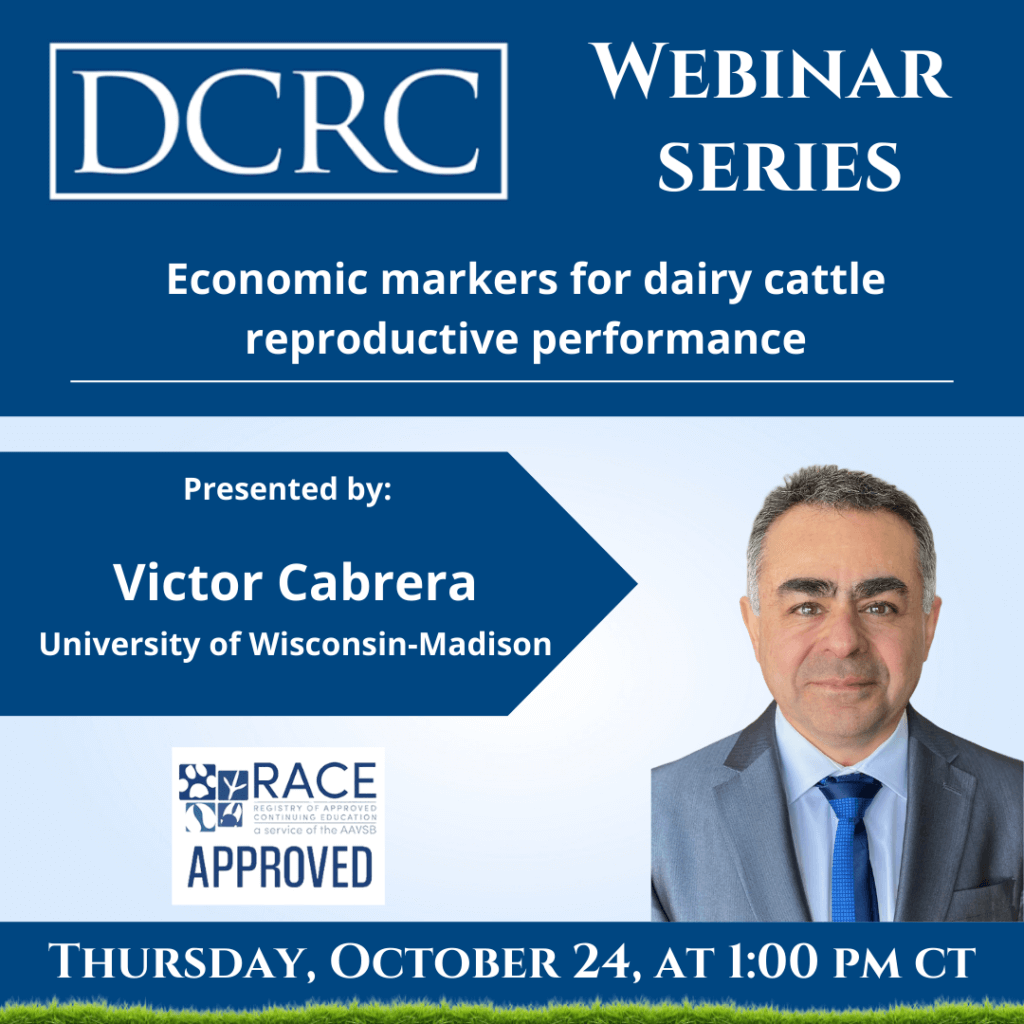
During the webinar, Cabrera will discuss how reproductive improvement results in higher milk productivity and, therefore, higher milk income over feed cost, more calf sales and lower culling and breeding expenses. Therefore, as the reproductive efficiency improves, the dairy herd’s net return increases. To help dairy managers and consultants make objective herd management decisions, customizable decision support tools should be used. These tools help users calculate the value of a pregnancy, the cost of a pregnancy loss, the economic value of improving the 21-day pregnancy rate, the cost of a day open and their interactions with milk production and other productive, economic and management traits.
Cabrera combines applied research, interdisciplinary approaches and participatory methods to deliver practical, data-driven, user-friendly and scientific decision support tools for dairy farm management. Prior to starting his career at UW-Madison, he served as an assistant professor at New Mexico State University, extension program planner for the Inter-American Development Bank, Peru, and agricultural educator and extension agent at Valle Grande Rural Institute, Peru. Cabrera earned his bachelor’s degree from La Molina Agrarian University, Peru, and master’s degree and PhD from the University of Florida.
For more information about DCRC’s webinars, e-mail Raphael Saraiva, DCRC Education Committee chair, at: raphael.saraiva@stgen.com.
Industry Calendar
- World Dairy Expo, October 1-4, Madison, Wisconsin
- Council on Dairy Cattle Breeding Industry Meeting, October 2, Madison, Wisconsin
- National Mastitis Council Webinar (presented in Spanish), October 17
- National Milk Producers Federation Annual Meeting, October 20-23, Phoenix, Arizona
- Dairy Cattle Reproduction Council webinar, October 22
- Dairy Cattle Reproduction Council webinar, October 24
- Dairy Cattle Reproduction Council Annual Meeting, November 12-14, Arlington, Texas
- Council on Dairy Cattle Breeding Triannual Evaluation, December 3
- Dairy Strong Conference, January 15-16, Green Bay, Wisconsin
- National Mastitis Council Annual Meeting, January 27-30, Charlotte, North Carolina
- World Ag Expo, February 11-13, Tulare, California
- Professional Dairy Producers Annual Business Conference, March 12-13, Madison, Wisconsin
- Central Plains Dairy Expo, March 25-27, Sioux Falls, South Dakota
- Dairy Calf & Heifer Association Annual Conference and Trade Show, April 8-10, Westminster, Colorado
- Precision Dairy Conference, June 17-18, Bloomington, Minnesota
