
Newsletter – 2025 – August
President's Message
 What a wonderful summer it has been so far! While weather conditions vary across the country, here in California’s Central Valley, we’ve enjoyed a surprisingly mild season compared to previous years. Morning temperatures have hovered in the low 60s° F. and we’ve had only a few days exceeding 100° F. This cooler weather has provided much-needed relief for our dairy herds. Although a few dairies experienced fertility dips in the early July heat spike, overall, the conditions have been favorable.
In late June, I had the pleasure of attending the American Dairy Science Association (ADSA) Annual Meeting in Louisville, Ky. The event was packed with innovative research and forward-thinking discussions. Key topics included sensor technologies to improve health and fertility, genomic advancements and the growing potential of beef-on-dairy strategies. Our Program Committee Co-chair Paula Molinari is working diligently to bring some of the most relevant posters and insights from ADSA and other conferences to our own annual meeting this fall.
Speaking of which, the 2025 DCRC Annual Meeting, Nov. 11-13, Middleton, Wis., is shaping up to be one of our best yet. Program Chair JP Martins and his team have been working hard to develop a timely and impactful agenda. This year’s program will focus on tools and strategies to strengthen the dairy workforce and enhance reproductive performance. We’ll also take a deep dive into beef-on-dairy opportunities and provide a broader agricultural market outlook. A special highlight will be a dairy farm tour that features dairies with outstanding reproduction performance. The featured dairies include Breezy Hill, Waunakee, Maier Farms, Waunakee, and Blue Star Dairy, Arlington. Plus, we’ll stop at J. Henry Bourbon for a tasting and tour. Additionally, we’re excited to offer a pre-conference session in Spanish, designed for dairy employees and delivered through a unique partnership between industry and university advisors. Stay tuned. Full program details will be released soon!
On the financial front of the dairy industry, the dairy sector has seen bullish trends in recent months. High beef prices – while not entirely unexpected – have significantly impacted dairy economics. Many producers are capitalizing on the tight beef supply – enjoying record-high prices for calves and cull cows. This shift is driving increased interest in beef-on-dairy programs, a topic we plan to explore in depth at our November meeting.
The DCRC leadership team remains committed to enhancing the value we provide to our members. One way we’re doing this is by building partnerships with other professional organizations. I’m pleased to share that DCRC has joined forces with the Dairy Calf and Heifer Association (DCHA) to support their programming. Joint leadership meetings have led to productive collaboration, including a strong draft for the post-weaned/reproduction heifer track at the upcoming DCHA Annual Conference and Trade Show, April 7-9, Tucson, Ariz. Special thanks to Kim Egan for her leadership in advancing this exciting initiative.
Please mark your calendars for the 2025 DCRC Annual Meeting, set for Nov. 11-13 in Middleton, Wis. Registration opens later this month. Keep an eye on your inbox for updates about this must-attend event.
Wishing you continued success and a smooth summer season. I look forward to connecting with many of you in Middleton this November!
By Ralph Bruno, DCRC President
Research Summaries
Progesterone profiles in postpartum dairy cows with inflammatory disorders
Tony C. Bruinjé, Emma I. Morrison, Eduardo S. Ribeiro, David L. Renaud, and Stephen J. LeBlanc
The objective of this study was to determine if progesterone (P4) profiles differed between dairy cows with or without inflammatory disorders early postpartum. The authors hypothesized that cows with elevated serum haptoglobin (Hp) in the first week postpartum and endometritis at 5 weeks postpartum would be more likely to have prolonged luteal phase (LP) and would have lower P4 concentrations during LP than cows without these inflammatory conditions.
Study population and outcomes assessed
- A total of 708 cows from 2 commercial herds were enrolled in this prospective cohort study and tracked from 3 weeks before parturition to 5 weeks postpartum.
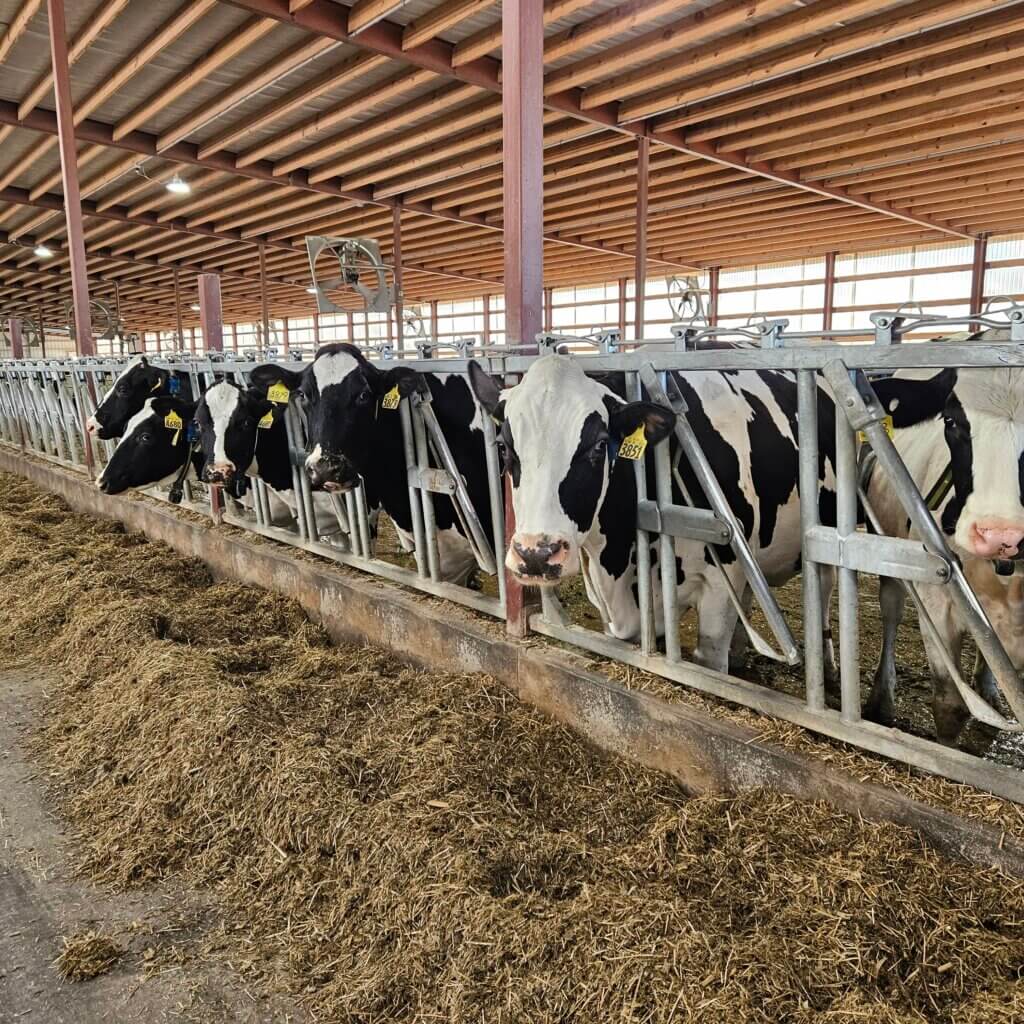
- Cows were examined for clinical health disorders until 5 weeks postpartum.
- Serum Hp was measured in blood at 2 and 6 days in milk (DIM; range ±2 days). Metritis was assessed at 4, 8, 11, and 15 DIM; and purulent vaginal discharge and endometritis (≥6% polymorphonuclear leukocyte [PMN] in endometrial cytology sampled by cytobrush) were assessed at 35 ±3 DIM.
- Inflammatory group (INFLAM, n = 139): Defined by elevated serum haptoglobin (≥0.8 g/L at 2 or 6 DIM) and/or endometritis (~35 DIM).
- Healthy control (n = 133): No clinical disease, Hp <0.8 g/L at both sampling times, singleton birth, and body condition score (BCS) ≥3.0.
- Progesterone monitoring: Serum P4 measured twice weekly between 35 and 70 DIM (±3days). The first luteal phase was defined from P4 ≥1 ng/mL to a drop below that level.
Results
- Inflammatory cows had 67% incidence of prolonged luteal phases (≥21 days) 37% in healthy cows, and the average luteal phase length was 17 days in inflammatory vs. 15 days in healthy cows.
- Progesterone concentrations were consistently lower in the INFLAM group compared with healthy controls: 4.6 vs. 5.5 ng/mL on day 4, 6.0 vs. 7.7 ng/mL on day 7, and 6.9 vs. 8.2 ng/mL at peak luteal phase.
- Among multiparous cows (but not primiparous cows), INFLAM was less likely to have luteolysis (P4 decline) by day 14 (adjusted hazard ratio [AHR] and 95% confidence interval [CI]: 0.54; 0.31 to 0.94) or by day 21 (AHR: 0.32; 0.12 to 0.84) than in healthy multiparous cows.
In conclusion, postpartum cows facing inflammation, both systemic (elevated haptoglobin) and uterine (endometritis), experienced longer luteal phases and lower progesterone peaks, particularly in multiparous cows. These disruptions can delay breeding readiness and contribute to lower fertility, underlining the critical role of postpartum health in dairy herd reproductive performance.
Access the paper at: Progesterone profiles in postpartum dairy cows with inflammatory disorders
Late gestation heat stress induces inflammation and impacts nutrient transfer signature in the placenta of dairy cows
L.T. Casarotto, H.N. Jones, P. Chavatte-Palmer, J.M. Lance, H. Olmo, and G.E. Dahl
The conditions within the uterus where a mammalian fetus develops are crucial in shaping its physiological functions later in life. Changes in the availability of nutrients, oxygen, and hormones in the maternal bloodstream can influence tissue development. Researchers hypothesized that late gestation heat stress leads to alterations in gene expression in the cotyledonary tissue related to acute inflammation and impacts the mechanisms of placental nutrient uptake, which affects the trajectory of fetal growth.
Study population and outcomes assessed
- Multiparous pregnant Holstein cows had lactation terminated (i.e., dried off) at 232 ±5 days of gestation and were randomly assigned to one of two treatments: cooling (CL; access to the shade of a barn plus forced ventilation via fans and water soakers over the feed lane to provide active evaporative cooling) or heat stress (HT; access to the shade of a barn and natural ventilation, no active cooling) for the entire duration of their dry period.
- Maternal plasma (n = 28/trt) cortisol concentrations were measured at days 14 and 7 prior to parturition, and at parturition. At delivery, placental cotyledonary tissue samples were collected and analyzed for gene expression (n = 4-5/trt).
Results
- During the final weeks of gestation, treatment impacted plasma cortisol concentrations as calving approached (p = 0.04), wherein HT dams exhibited lower plasma cortisol concentrations than CL dams at -14 days (9.65 vs. 13.09 ±1.5 ng/ml; p < 0.001) and at parturition (16.97 vs. 22.32 ±1.4 ng/ml; p < 0.001), combined with significant changes in placental gene pathways associated with acute inflammation and cortisol synthesis and secretion.
- Specifically, pathways related to interleukin-6 (IL6) and NLR family pyrin domain-containing protein 3 (NLRP3), which regulate inflammation, were upregulated by HT, which suggests placental inflammation.
- Additionally, pathways involved in nutrient transfer and amino acid metabolism were impaired, as HT downregulated key genes responsible for these functions, especially serine biosynthesis.
In conclusion, these findings indicate that HT during late gestation leads to dysregulation of cortisol secretion pattern in maternal plasma, resulting in reduced cortisol levels in the HT animals. Additionally, it also caused placental inflammation impacting feto-maternal transfers, which highlights the importance of the late gestation period on fetal development and managing maternal environmental stressors (e.g., heat stress) in dairy production.
Access the paper at: https://www.sciencedirect.com/science/article/pii/S0093691X25002328?via%3Dihub
Late-gestation heat stress abatement in dairy heifers promotes thermoregulation and improves productivity
B.D. Davidson, B. Dado-Senn, N. Rosa Padilla, T.F. Fabris, L.T. Casarotto, V. Ouellet, I.M. Toledo, G.E. Dahl, and J. Laporta
Multiparous, nonlactating pregnant cows are negatively affected by heat stress, but the effect of heat stress on more thermotolerant pregnant heifers has received less attention. The researchers’ objective was to characterize the effect of late-gestation heat abatement on thermoregulatory responses and subsequent milk production of nulliparous Holstein heifers.
Study population and outcomes assessed
- Pregnant heifers, blocked by body condition score (BCS) and predicted transmitting ability (PTA) for milk, were enrolled in either heat stress (HT, shade of freestall barn; n = 16) or cooling (CL, shade of freestall barn, water soakers, and fans; n = 15) environments during the last 60 days of pregnancy (~8 weeks).
- Rectal temperature (RT; thermometer), respiration rate (RR; breaths/minute), sweating rate (SR; VapoMeter, Delfin Technologies, Kuopio, Finland), and skin temperature (ST; infrared thermometer) were measured thrice weekly from enrollment to calving. Vaginal temperature (VT; i-button intravaginal device) was measured every 10 minutes for 7 consecutive days at weeks -8, -6, -4, and -2, relative to calving and averaged hourly. Daily thermoregulatory patterns, assessed by SR and ST, were measured every 4 hours over a 36-hour time interval at weeks -6, -4, and -2, relative to calving.
- Upon calving, milk, protein, and fat yields were recorded twice daily for 15 weeks. The average temperature-humidity index (Hobo Pro temperature probe, Onset Computer Corporation, Pocasset, MA) in the barn during the precalving period was 77 (minimum of 72, maximum of 82). Only heifers that gave birth to a female calf (CL = 12, HT = 14) were included in the statistical analysis.
Results
- In the precalving period, CL heifers had lower RR (44.3 vs. 60.0 ±1.6 breaths/minute), RT (38.7 vs. 38.8 ±0.04°C), unshaved ST (34.7 vs. 35.3 ±0.17°C), and unshaved SR (19.0 vs. 35.2 ±1.9 g/m2h), relative to HT heifers.
- Additionally, VT was lower in CL heifers during weeks -4 and -2, specifically during early morning and early afternoon hours. When measured over a 36-hour time interval, ST and SR were lower in CL heifers, when compared with HT heifers for all weeks.
- Notably, ST was reduced overnight and SR was reduced during the daytime. Cooled heifers had higher milk yield (35.8 vs. 31.9 ±1.4 kg/day), when compared with HT heifers.
Similar to multiparous cows, the data indicate that actively cooling heifers in late pregnancy is effective in promoting thermoregulation and results in elevated milk production postcalving.
Access the paper at: https://www.sciencedirect.com/science/article/pii/S0022030220309796?via%3Dihub
Featured Column
The ‘S word,’ it’s so much more than environmental stewardship
Sustainability means more than environmental stewardship. The “S word” – sustainability – also encompasses economic and social factors, explained Kaitlyn Briggs, fairlife LLC’s dairy welfare lead, during the 2024 Dairy Cattle Reproduction Council Annual Meeting. “Additionally, animal health should be considered an important ‘lever’ in sustainability.”
Animal health, which strongly influences production and reproduction efficiencies, plays a key role in the environmental impacts – and thus sustainability – of dairy and beef operations. Optimization of efficiencies is the most important tool in environmental impact mitigation.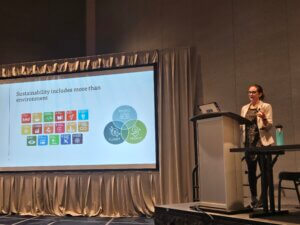
To provide a little background, Briggs discussed how sustainability has become a central issue in food animal agriculture, particularly in recent years as the environmental impacts of food production have come under greater scrutiny. She noted that, unfortunately, the concept of sustainability is often misunderstood. Sustainability is multifaceted and “experts” (some may consider them “environmental activists”) often use numbers wrongly to drive home their biased messages, which aren’t backed by sound science.
“While many companies focus on environmental sustainability and their commitments to reducing emissions, true sustainability also encompasses economic and social dimensions,” Briggs stated. “For the agricultural sector, a comprehensive approach to sustainability must balance environmental stewardship with economic viability and social responsibility.”
When solely looking at U.S. environmental sustainability, the dairy industry plays a significant role in the agricultural economy and contributes approximately 2% of total U.S. greenhouse gas (GHG) emissions (US EPA, 2021). “Despite its relatively modest contribution to national emissions, the dairy sector is a key target for emissions reduction efforts due to its high visibility and critical role in the food supply chain,” Briggs remarked.
Not to belittle the importance of the dairy industry’s role in environmental sustainability, Briggs said that dairy farming’s economic sustainability is crucial to ensuring the industry’s longevity. “Dairy farmers must invest in technology, infrastructure, and animal health improvements to remain competitive – all while balancing environmental regulations,” she stated. “Social sustainability, which includes animal welfare, labor practices, and the well-being of farming communities, is equally important and increasingly scrutinized by consumers and advocacy groups (Brennan et al, 2022).”
Briggs noted that the role of animal health is often underappreciated in sustainability discussions. According to the Food and Agriculture Organization (FAO) Global Livestock Environmental Assessment Model (GLEAM) report, improving animal health in agriculture could lead to a global reduction of 0.2 Gt CO2eq (gigatons of carbon dioxide equivalent) per year through decreased morbidity and mortality. “This impact is likely more pronounced in lower- and middle-income countries,” she commented.
In the United States, animal health improvements could lead to a 10% reduction in greenhouse gas (GHG) emissions (Kyriazakis et al, 2024). Between 2007 and 2017, the U.S. dairy sector reduced GHG emissions by 19% per gallon of milk. Advancements in genetics, nutrition, and animal management contributed to reduced GHG emissions (Capper and Cady, 2020).
Briggs explained that improved animal health over an animal’s lifetime may result in increased absolute emissions at the individual level due to greater feed intake, longer lifespan, and increased milk production. However, supply chain emissions are expected to decrease due to enhanced productivity and a reduced need for replacement animals (Özkan et al., 2022).
Based on scientific studies, Wageningen University researchers suggest that each case of lameness increases emissions per unit of milk by 1.5%, while a first incidence of mastitis raises emissions by more than 6%. Cows experiencing three or more cases of mastitis may see nearly a doubling of emissions per unit of milk (Mostert et al., 2018, 2019). Due to the high prevalence of mastitis and lameness globally, the industry should place a high priority on prevention, diagnosis, and the pathophysiology of these diseases to reduce dairy production’s carbon footprint further.
For other dairy cattle health issues, the data is less conclusive. Some studies propose that longevity (milking cow’s lifespan) can be a marker for health, welfare, economic, and environmental sustainability. However, longevity may also be influenced by the availability of replacements (Nguyen et al., 2022).
“In fact, a higher replacement rate may offer sustainability benefits from both economic and environmental perspectives,” Briggs stated. “Maintaining a moderate number of surplus heifers allows for more targeted replacement decisions based on milk production – even among healthy cows.”
From economic and environmental perspectives, reproduction (success vs. failure) also highly influences sustainability. Briggs noted that reproductive failure is the leading cause for dairy cows to leave a herd.
Improving reproductive performance could enhance environmental outcomes by reducing the need to cull otherwise productive animals (Heise et al., 2016; Pinedo et al., 2010). Additionally, emerging evidence suggests that heat stress and other climatic factors are increasingly affecting dairy cows, which could pose greater challenges for the U.S. dairy industry in the coming years (Tao et al., 2018; Anderson et al., 2022).
In conclusion, Briggs reiterated the importance of discussing animal health when addressing dairy operations’ sustainability. “Typically, dairy farm sustainability discussions address manure management in the form of digesters or composting, feed additives, or cover crops,” Briggs commented. “However, animal health and welfare rank the highest in consumer surveys when consumers are asked what they view as sustainable livestock production.”
Briggs added, “Dairy industry ‘players,’ including veterinarians, animal health professionals, and dairy producers, should be capable of discussing sustainability – from an economic, environmental, and social lens, including the ability to quantify their area of expertise, animal health, and management.”
References available upon request (jodee@dcrcouncil.org).
Featured Member
Editor’s Note: For each issue, DCRC interviews a member to learn more about his/her career, involvement with DCRC and thoughts about dairy cattle and reproduction.
Kylene Anderson
Hoard’s Dairyman
DCRC member since 2025
 Meet the Dairy Cattle Reproduction Council’s new Awards Committee chair – Kylene Anderson, who started working for Hoard’s Dairyman magazine earlier this year. As the magazine’s managing editor (just the seventh person to hold this title in the magazine’s 140-year history), Anderson and her editorial team work with the dairy industry’s top minds to provide U.S. dairy producers with the highest levels of education, information, guidance and insight for profitable dairy production. “Our main channels are the Hoard’s Dairyman magazine, Intel e-newsletters, webinars, blogs and Hoard’s Dairyman podcast,” she reported.
Anderson explained that Hoard’s Dairyman magazine is currently read by more than 35,000 subscribers in all 50 states. The magazine was established in 1885 as a “journal devoted to dairy farming.” “Today, it remains the trusted news, information and educational source for U.S. dairy producers, veterinarians and educators, plus key industry stakeholders and influencers who also receive the magazine and its digital communications,” Anderson stated.
Farm complements magazine
In 1899, W.D. Hoard purchased the Hoard’s Dairyman Farm, which is located just north of Fort Atkinson, Wis. “One main purpose of the farm is to keep all employees of the magazine aware of on-farm aspects of the industry covered in the 15 issues published each year,” Anderson explained. It is home to the largest and longest continually registered Guernsey herd in the United States. In 2018, Hoard’s began producing cheese and offers nine varieties under the Hoard’s Dairyman Farm Creamery label. In addition to Guernseys, Hoard’s is home to a few Jerseys. A portion of the herd is housed in a two-row freestall barn, milking in a double-10 herringbone parlor, with the balance of the herd in a second freestall barn built in 2019, featuring a voluntary milking system.
Anderson grew up on her family’s registered Holstein dairy – located just a few miles from the Hoard’s Dairyman Farm. She continued her education at the University of Wisconsin-Madison, majoring in dairy science and agricultural journalism/life sciences communication, with an emphasis on international agriculture. After working in Mexico for the UW-Madison International Agriculture Program in Mexico for six months, she moved back to Wisconsin and spent a total of 16 years with ABS Global and five years with Filament Marketing – working with livestock clients. Today, Anderson and her husband own a small, registered Angus cow-calf operation and several dairy heifers and cows that their children show.
Wiltbank ignites interest in dairy cattle repro
Why is Anderson interested in dairy cattle reproduction? “In summary, Dr. Milo Wiltbank,” Anderson quipped. “I had the opportunity to serve as a teaching assistant for the UW-Madison Farm and Industry Short Course under Wiltbank while I was a senior in the dairy science program,” Anderson stated. “It’s an opportunity that I won’t ever forget. Prior to that, my interest in cattle reproduction was fostered in the late 1990s, when I had the chance to flush my favorite show cows, create many embryo transfer calves and watch what the complement of advanced reproduction techniques and genetic improvement can do for a herd. I was also blessed to grow up and today still live near Sunshine Genetics and the talented veterinarians in the Whitewater, Wis. Veterinary Clinic. Additionally, throughout my time with ABS, I was honored to work with many accomplished bovine reproductive specialists with deep knowledge of both male and female reproduction, and I was responsible for the marketing of sexed semen/sexed genetics.”
While her direct involvement in DCRC has been limited, Anderson understands that having one, united, unbiased group focused on reproduction education and complementing that with genetic improvement has brought the dairy industry to new heights of reproductive performance that were not thought possible just 15 years ago. “DCRC members have done a great job helping the dairy industry improve reproduction-related benchmarks,” she stated. “What was considered unachievable just five or 10 years ago is now an industry average, in so many categories and areas of repro.”
Quest for efficient, sustainable cows continues
For the future, Anderson looks forward to dairy producers continuing to breed for more efficient and sustainable cows. “We undoubtedly have genetic recessives that are still impacting reproduction that have yet to be discovered,” she remarked. “The faster we can identify the unknown or undiscovered additional genetic causes of early embryonic death, we can make breeding decisions to make more genetic and, therefore, reproductive improvement.
From a challenge perspective, Anderson listed “labor.” “I hear from dairy producers – on farms from coast to coast – that overall farm labor is a challenge,” she commented. “But, reproduction labor is the most challenging.”
Industry Calendar
- NMC: The Global Milk Quality Organization Webinar, August 7
- Council on Dairy Cattle Breeding Triannual Evaluation, August 12
- NMC: The Global Milk Quality Organization Webinar, August 21
- Dairy Calf & Heifer Association Webinar, August 21
- Dairy Cattle Reproduction Council Webinar (presented in Spanish), September 11
- American Association of Bovine Practitioners Conference, September 11-13, Omaha, Nebraska
- 8th International Symposium on Energy and Protein Metabolism and Nutrition, September 15-18, Rostock-Warnemünde, Germany
- World Dairy Expo, September 30-October 3, Madison, Wisconsin
- CDCB Industry Meeting, October 1, Madison, Wisconsin
- American Dairy Science Association Discover Conference, October 24-26, Itasca, Illinois
- Joint Annual Meeting of the National Dairy Promotion and Research Board, National Milk Producers Federation and United Dairy Industry Association, November 9-12, Arlington, Texas
- Dairy Cattle Reproduction Council Annual Meeting, November 11-13, Middleton, Wisconsin
- Council on Dairy Cattle Breeding Triannual Evaluation, December 2
- 4th International Precision Dairy Farming Conference, December 3-5, Christchurch, New Zealand
- NMC Annual Meeting, January 26-29, Birmingham, Alabama
- World Ag Expo, February 10-12, Tulare, California
- Central Plains Dairy Expo, March 17-19, Sioux Falls, South Dakota
- Dairy Calf & Heifer Association Annual Conference and Trade Show, April 7-9, Tucson, Arizona
