
Newsletter – 2025 – February
President's Message
By Ralph Bruno, Zoetis
 Happy New Year, everyone! Even though it’s already February, it’s never too late to wish you all a fantastic 2025! I hope your year is off to an amazing start. As we embark on this new year journey, I’m thrilled to work with an amazing board of directors to continue delivering the great value of our organization.
Our board of directors kicked off 2025 with a productive meeting in mid-December. We defined topics for our upcoming webinars and discussed the agenda for our 2025 annual meeting, which will be held in Middleton, Wis., November 11-13. Our program chair, JP Martins (jp.martins@wisc.edu) from the University of Wisconsin, is very engaged in creating an attractive program for producers, allied industry members, and veterinarians. If you have any ideas or suggestions for this year’s program, please feel free to reach out to JP or me.
After closing our 2024 financial year, our organization remains in a strong position. However, it is important to note that we rely on the support of our sponsors to continue our efforts to broaden our reach. I would like to once again thank our sponsors from last year and look forward to working with your business again. If your company is interested in supporting DCRC, please reach out to the board of directors and staff (Kristy Mach at: kristym@dcrcouncil.org or Sue Schatz at: sue@dcrcouncil.org).
Starting in March, DCRC will once again accept nominations for its annual Excellence in Dairy Reproduction Awards program. This initiative celebrates exceptional reproductive performance in dairy herds worldwide. We greatly value the nominations submitted by veterinarians, extension agents, representatives from artificial insemination and pharmaceutical companies, and consultants. If you know of a herd excelling in reproductive performance, please consider nominating them. The nomination period runs from March 1 to April 30. For more details, visit DCRC Awards. Please help us spread the word to ensure that herds with outstanding reproductive performance receive the recognition they deserve.
Upcoming webinar series
- February 3: Robert Hagevoort from New Mexico State University will present on Employee Training and Retention. Hagevoort will share his experience in managing talented employees. It’s a mindset shift from finding the right person to developing them. Register here (https://bit.ly/DCRCFeb3Hagevoort).
- February 20: Ricardo Chebel from the University of Florida will present on Reproductive Management in the Era of Automation: Managing Cows According to Their Needs. This webinar will provide practical insights into the application of cutting-edge technologies in dairy farming and offer case studies demonstrating the benefits of adopting automated reproductive systems to improve reproductive performance. Register here (https://bit.ly/DCRCFeb20Chebel).
Veterinarians can earn one Registry of Approved Continuing Education (RACE) credit for attending these webinars. To learn more about this opportunity, contact JoDee Sattler at: jodee@dcrcouncil.org. If you are a DCRC member and cannot attend the live program, you may access the recorded materials later at: www.dcrcouncil.org.
Industry challenges
The HPAI outbreak continues to affect some dairy herds. As of January 2025, the U.S. Department of Agriculture has reported 929 confirmed herds in 16 states. This outbreak has had a tremendous impact on affected dairies, decreasing milk production and increasing herd turnover. While much has been learned about this disease in cattle, many unknowns remain. The effect of HPAI on fertility is one of these unknowns. Some herds have reported significant fertility loss, but these findings have not been consistent across affected herds. As we learn more about the effect of HPAI on dairy cattle fertility, we will update you. We hope this outbreak subsides soon.
Stay updated on DCRC programs and resources by visiting our website. Follow us on X (@DCRCouncil), Facebook and LinkedIn. Your retweets and likes help extend the reach of DCRC’s information and programs.
Research Summaries
Association of genomic predictions for fertility traits with reproductive outcomes in dairy cows under two estrus detection and timed AI programs
D.B. Melo, R.G.S. Bruno, R.S. Bisinotto, and F.S. Lima
In recent years, the dairy industry has increasingly used genomic traits like daughter pregnancy rate (GDPR) and cow conception rate (GCCR) to enhance breeding strategies and herd performance. While both traits are highly correlated, their effects can vary based on the breeding strategy, particularly in programs that combine estrous detection (ED) and timed artificial insemination (AI). This study evaluated the reproductive responses in two reproductive programs (RepP) with different lengths for ED and TAI and their relationship with GDPR and GCCR.
Study population and outcomes assessed
- The study was conducted from March to December 2017 on a commercial dairy farm in Merced, Calif. A total of 1,924 Holstein cows, including 768 primiparous and 1,154 multiparous cows, were enrolled. All cows were housed in a freestall barn.
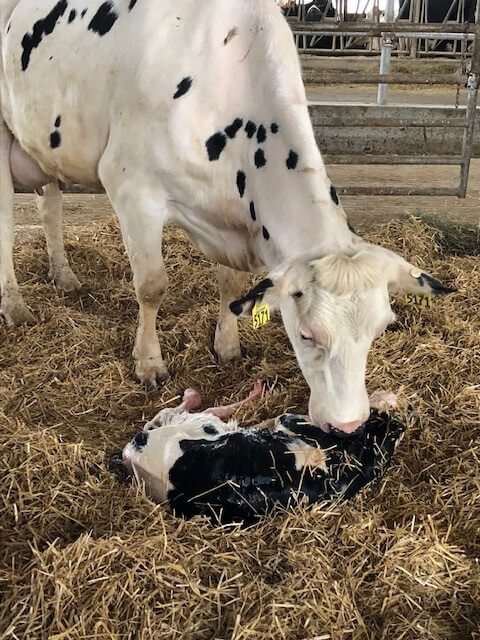
- Cows were randomly allocated to two different reproductive programs based on their ear tag numbers: odd numbers (short) and even (long) treatments.
- In the Short RepP (n = 982), cows were enrolled in a Presynch-Ovsynch protocol (PGF2α at 36 ± 3 and 50 ± 3 days in milk [DIM]) followed by ED and AI between 50 ± 3 and 62 ± 3 DIM. Cows not detected in estrus proceeded to an Ovsynch protocol (GnRH at 62 ± 3, PGF2α at 69 ± 3, GnRH at 71 ± 3, and timed AI [TAI] at 72 ± 3 DIM). In the Long RepP (n = 942), cows received PGF2α at 50 ± 3 DIM followed by AI at ED up to 81 ± 3 DIM. Cows without ED were enrolled in the Ovsynch protocol (GnRH at 82 ± 3, PGF2α at 89 ± 3, GnRH at 91 ± 3, and TAI at 92 ± 3 DIM).
- Cows were further categorized into quartiles (Q1 to Q4) based on their daughter pregnancy rate (GDPR, qGDPR) and cow conception rate (GCCR, qGCCR).
- Pregnancy was diagnosed via transrectal ultrasonography of the uterus at day 32 ± 3 after AI.
- Statistical analyses were performed using JMP from SAS. Days from calving to first service (TP1), AI at estrous detection (AIE), pregnancy at the first service (P1), pregnancy loss for the first service (PL), and number of services to conception (NSFC) were assessed. Time to pregnancy was analyzed using Cox’s proportional hazard model.
Results
- The short RepP resulted in shorter days from calving to pregnancy (Short = 64.3 vs. Long = 72.1) and a greater percentage of pregnant cows after the first service compared with the Long RepP.
- The Long RepP had a higher estrous detection rate compared with the Short RepP (Short = 45.2% vs. Long = 73.2%).
- Interactions between RepP and GDPR were present for TP1, AIE, and P1, but no interactions were observed between RepP and GCCR.
- The correlation between GDPR and GCCR was 0.87. Cows in the highest quartiles for both GDPR and GCCR had shorter time-to-pregnancy intervals and higher pregnancy hazard ratios – up to 300 DIM – than those in the lowest quartiles.
In conclusion, reproductive programs with varying estrous detection lengths before timed AI benefit from selecting fertility traits like GDPR and GCCR, with GDPR showing interactions with these programs. While GCCR did not show interactions with the assessed reproductive programs, it positively influenced all reproductive responses in both programs. Further research is needed to better understand how GDPR impacts pregnancy outcomes.
Access the paper at: Association of Genomic Predictions for Fertility Traits with Reproductive Outcomes in Dairy Cows Under Two Estrus Detection and Timed AI Programs. – ScienceDirect
Associations of body condition score, body condition score change, and hyperketonemia with mastitis, reproduction, and milk production
K.C. Krogstad and B.J. Bradford
Body condition score (BCS) and hyperketonemia (HYK) have been associated with diseases, fertility, and culling, but data are contradictory about their association with pregnancy loss. The objective was to conduct a retrospective cohort study to investigate associations between BCS, BCS change (ΔBCS), blood β-hydroxybutyrate (BHB), and HYK with mastitis, pregnancy per artificial insemination (P/AI), pregnancy loss (PGL), milk yield, and risk of leaving the herd on a Michigan dairy farm that uses an automated milking system (AMS).
Study population and outcomes assessed
- The BCS for cows prepartum (14 days before calving), postpartum (14 to 21 days in milk [DIM]), and multiparous cows were evaluated for HYK between 3 and 7 DIM.
- Records were gathered from herd management software. Univariable associations of BCS (prepartum n = 826, postpartum n = 956), ΔBCS (n = 819), and BHB (n = 628) with mastitis, P/AI, PGL, and risk of leaving the herd were evaluated. Survival analyses investigated the association of BCS, ΔBCS, and HYK within parity with mastitis, pregnancy, and hazard of leaving the herd during lactation.
- Researchers evaluated the association of BCS, ΔBCS, and HYK with whole lactation milk yield using repeated measures mixed models.
Results
- Thinner cows, both pre (BCS >3.25) and postpartum (BCS <2.75), had greater risk of leaving the herd (Odds Ratio = 1.48 and 2.16, respectively) compared with their moderate BCS herdmates.
- Cows that lost ≥0.375 units of BCS after calving had greater risk of PGL (Odds Ratio = 4.99).
- Cows that lost ≥0.75 unit of BCS had greater risk of being culled (Odds Ratio = 1.80).
- Cows with HYK were at greater risk of mastitis (Relative Risk = 1.34) and being culled (Odds Ratio = 2.27).
- Cows with increasing BHB had greater risk of PGL and being culled such that a 1 mmol/L increase in BHB resulted in 2.32 and 1.67 greater risk, respectively.
- Hyperketonemic cows within third-plus parity made 5.4 kg/day ± 1.04 kg/day (difference ± SED) less milk yield over their lactation compared with non-HYK third-plus parity cows.
In conclusion, blood BHB and HYK had adverse associations with mastitis, fertility, leaving the herd, and milk yield. Additionally, BCS loss after calving and BHB during week 1 of lactation are risk factors associated with incidence of PGL.
Access the paper at https://www.journalofdairyscience.org/article/S0022-0302(24)01397-3/fulltext#fig1
The economic impact of purulent vaginal discharge in dairy herds within a single lactation
O.A. Ojeda-Rojas, J. Pérez-Báez, S. Casaro, R.C. Chebel, F. Cunha, A. De Vries, J.E.P. Santos, F.S. Lima, P. Pinedo, G.M. Schuenemann, R.C. Bicalho, R.O. Gilbert, S. Rodriguez-Zas, C.M. Seabury, G. Rosa, W.W. Thatcher, and K.N. Galvão.
The current scientific consensus is that uterine diseases have a negative association with the overall productive and reproductive performance of dairy cows, which results in significant economic losses. The prevalence of purulent vaginal discharge (PVD) among lactating dairy cows is approximately 20%, reaching up to >30%. The goal of this study was to calculate the cost of PVD in dairy cows.
Study population and outcomes assessed
- The data set included 11,051 cows from 16 dairy herds located in 4 regions of the United States.
- Purulent vaginal discharge was characterized as a mucopurulent, purulent, or reddish-brownish vaginal discharge collected at 28 ± 7 days in milk.
- Gross profit was calculated as the difference between incomes and expenses. The cost of PVD was calculated by subtracting the gross profit of cows with PVD from the gross profit of cows without PVD. Continuous outcomes, such as milk production (kg/cow), milk sales ($/cow), cow sales ($/cow), feed costs ($/cow), reproductive management cost ($/cow), replacement costs ($/cow), and gross profit ($/cow), were analyzed using linear mixed-effects models.
- Pregnancy and culling by 305 days in milk (DIM) were analyzed by generalized linear mixed-effects models using logistic regression.
- Models included the fixed effects of PVD, metritis, parity, region, season of calving, and morbidity in the first 60 DIM, as well as the interactions between PVD and metritis, PVD and parity group, and PVD and morbidity.
- Farm and the interaction between PVD and farm were considered random effects in all the statistical models. A stochastic analysis was conducted using 10,000 iterations with varying relevant inputs.
Results
- Cows with PVD produced less milk (9,753.2 ± 333.6 vs. 9,994.6 ± 330.9 kg/cow), were less likely to be pregnant (70.7 ± 1.7 vs. 78.9 ± 1.2%), and were more likely to be culled by 305 DIM (34.6 ± 1.7 vs. 27.2 ± 1.3%) compared with cows without PVD.
- Consequently, milk sales (4,744.7 ± 162.3 vs. 4,862.1 ± 161.0 $/cow) and residual cow value (1,079.6 ± 23.0 vs. 1,179.3 ± 20.3 $/cow) were less for cows with PVD.
- Replacement (639.4 ± 26.4 vs. 526.0 ± 23.4 $/cow) and reproductive management costs (76.3 ± 2.5 vs. 69.0 ± 2.4 $/cow) were greater for cows with PVD.
- The mean cost of PVD was $202. The stochastic analysis also showed a mean cost of $202, ranging from $152 to $265.
In conclusion, PVD resulted in large economic losses to dairy herds by being associated with decreased milk yield, impaired reproduction, and greater culling.
Access the paper at https://www.sciencedirect.com/science/article/pii/S0022030224013456#ceab10
Featured Column
HPAI’s threat continues to grow
Unfortunately, the number of species contracting highly pathogenic avian influenza (HPAI) has grown – including lactating dairy cows. During the 2024 Dairy Cattle Reproduction Council Annual Meeting, Jason Lombard, Colorado State University veterinary epidemiologist, provided some HPAI history and discussed

Jason Lombard
the disease’s many challenges.
“The first detection of HPAI in the current U.S. outbreak was in a commercial turkey flock in Indiana in 2022,” Lombard stated. In early 2024, there were reports of an uncharacterized morbidity event occurring in the Southwest, primarily in Texas and New Mexico. As part of this morbidity event, dairy producers and veterinarians reported many dead birds and farm cats.
On March 25, 2024, the U.S. Department of Agriculture (USDA) confirmed HPAI in dairy cattle for the first time. Five weeks later, USDA enacted a Federal Order pertaining to HPAI, which required testing of lactating dairy cows prior to interstate movement and mandated private laboratories and state veterinarians to report positive influenza A test results to the USDA Animal and Plant Health Inspection Service (APHIS). As of January 2025, there were 929 affected dairy herds in 16 states. The cattle genotype for the virus is classified as H5N1 clade 2.3.4.4b, genotype B3.13.
Disease spreads via cattle movement, workers
The known risk of disease spread is through movement of lactating cattle, which is how the disease quickly spread from the Southwest to other states. Additionally, there’s solid evidence that shared workers in poultry and dairy operations spread the disease between the two agricultural sectors. Service personnel and vehicle movements on and off dairy farms are also assumed to be risky, but this risk has not been quantified. Feces are assumed to be low risk and so is manure (combination of feces and urine), even though small amounts of the virus have been detected in a very low percentage of urine samples.
To evaluate viral transmission risks, researchers tested milk trucks at a processing plant in Michigan. Of the 126 samples collected from 18 trucks, only one was positive – suggesting that milk trucks were also a very low risk for transmitting HPAI in Michigan. Additionally, migratory waterfowl have not been detected with the cattle genotype since discovering the virus in cattle. USDA’s Wildlife Services has tested peri-domestic birds around infected dairy operations and detected a very low percentage of birds being infected with HPAI. Whole genome sequencing suggests that these birds are likely a spillover host from the cattle as opposed to being a route of exposure.
Numerous clinical signs
The clinical signs of HPAI in cattle include fever, decreased rumination, decreased water intake, decreased feed intake, decreased activity, depressed attitude, mastitis (consisting of thick, yellow milk), and nasal discharge. One of the clinical signs present in these herds is a serous nasal discharge, followed by a serosanguineous discharge, which ultimately turns into a mucopurulent nasal discharge.
The percentage of cows in herds with clinical signs has ranged from 7 to 25%. In California, however, close to 50% of cows have shown clinical signs. This increase in the percentage of cows with clinical signs in California has, in part, been attributed to heat stress that these cows experienced. Producers reported observing clinical signs for 16 to 90 days after the onset of clinical disease.
Significant production losses
Milk production from cows that have been infected and recovered generally produce 60-70% of their previous milk production level in the current lactation. “Histological evaluation of the mammary gland of experimentally infected cows has revealed fibrous deposition or scar tissue within the secretory cells, suggesting a functional decrease in mammary tissue,” Lombard explained. “The question about future milk production in these clinical cows is a concern. Clinical cows that started a new lactation and had an evaluation of projected milk production showed a 2.5% and 12% decrease in projected 305-day milk production and mature equivalent 305-day milk production, respectively.”
As part of the USDA’s longitudinal study, serial sampling of 20 clinical and 10 nonclinical cows is occurring on multiple operations. The number of cows shedding the virus in milk ranges from 25-75% of the cows that were designated as clinical cases by farm management. A small percentage of cows is also shedding the virus in nasal secretions and/or urine. Although some cows are shedding the virus in milk for a month or less, some cows have been found to shed the virus, at very low levels, for more than 70 days. “These individual cow shedding results correlate with what we have observed in bulk tank milk testing, which have been intermittently positive for close to 100 days in some herds,” Lombard noted.
The impact of infection on bulk tank somatic cells counts (BTSCC) is variable. Some herds experienced less than a 20% increase in BTSCC; other herds experienced a 120% increase. Total daily milk production and daily milk production per cow have decreased from 6 to 15% in the days following the onset of clinical signs. The combination of decreased milk sold and decreased milk quality, based on increased BTSCC, results in lower milk payments to producers.
Lombard was a presenter in a Center for Disease Control and Prevention HPAI in dairy cattle webinar. Click here to view the webinar.
For more information about HPAI, click here.
Featured Member
Editor’s Note: For each issue, DCRC interviews a member to learn more about his/her career, involvement with DCRC and thoughts about dairy cattle and reproduction.
Mark Doornink
Parnell Living Science
DCRC member since 2016

Mark Doornink
Meet your newest Dairy Cattle Reproduction Council (DCRC) board member – Mark Doornink, Clintonville, Wis. Raised on his family’s farm in western Wisconsin, he earned a bachelor’s degree in animal science with dairy production emphasis at the University of Wisconsin-River Falls. Early in his career, Doornink worked as a breeding technician and dairy nutritionist before going to work at an 800-cow Wisconsin farm. On that dairy farm, he started as a milker on the night shift and finished as herd health manager – working in just about every other position along the way.
“While working on that dairy, I learned firsthand about two key things,” he commented. “First, implementing technology could help the dairy operation be more profitable. Second, the real value is in the pregnancy.”
Focuses on software training
In March of 2000, Doornink started his career with Valley Ag Software (VAS). At VAS, he provided technical support to on-farm users and input to product development for DairyComp 305, ParlorWatch and FeedWatch for more than a decade. Because of his herd management experience and deep knowledge of VAS programs, Doornink conducted countless training and user meetings in all parts of North America. Toward the end of his two-decade-long tenure at VAS, Doornink developed the strategy and roadmap to move their successful on-premise programs to a cloud-based, collaborative platform.
In January of 2020, Doornink became the vice president of product management at VES Environmental Solutions. A year later, VES merged with Artex Barn Solutions to form VES-Artex. At VES-Artex, Doornink developed and implemented a roadmap to create a cloud-based platform that transitioned VES-Artex from a “bent metal” company to a software solutions provider for the dairy industry.
Manages digital products and services
Today, Doornink is the vice president of digital technology for Parnell Living Science, which he embarked on in November of 2022. In this role, Doornink manages the digital products and services that provide added value to customers. Also, he leads a small team of software developers that build and maintain Parnell’s mySYNCH cloud-based platform. Furthermore, Doornink works closely with the field sales team to provide training and on-farm support to troubleshoot and assist farm managers achieve reproductive success.
Reflecting on his interest in dairy cattle reproduction, Doornink remarked, “I have always had a passion for reproductive success on farms. In the mid-1990s, our farm was an early adopter of Ovsynch and using handhelds cowside to record information. That passion was further fueled by my role at VAS where I helped design and implement the repro synchronization programs for hundreds of farms across the United States. It was personally satisfying to see dairy farms nearly double the Preg Risk numbers in a matter of a decade.”
Doornink attended his first DCRC Annual Meetings in 2016. Since that time, he has rarely missed an annual meeting. Attendance is important to him and he attributes making lifelong friends due to his involvement with DCRC.
DCRC Annual Meeting fosters one-on-one discussions
“The DCRC Annual Meeting is an excellent opportunity to learn about the new advances in reproductive management,” Doornink stated. “Besides just hearing the speakers, you can talk with them individually and have a discussion that is specific to a particular topic or farm.”
What has he learned by attending DCRC Annual Meetings? “I remember a particular session at the annual meeting that involved a small panel discussion with a moderator and two dairymen – one from Kansas and one from California,” Doornink recalled. “The two dairy managers operated their farms very differently, but both were achieving excellent outcomes. It was not a session that pointed out what was right or wrong. This session taught me that judgment of success should be measured only when you fully understand what the goals are for a farm.”
When it comes to addressing reproductive challenges facing dairy producers today, Doornink noted that he works with many herds that struggle to fully implement a certain estrous synchronization program. “Every farm is different,” he remarked. “Copying what your neighbor does for a repro program may not be the right move for your farm. Some synch programs require setup shots to be given four to five days per week. Ensuring that every cow gets every shot can be challenging. I see so many managers that wait and monitor the outcome at the end of the line (Conception Risk, Preg Risk, Palpated Pregnancy Rate, etc.), instead of focusing on flawless execution and implementation. If you focus on execution and implementation, the results will vary less from week to week – and probably closer to expectations.”
Zoetis Research Article
A Low-risk, high-reward route to improved breeding efficiency
A study of more than 6,660 cows showed a boost in first-service conception.
By John Lee, Dairy Technical Services, Zoetis

Managing cows for higher milk production and higher profitability requires an efficient fertility program. A strong 21-day pregnancy rate can be a driver of financial success on a dairy by helping eliminate increased labor for second and third services, as well as by reducing milk production losses and culling risks.1 Employing a fixed-time artificial insemination (FTAI) and synchronization program can result in improved breeding efficiency and profitability to achieve producers’ goals.
Zoetis conducted a large-herd research study of more than 6,600 cows to determine the impact of a higher dose of Factrel® Injection (gonadorelin injection) – from 2 mL to 4 mL – given at the third GnRH injection of Double-Ovsynch synchronization programs. This increase in dosage could overcome high progesterone levels, induce new ovulation and increase first-service conception risk.
Help boost breeding efficiency and profitability with an increased dose
Results of the study indicated that there was a significant boost of first-service conception risk in cows that had given birth more than once when given 4 mL of Factrel on Day 17 versus 2 mL.2 The multiparous cows showed an 11.7% increase in first-service conception risk, while cows that had only given birth once, or primiparous, showed a 1.9% increase.2
An investment of an additional 2 mL of Factrel during the third GnRH injection, producers can help improve their herds’ breeding efficiency, keep older lactating cows in the milking string and reduce costs for second and third conception services.
Based on a predictive reproductive financial model, an estimate of return on investment (ROI) indicates a 2.4-to-1 ratio in favor* of adding 2 mL of Factrel in the Double-Ovsynch regimen.2 Overall, this low-risk optimization can reap high rewards by helping to reduce input costs and outweigh the investment needed to perform second and third services.
Building a strong fertility program
Producers can work to optimize their fertility programs with the help of the Zoetis reproductive portfolio: Factrel with Lutalyse® Injection (dinoprost tromethamine injection) or Lutalyse® HighCon Injection (dinoprost tromethamine injection).
Producers that utilize this GnRH and prostaglandin combination from Zoetis in their FTAI and synchronization program can see a variety of benefits, such as a flexible treatment regimen, reduced time necessary for heat detection, improved reproductive efficiency and following Beef Quality Assurance (BQA) best practices.
Visit Zoetis Dairy Fertility to learn more.
IMPORTANT SAFETY INFORMATION FOR FACTREL: Factrel is for use in cattle only. See full Prescribing Information, here.
IMPORTANT SAFETY INFORMATION FOR LUTALYSE AND LUTALYSE HIGHCON: Women of childbearing age and persons with respiratory problems should exercise extreme caution when handling Lutalyse/Lutalyse HighCon. Lutalyse is readily absorbed through the skin and may cause abortion and/or bronchiospasms, therefore spillage on the skin should be washed off immediately with soap and water. Aseptic technique should be used to reduce the possibility of post-injection clostridial infections. Do not administer Lutalyse in pregnant cattle unless cessation of pregnancy is desired. See full Prescribing Information for Lutalyse, here. See full Prescribing Information for Lutalyse HighCon, here.
*The ROI calculation is based on commercial prices for reproductive hormones. The total breeding costs and cost per pregnancy were lower when giving the extra dose volume of Factrel®. Although the hormone costs for first service were higher with 4mL of Factrel, there were savings in the overall breeding cost and more pregnancies created with the higher dose of Factrel for multiparous cows.
1Lormore, M. What Drives Financial Success on a Dairy? Parsippany, NJ: Zoetis; 2021.
2Data on file, Study Report No. 20CRGREP-02-01, Zoetis Inc.
All trademarks are the property of Zoetis Services LLC or a related company or a licensor unless otherwise noted.
©2022 Zoetis Services LLC. All rights reserved. FAC-00079
Industry Calendar
- DCRC webinar: Employee training and retention, February 3
- Iowa Ag Expo, February 4-6, Des Moines, Iowa
- World Ag Expo, February 11-13, Tulare, California
- DCRC webinar: Reproductive management in the era of automation: Managing cows according to their needs, February 20
- Professional Dairy Producers Annual Business Conference, March 12-13, Madison, Wisconsin
- Central Plains Dairy Expo, March 25-27, Sioux Falls, South Dakota
- DCRC webinar: Economic considerations of methane-reducing feed additives, April 3
- Dairy Calf & Heifer Association Annual Conference and Trade Show, April 8-10, Westminster, Colorado
- Precision Dairy Conference, June 17-18, Bloomington, Minnesota
- National Mastitis Council Regional Meeting, July 22-24, Rochester, New York
- World Dairy Expo, September 30-October 3, Madison, Wisconsin
- Dairy Cattle Reproduction Council Annual Meeting, November 11-13, Middleton, Wisconsin
